Furongzhen (Furong Town, 芙蓉镇): The Transit Stop Nobody Talks About
When I bought my train ticket from Fenghuang toward Furongzhen, the system sold me the wrong route first. I ended up making an unplanned transfer, buying a second ticket, and figuring it out on the move — because the station name (芙蓉镇站) and what Google calls "Furong Town" are technically the same thing, but in practice everything gets confusing fast. Chinese railway logic is its own universe.
I eventually got there. And I stayed for three days.
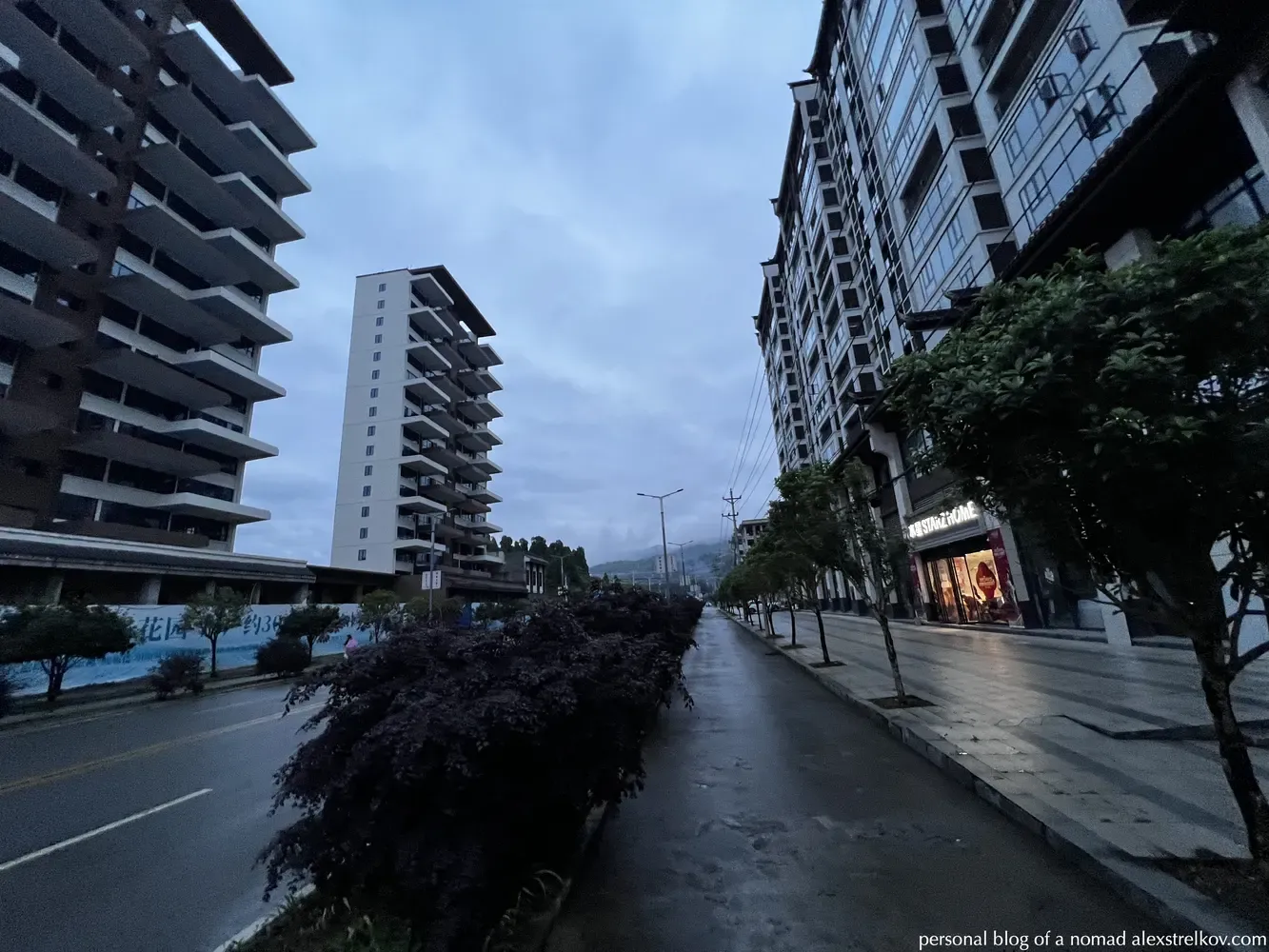
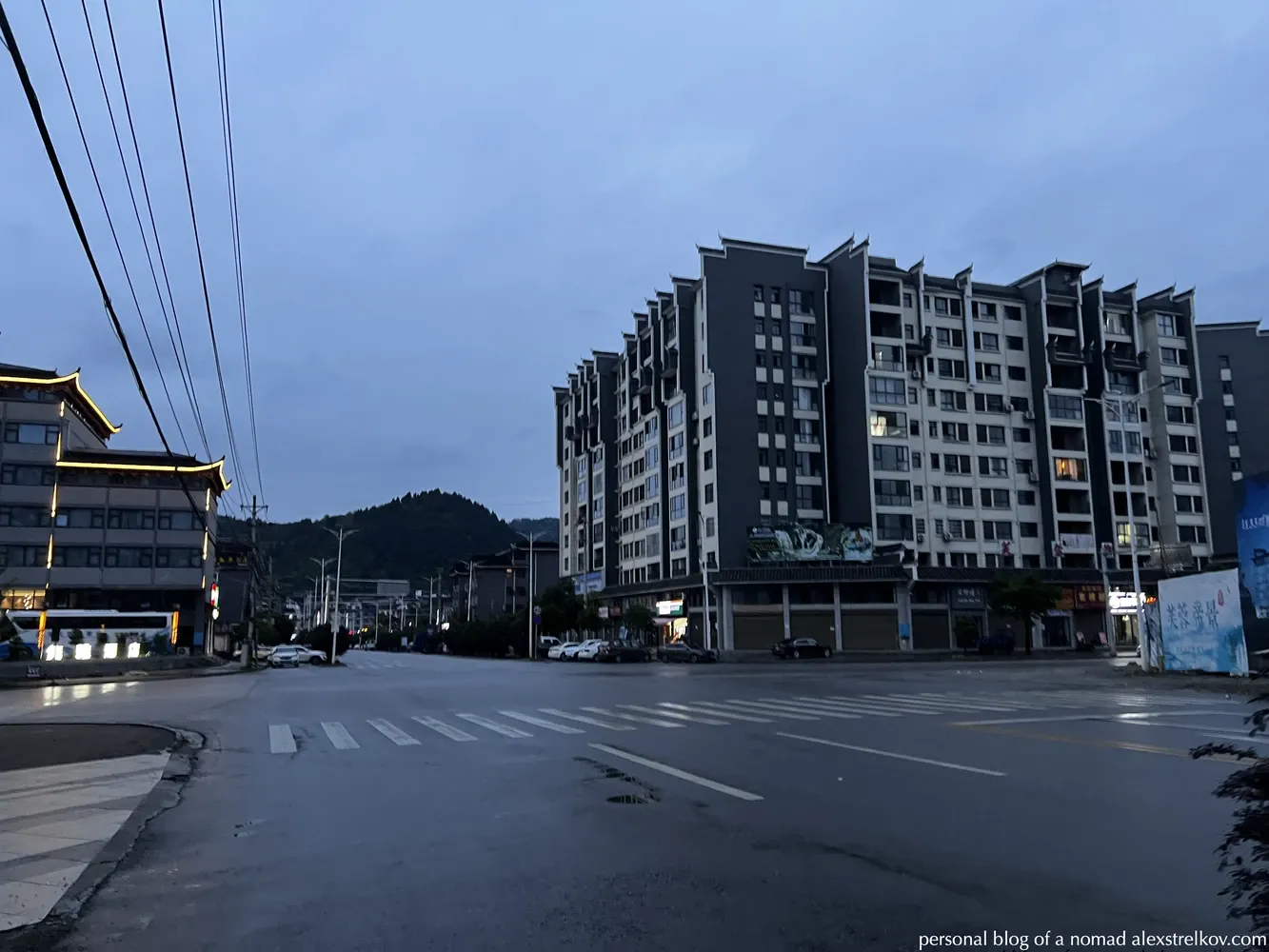
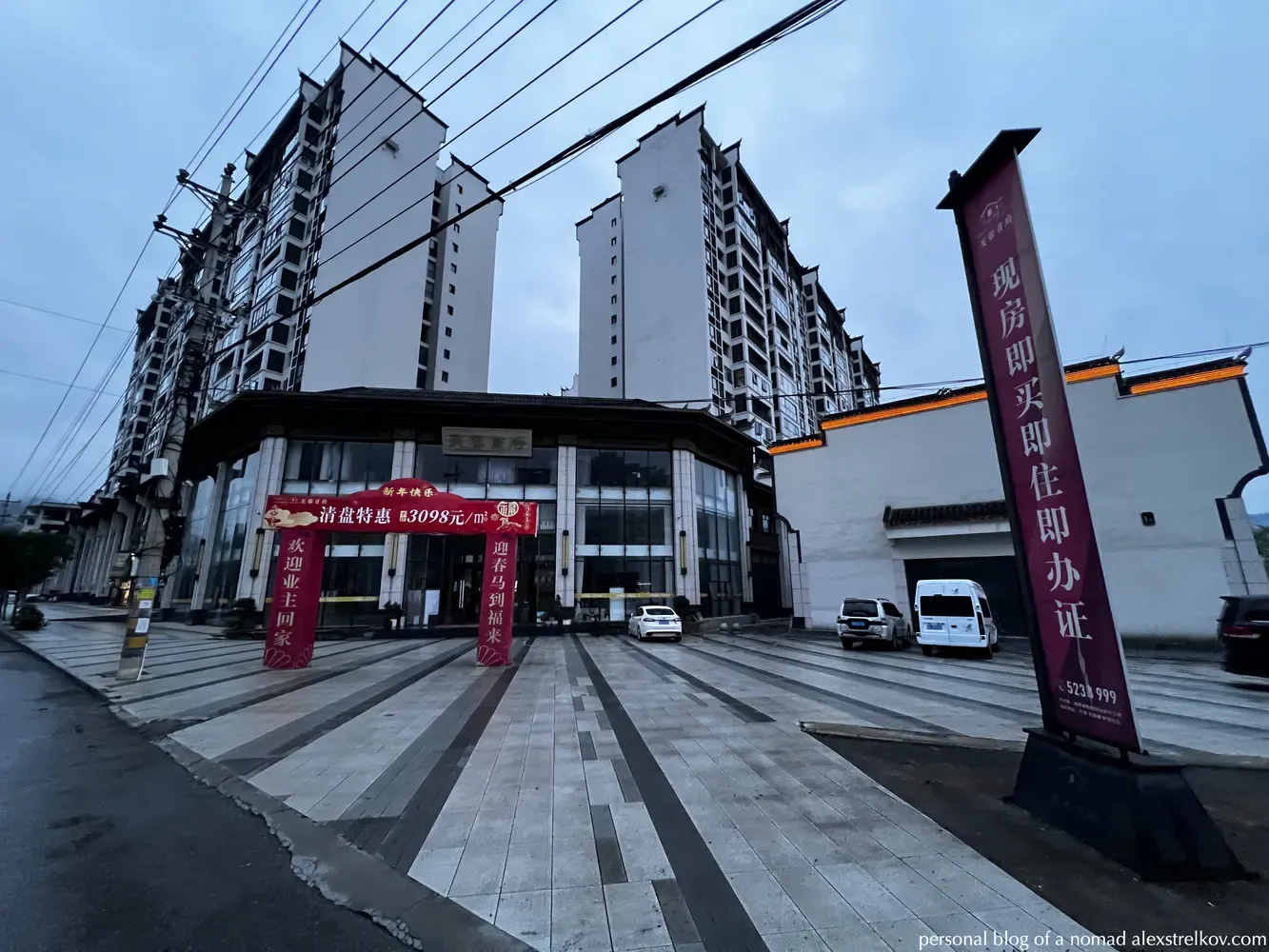
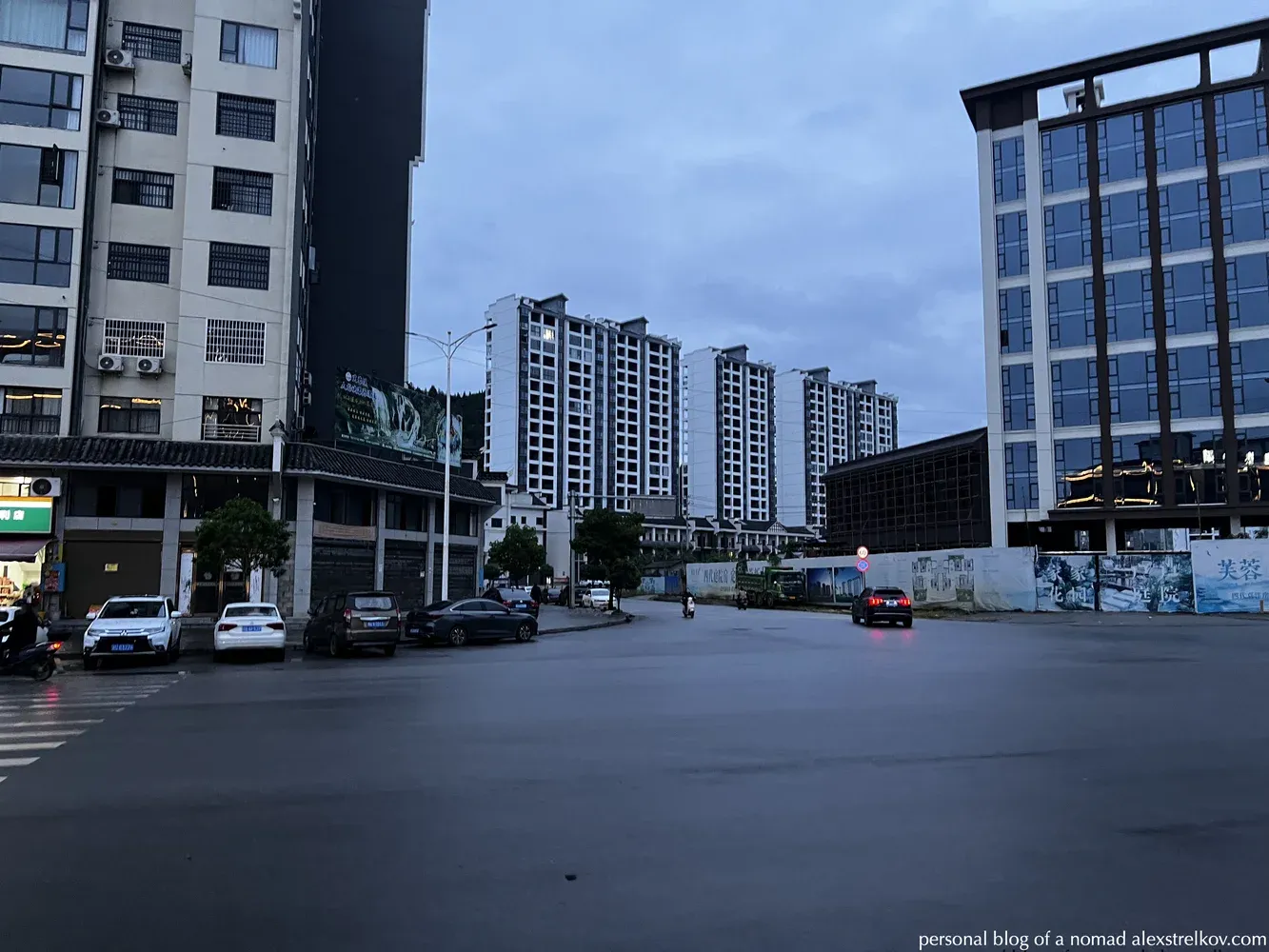
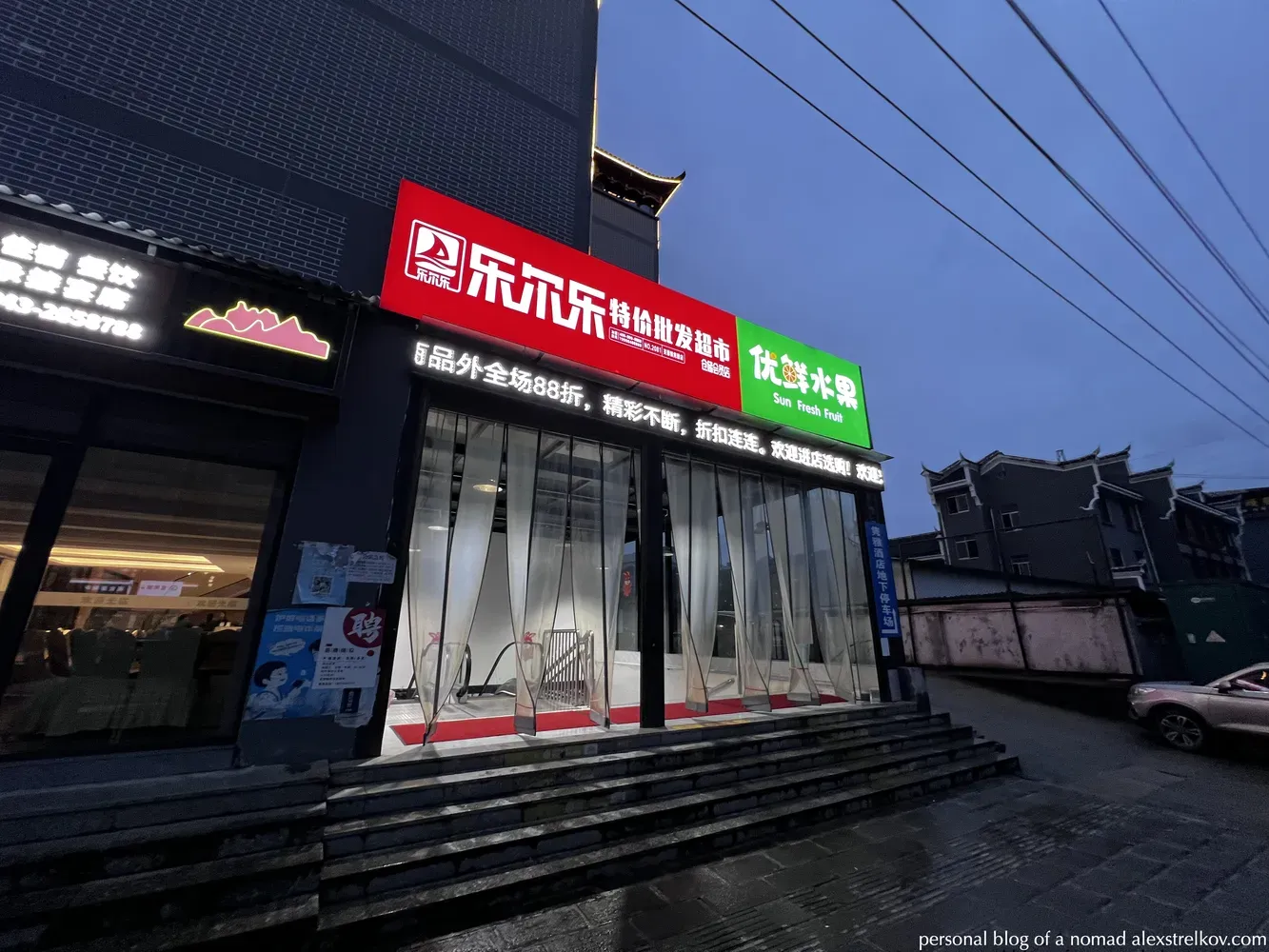
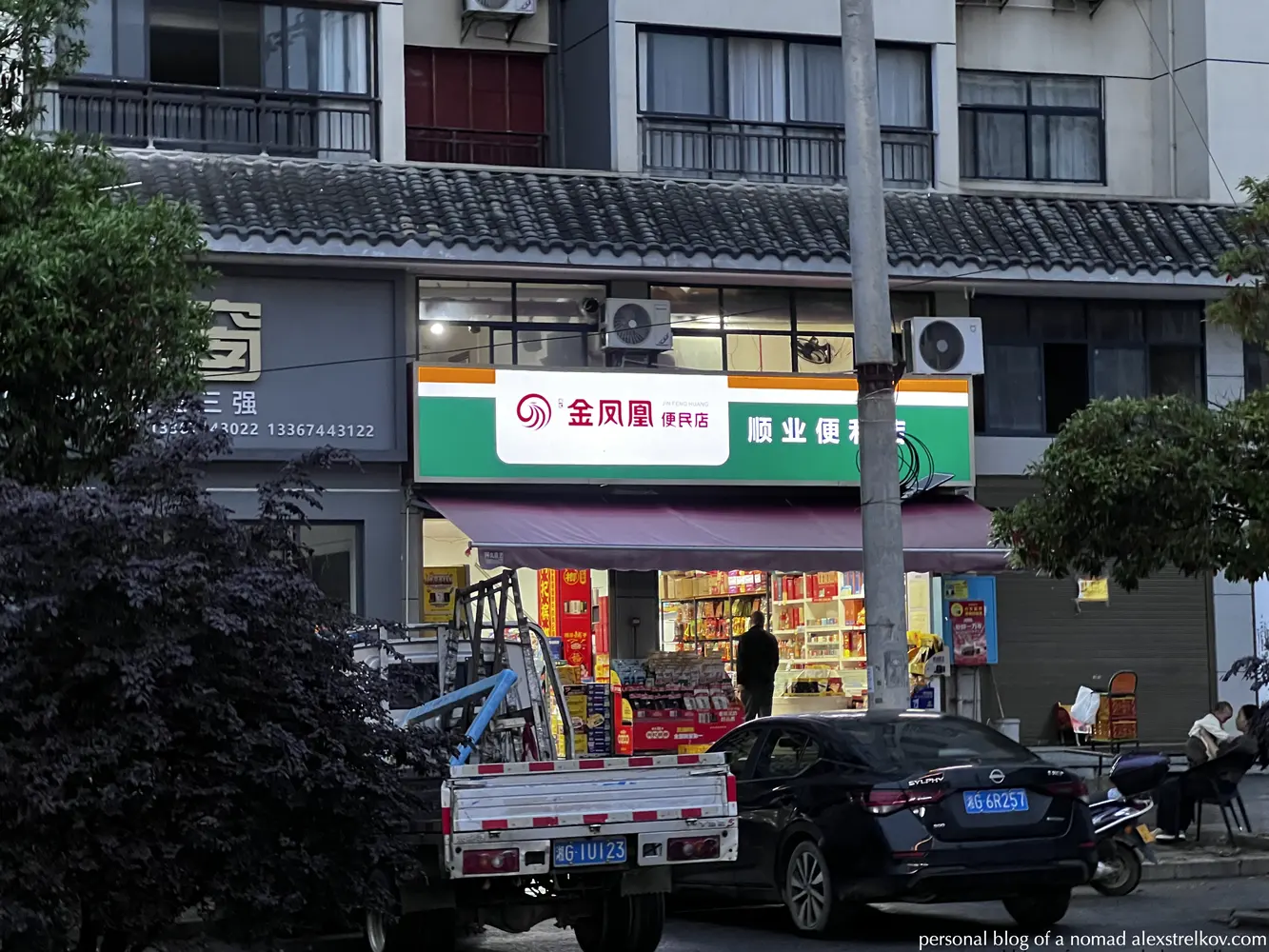
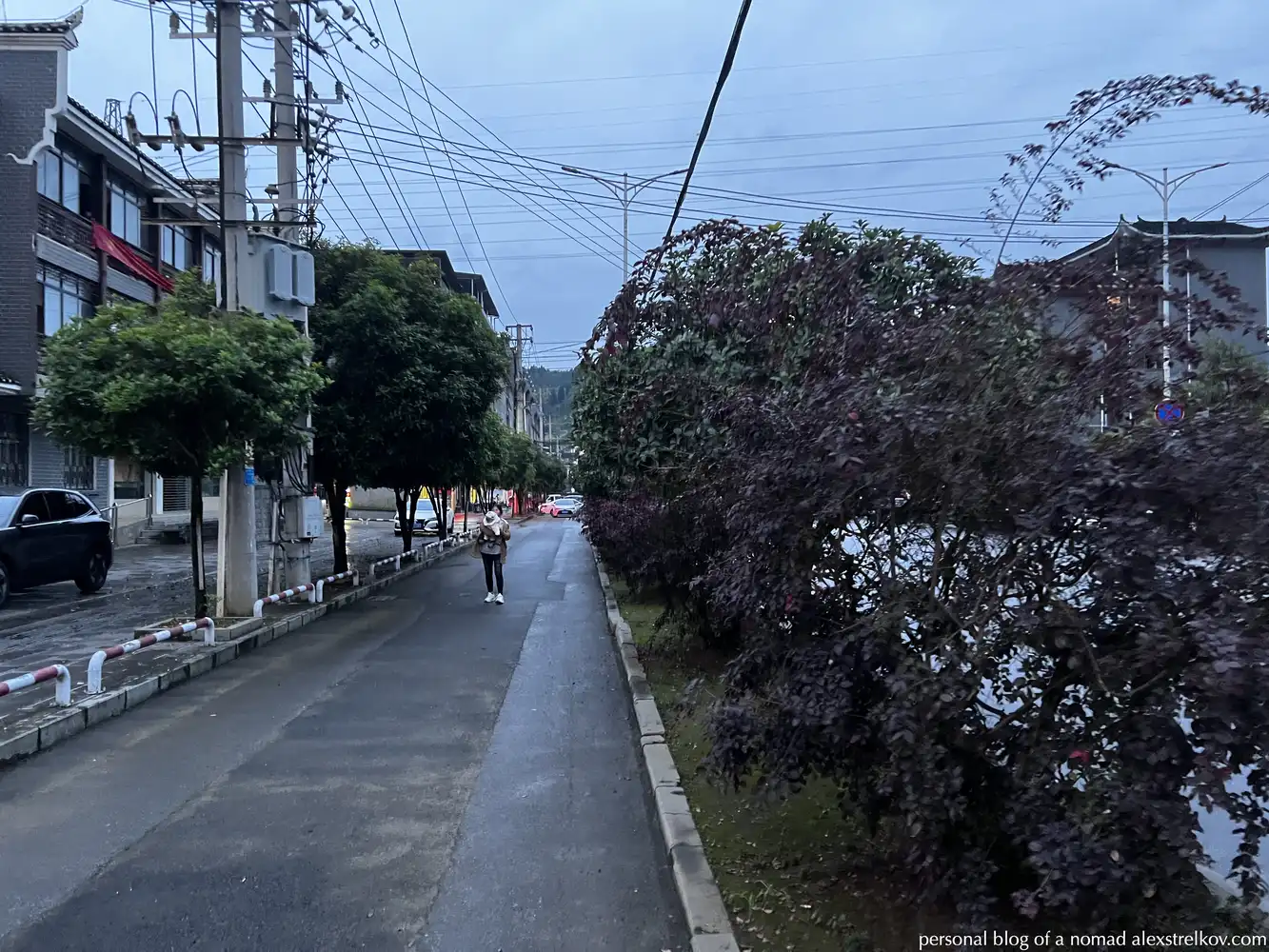
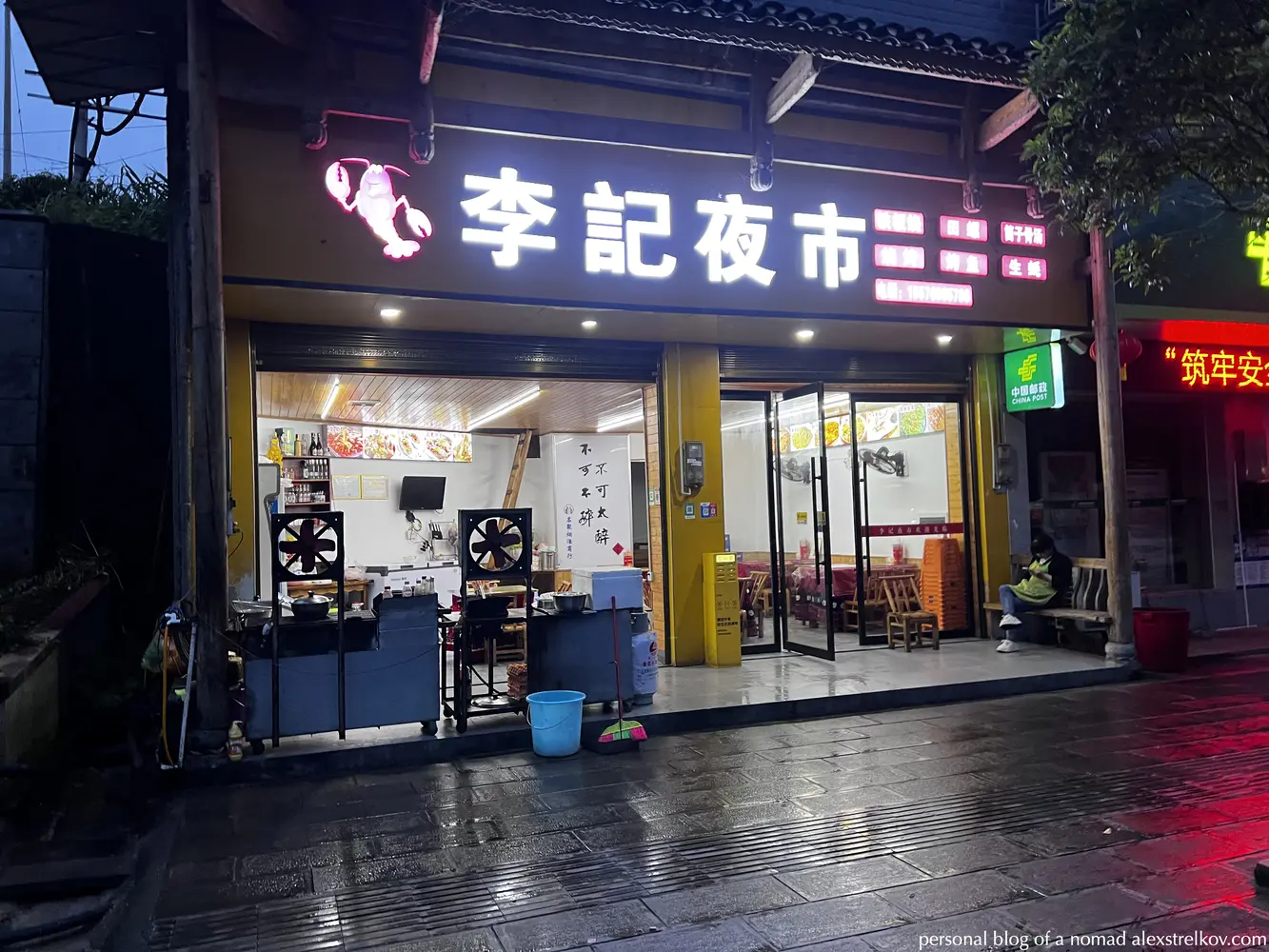
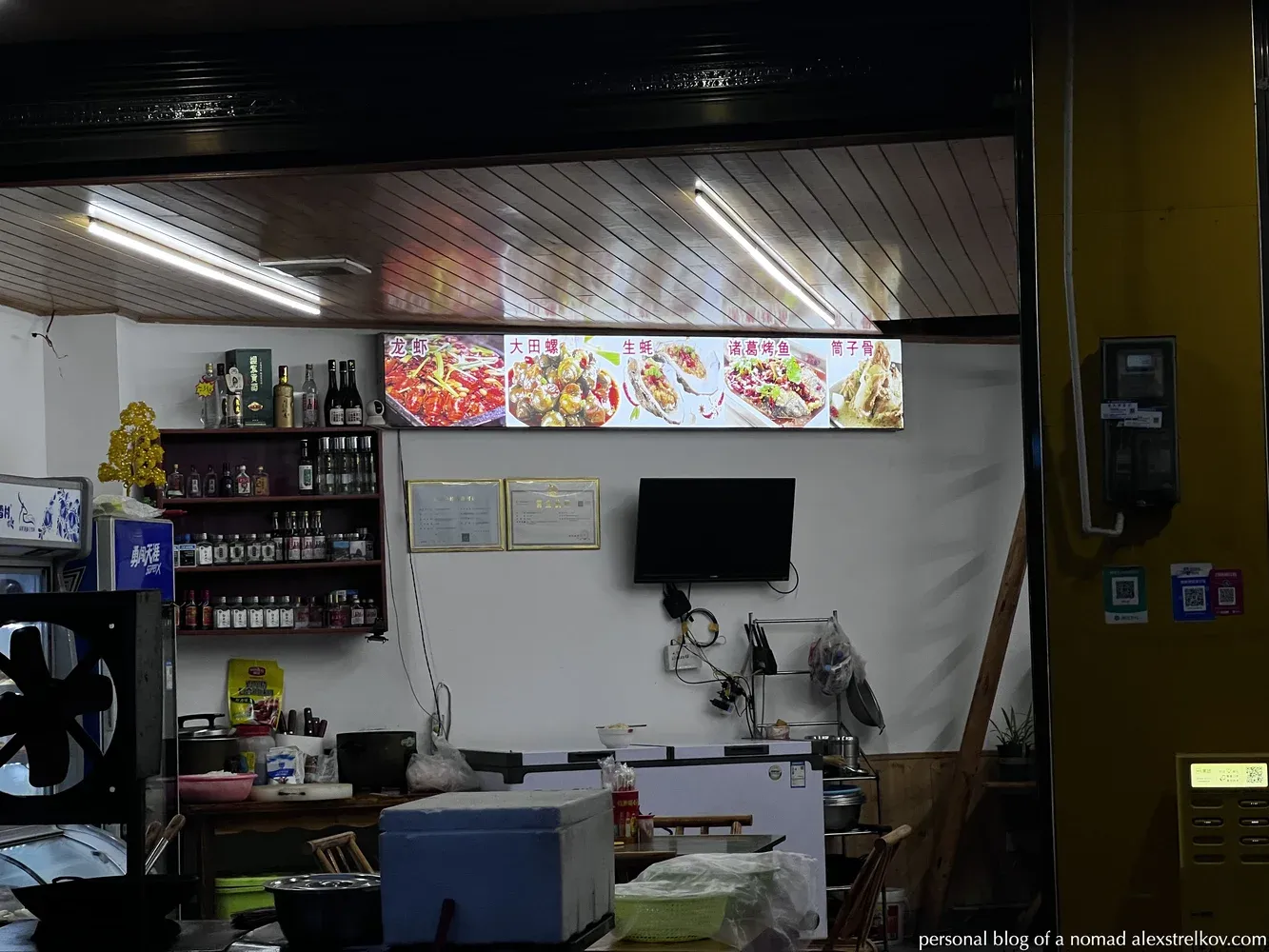
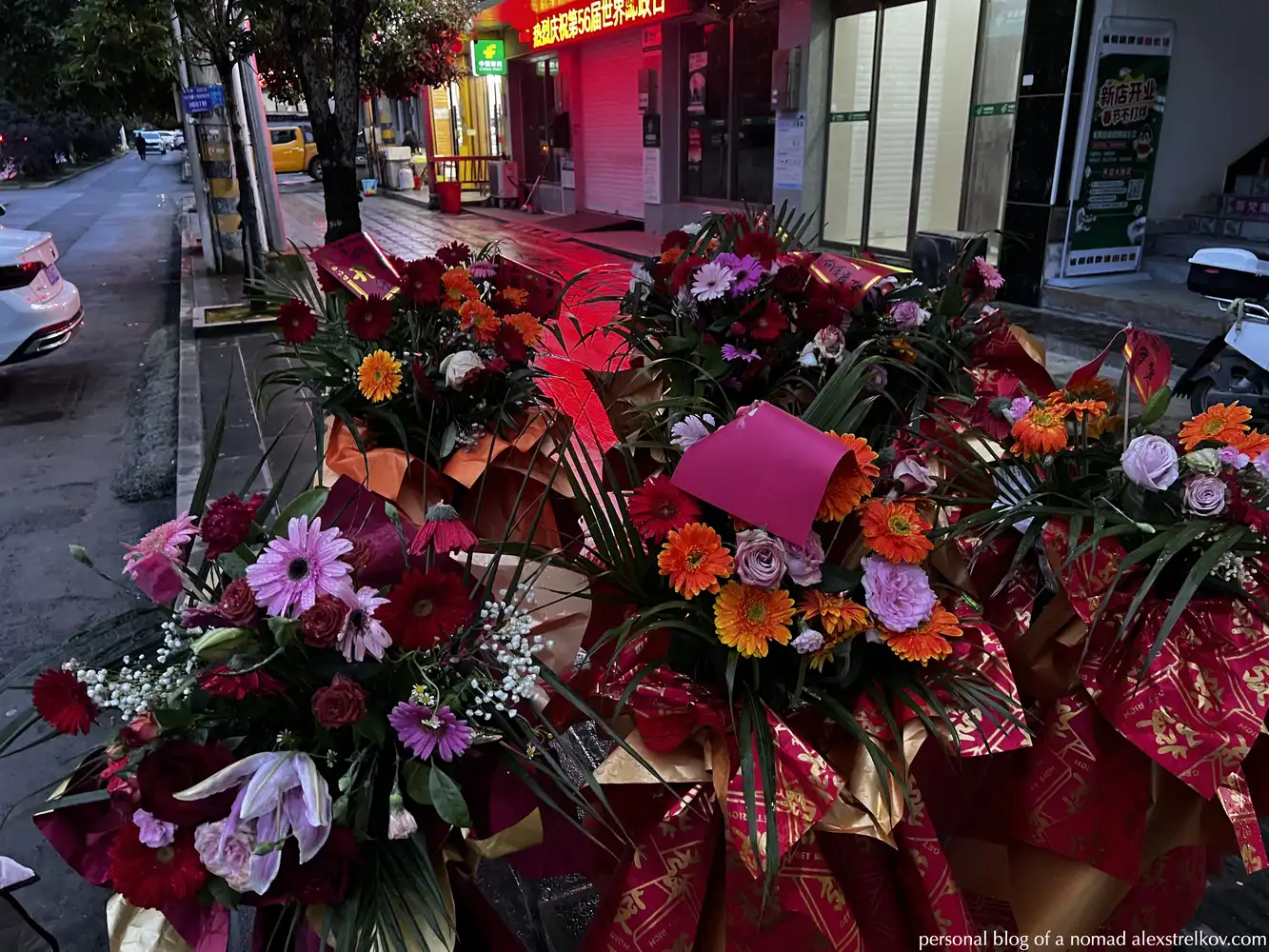
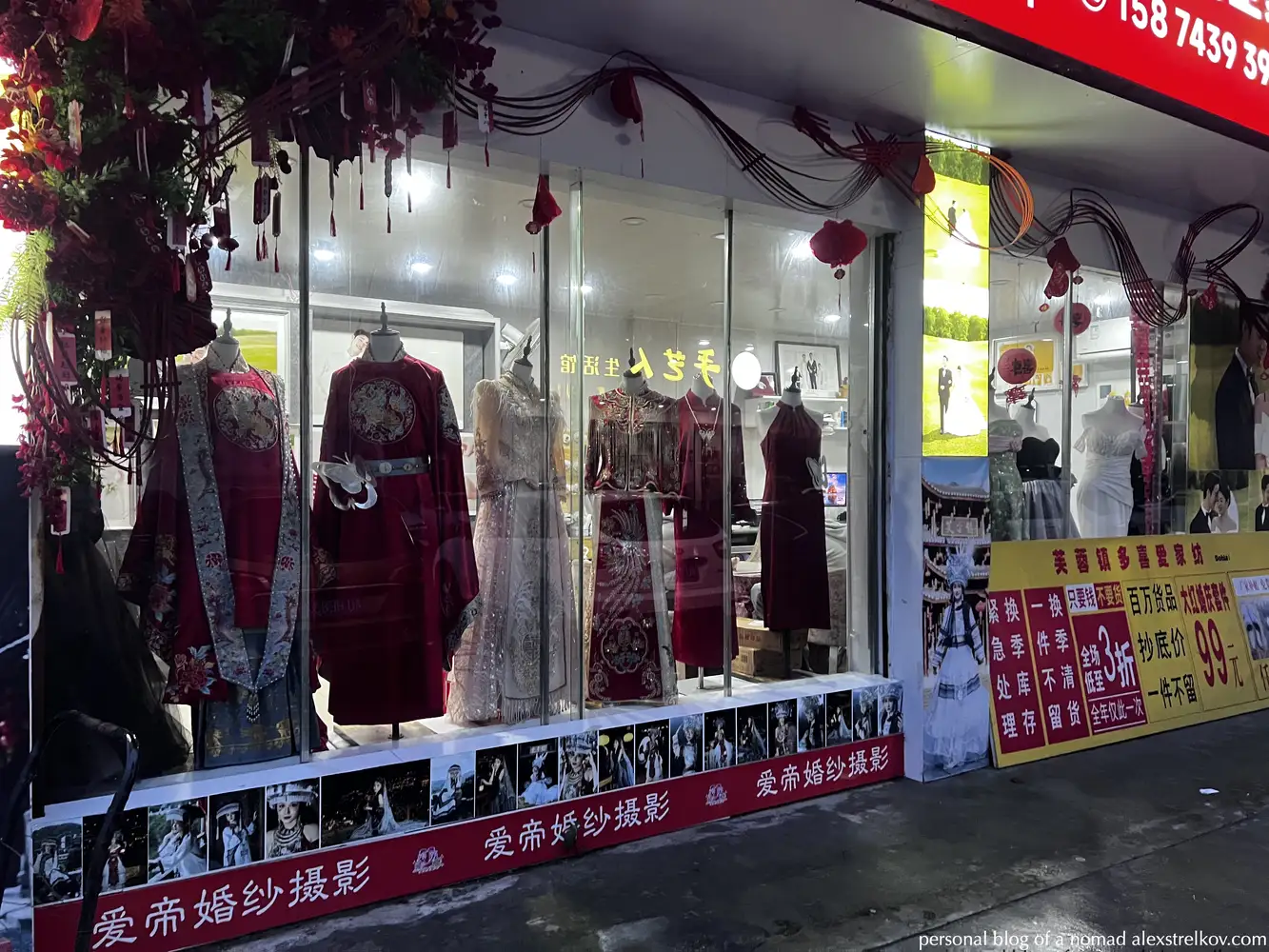
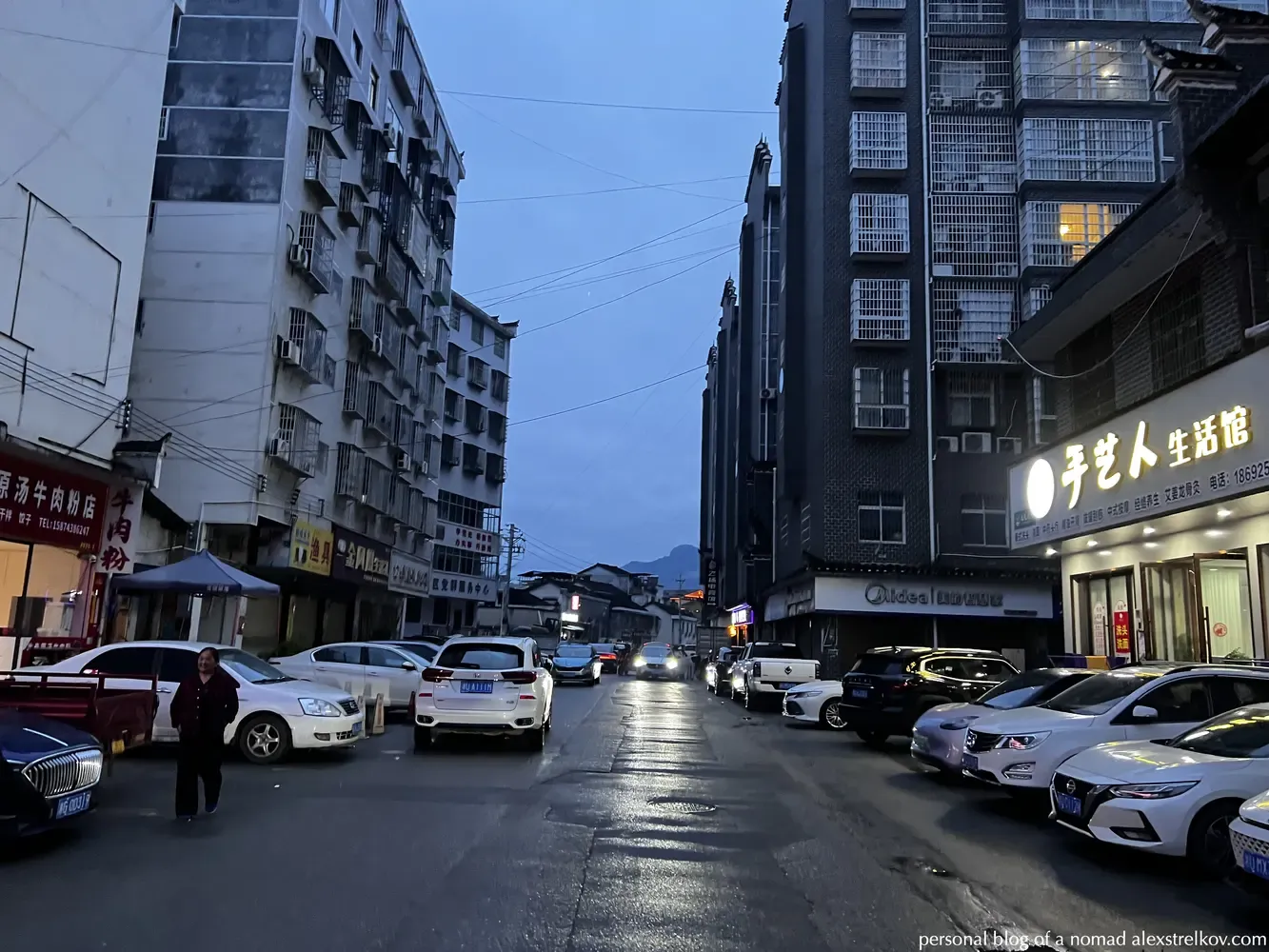
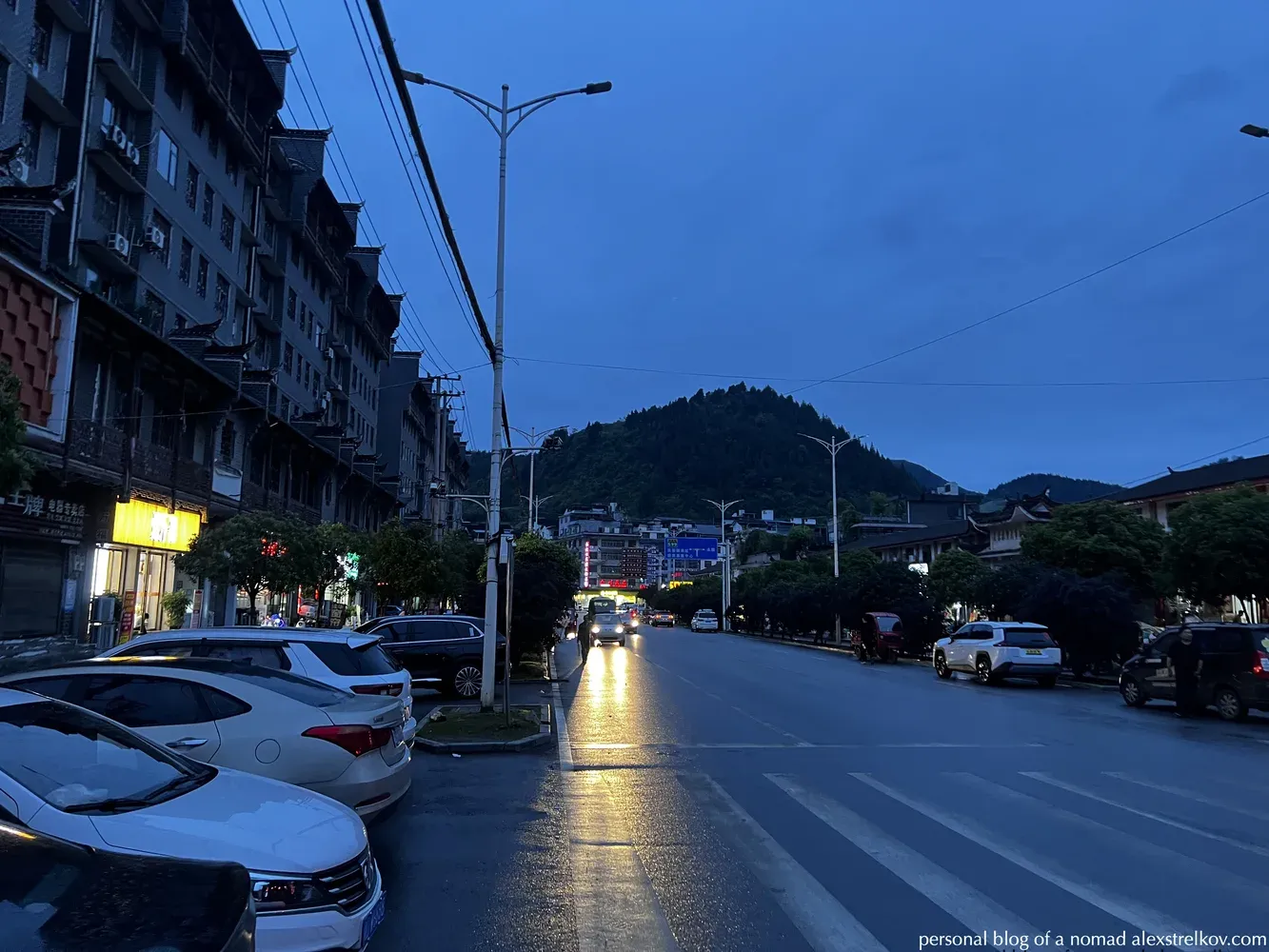
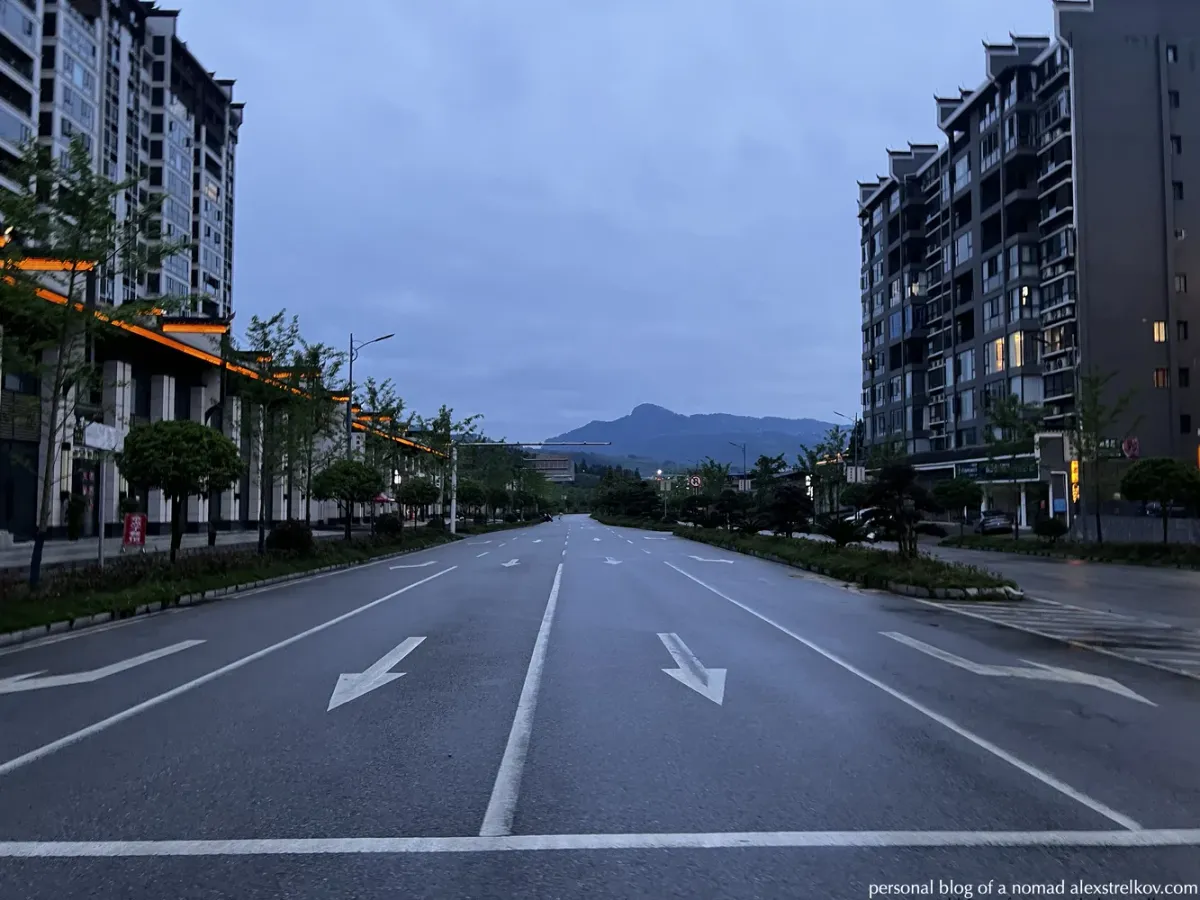
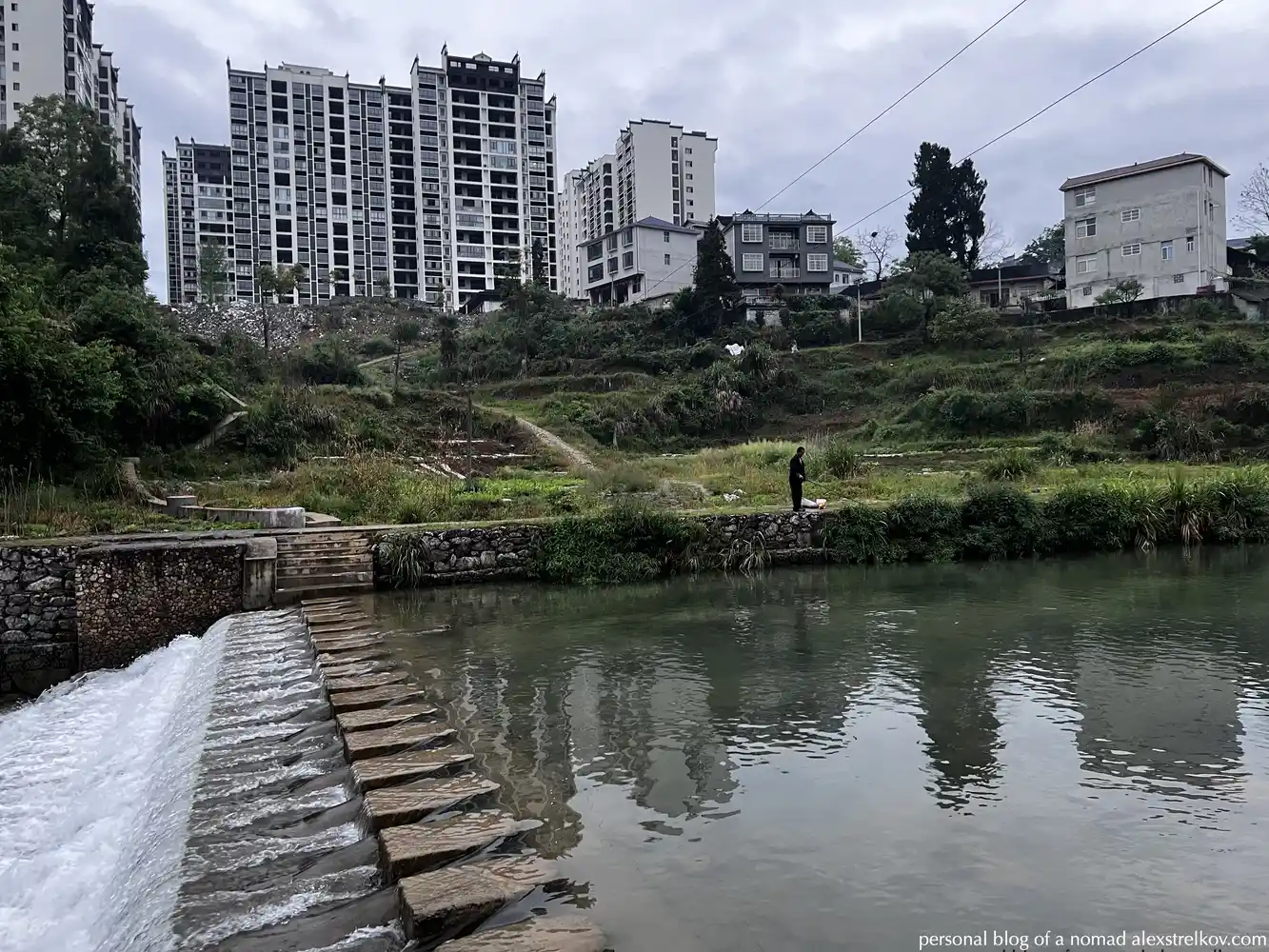
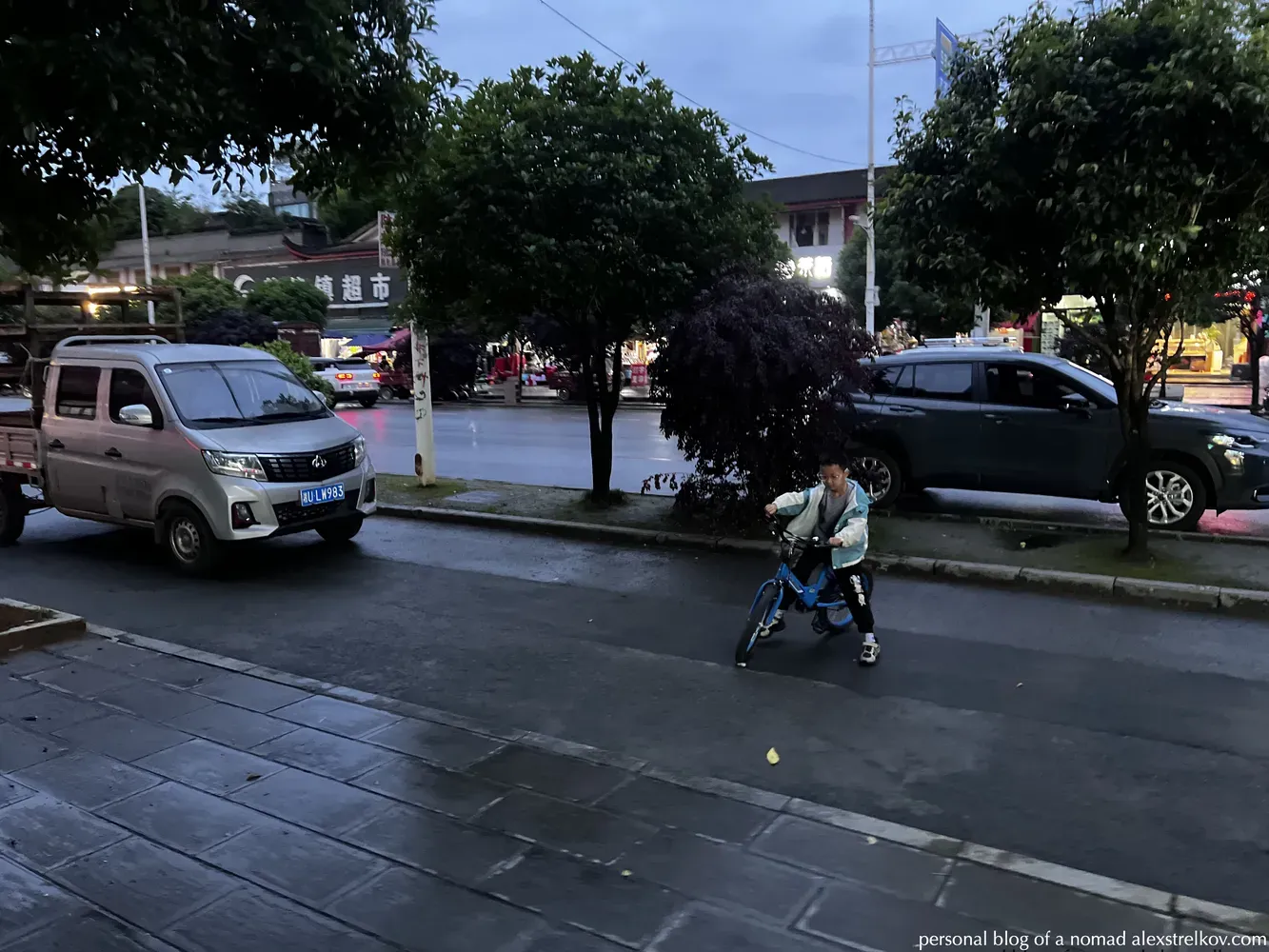
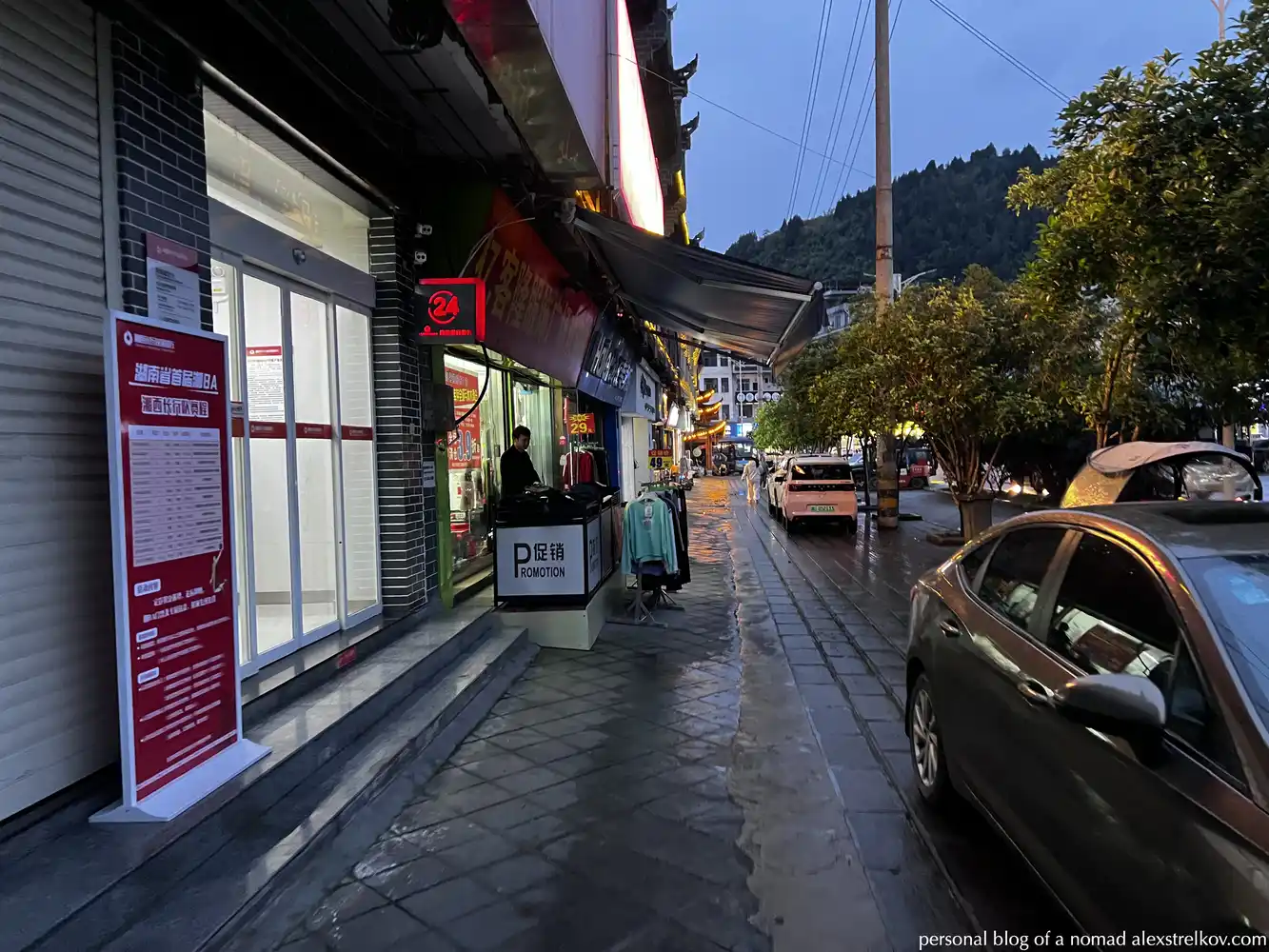
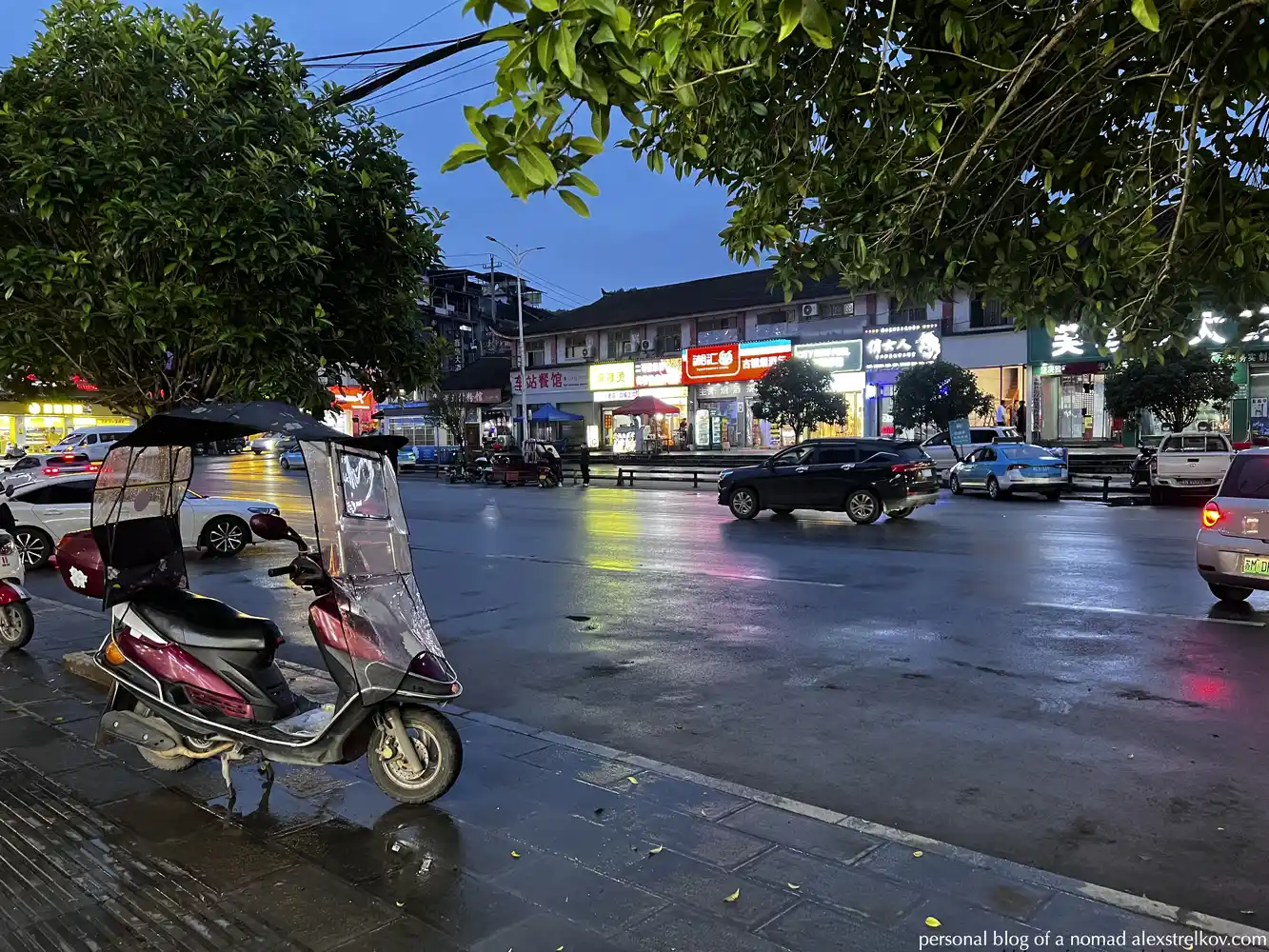
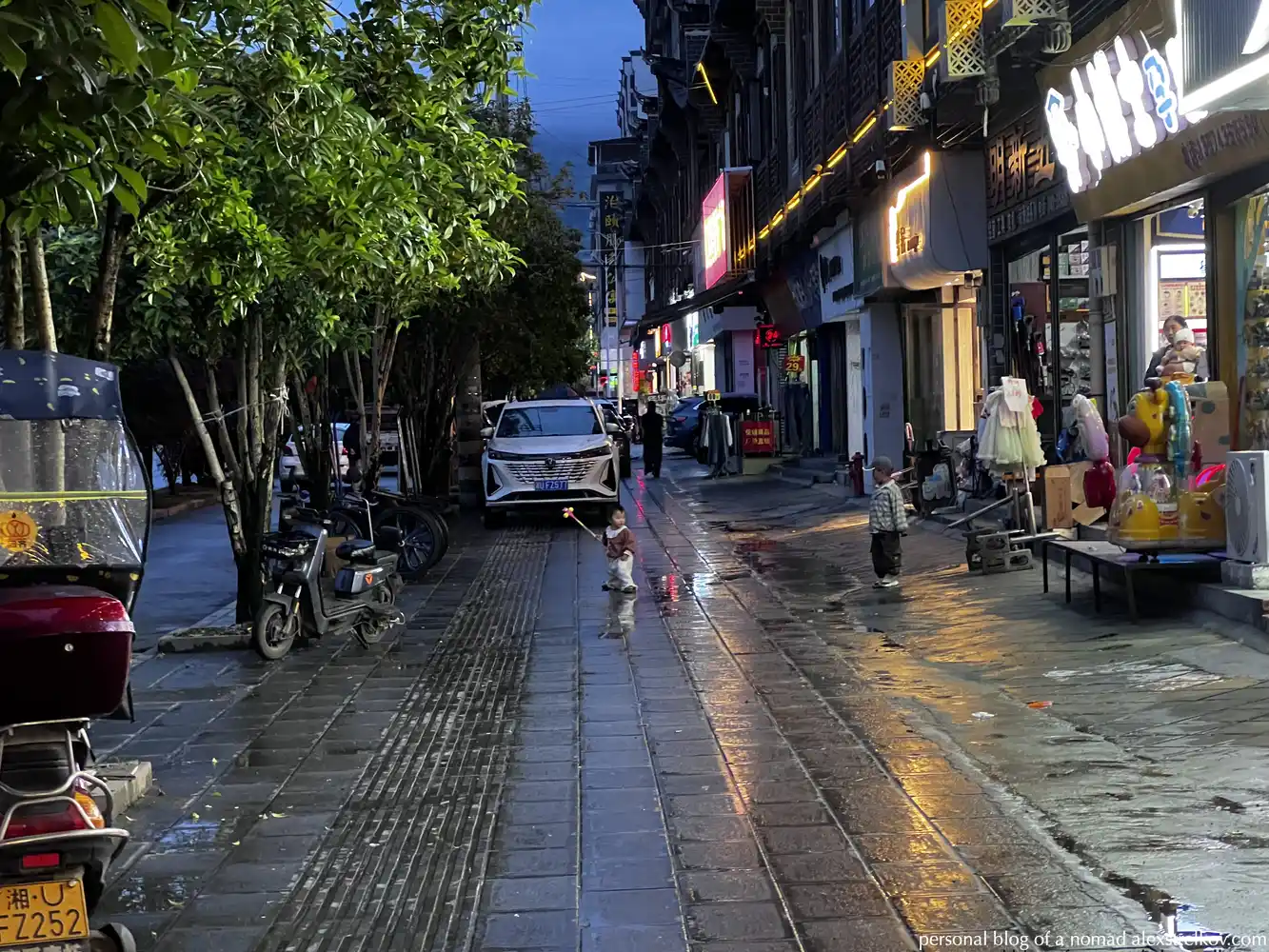
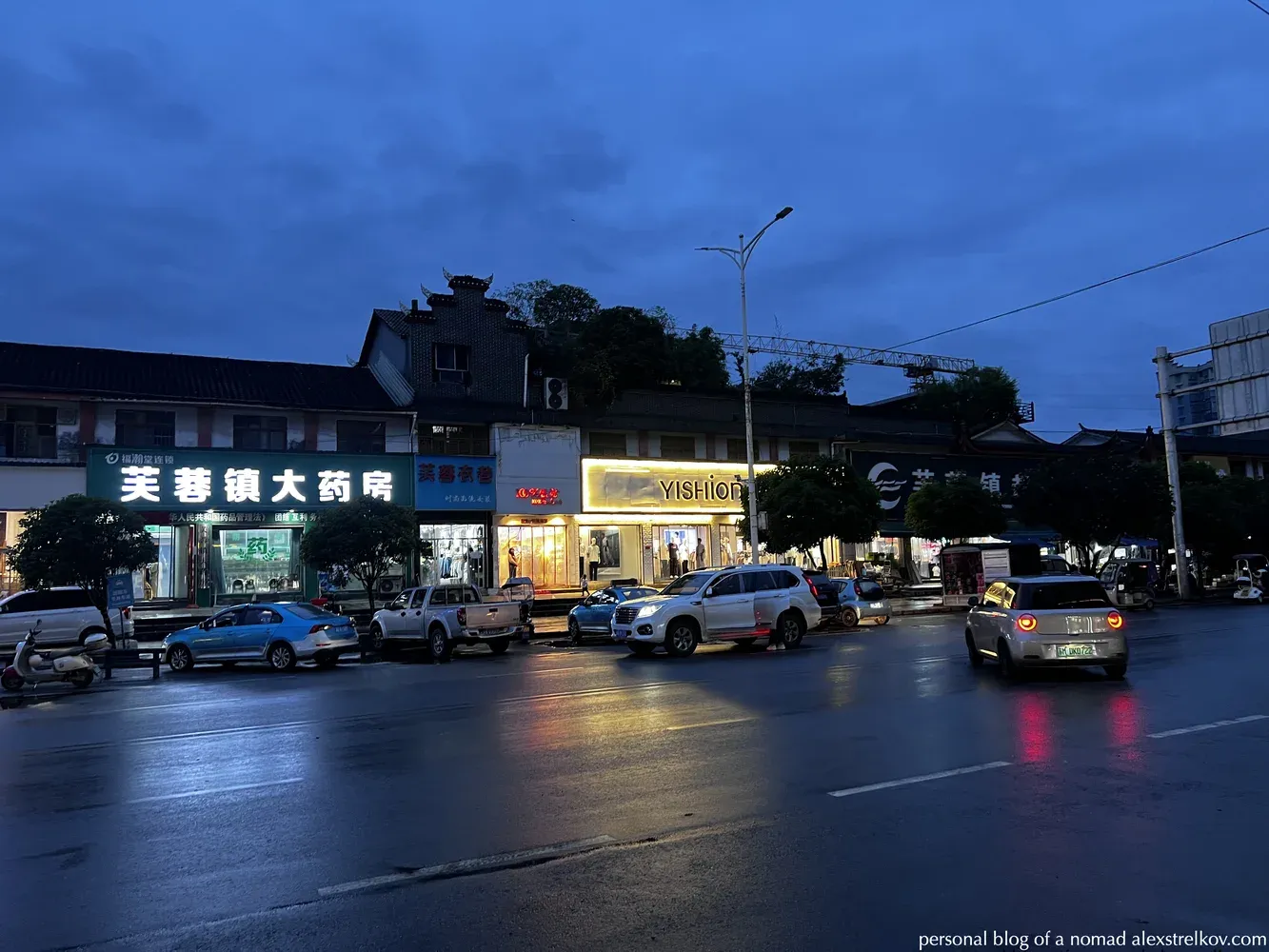
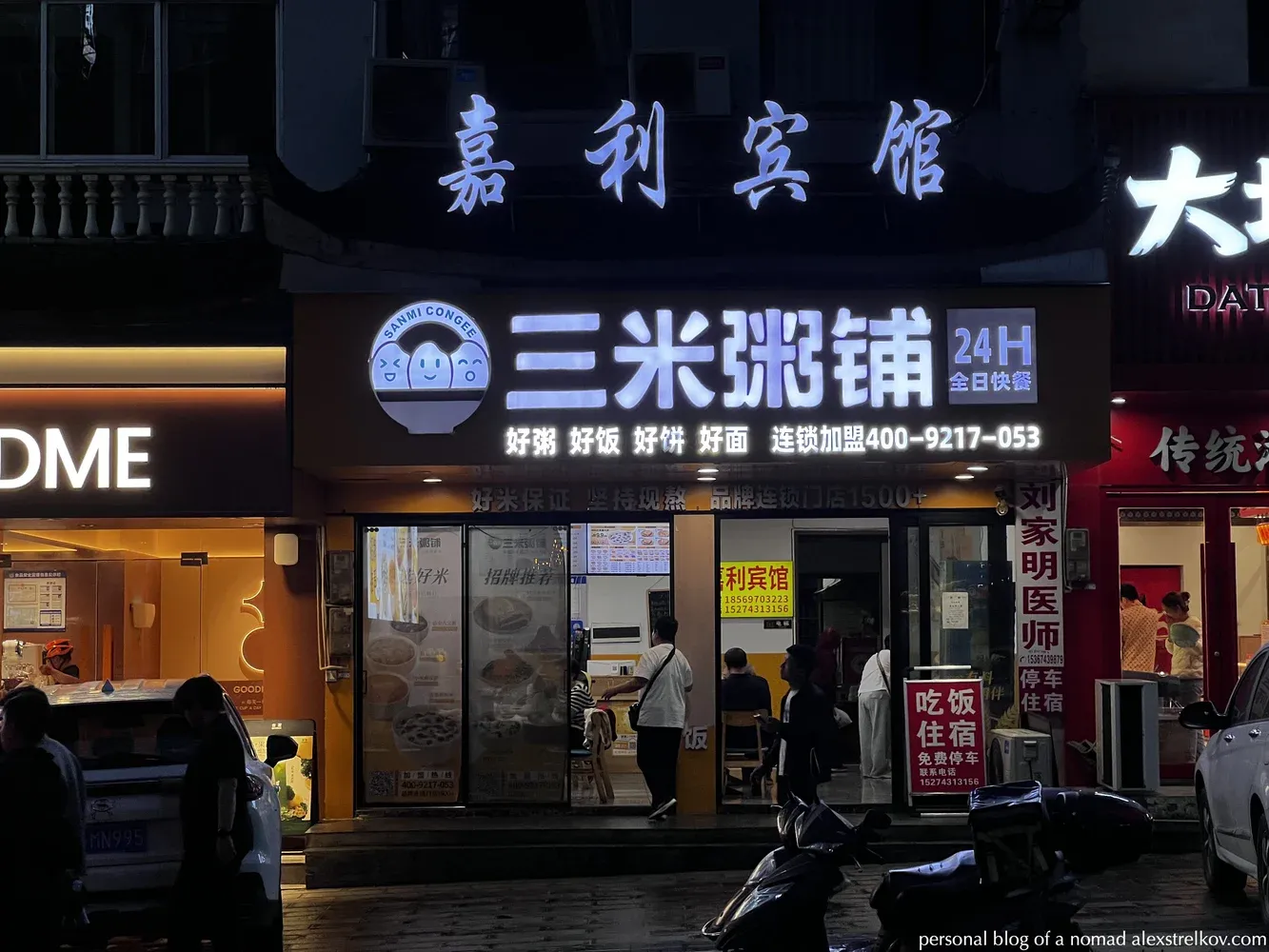
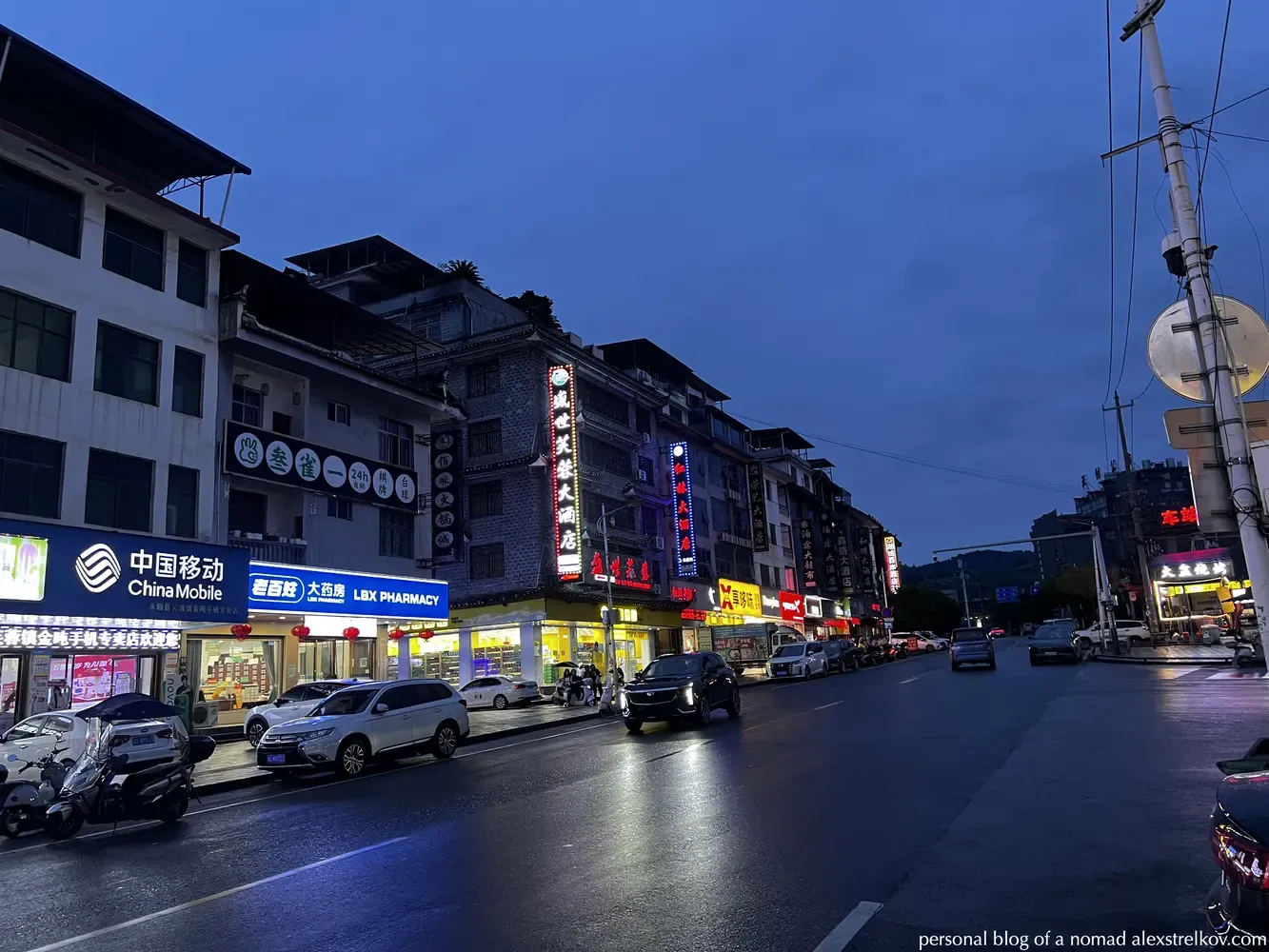
This isn't a place people come to for its own sake. Furongzhen is a small provincial town in the mountains of Hunan, roughly halfway between Zhangjiajie and Fenghuang. Its tourist fame belongs entirely to the ancient village with a waterfall further down the slope — but the town itself, where ordinary Chinese people live, sits higher up and runs by its own rules. Apartment blocks, wet asphalt, corner shops. No foreigners.
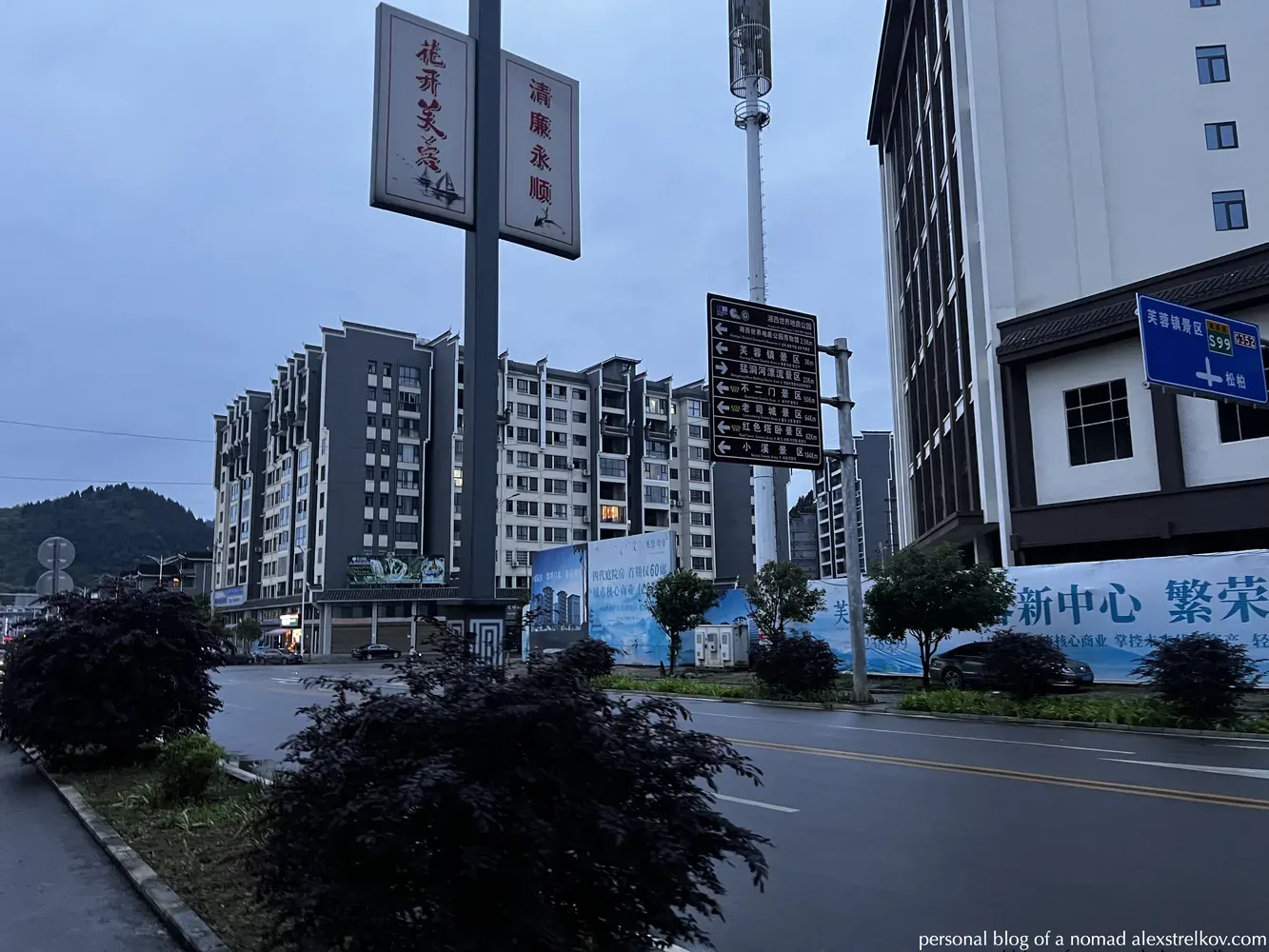
Two Places, One Name
Worth understanding before you arrive, so you don't end up confused the way I did.
Furong Town is a tourist destination in northwest Hunan, roughly halfway between Fenghuang and Zhangjiajie. But what most tourists actually mean by "Furong Town" is the ancient village — over 2,000 years old, wooden Tujia-style houses, and a waterfall that you literally walk through on a carved stone path. The railway station is about 5 km from the entrance to that tourist zone.
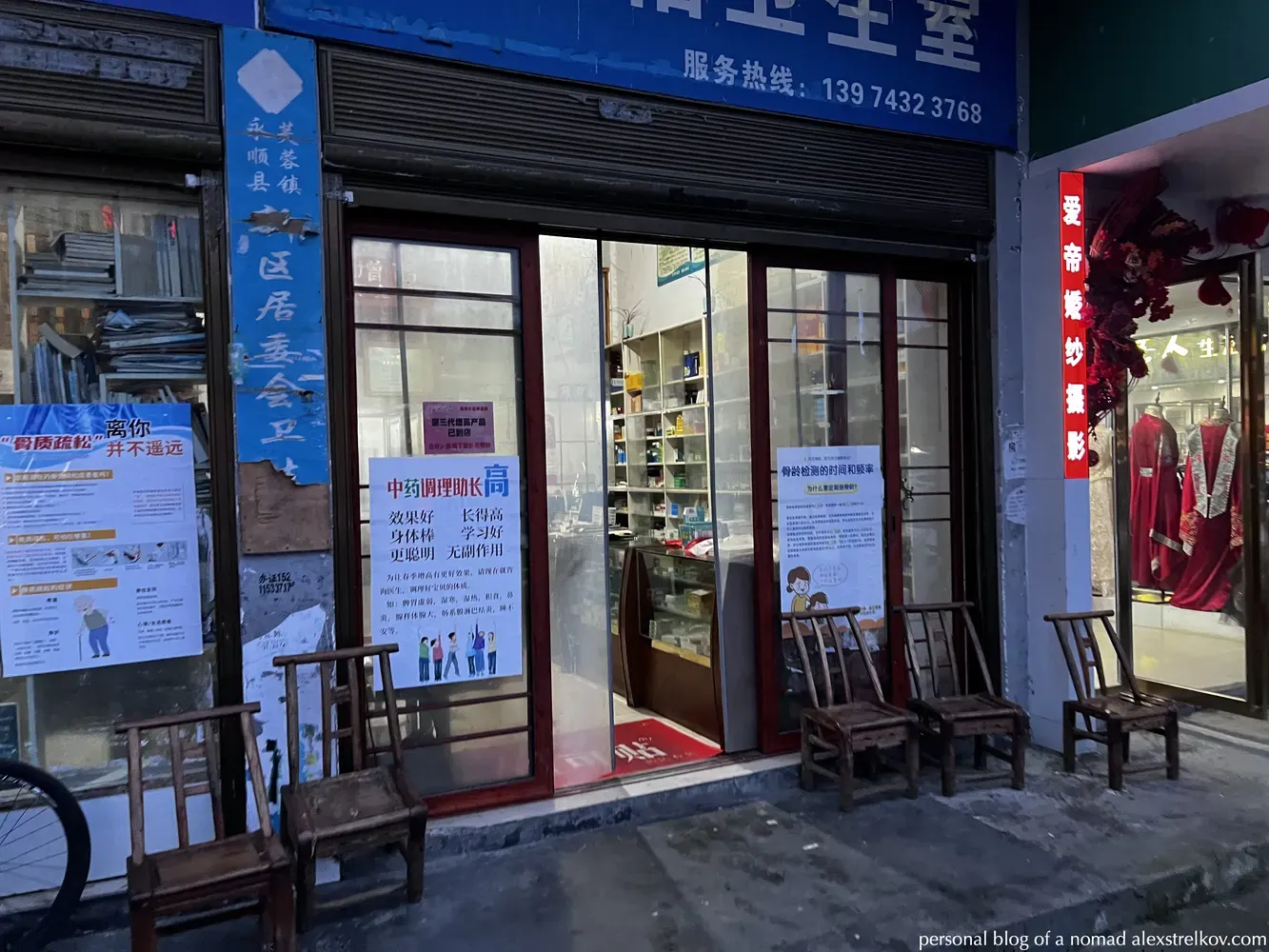
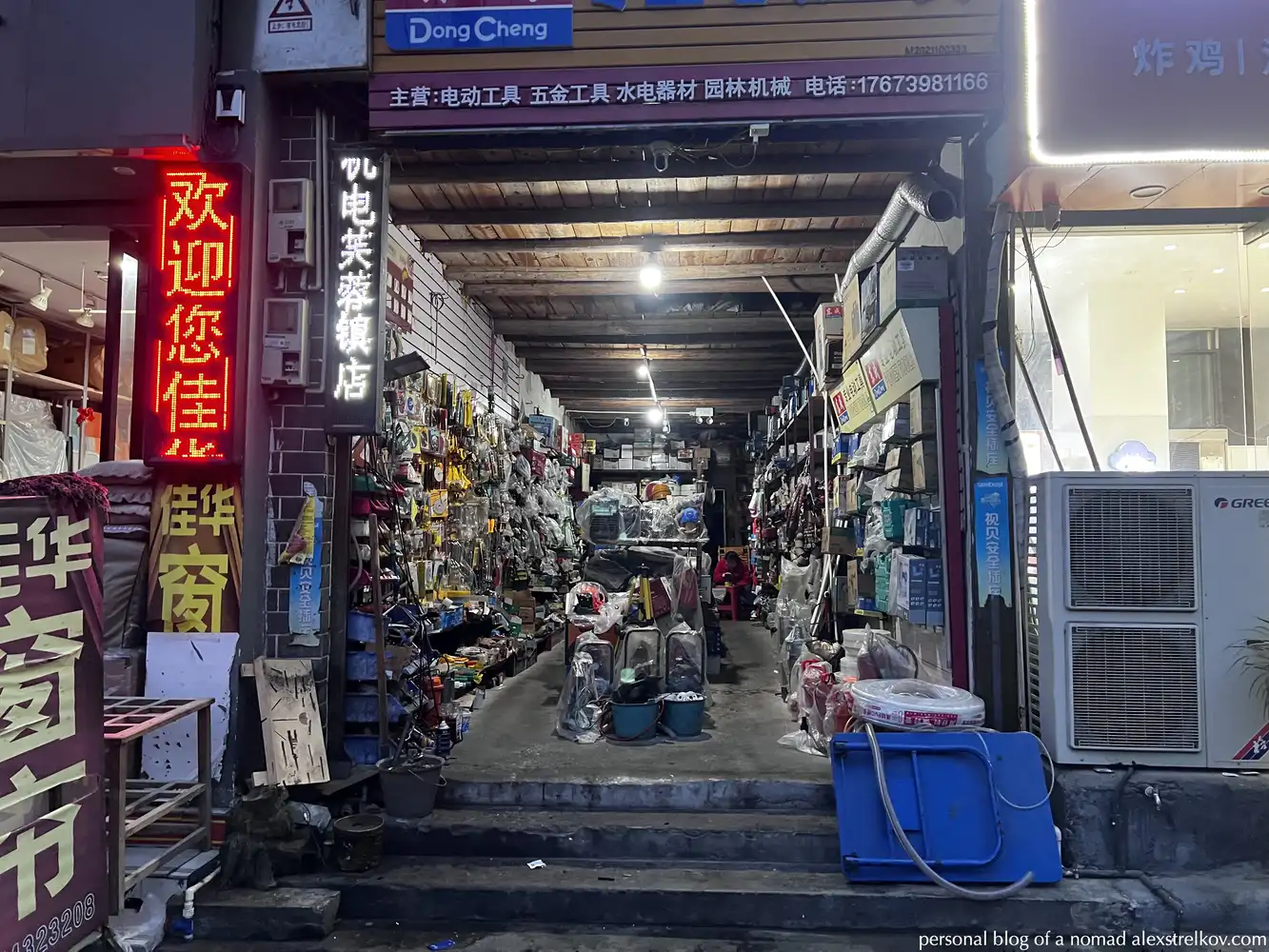
I was staying in between — in the ordinary residential part of town further up the hill. No turnstiles, no ticket booths. Pharmacies stocking traditional Chinese medicine instead of souvenirs. A massage parlor where they looked at me with genuine surprise: a foreigner? Here?
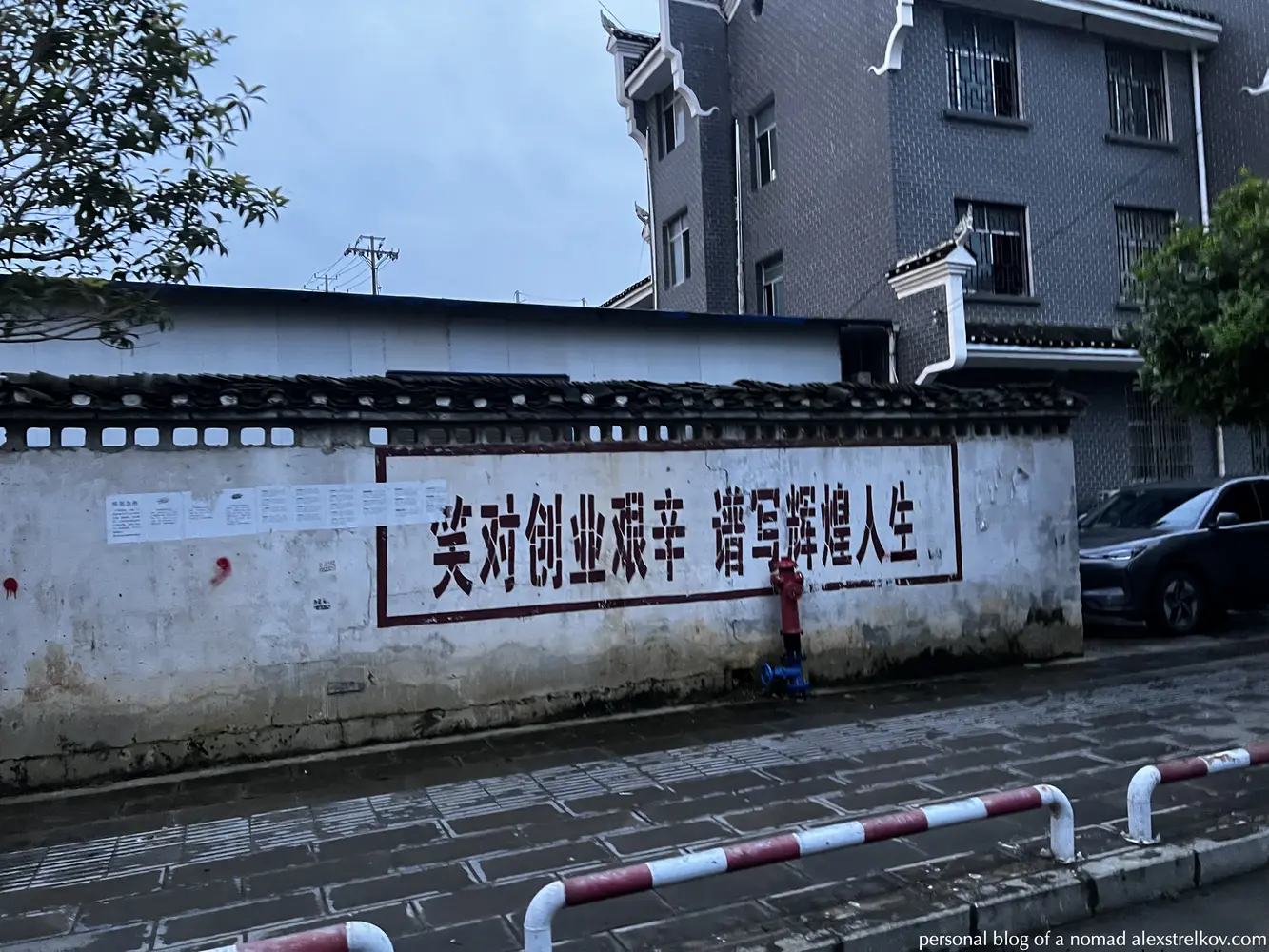
Getting There
I came from Fenghuang — high-speed train from Fenghuanggucheng Station (凤凰古城站) to Furongzhen Station (芙蓉镇站). The ride takes around 40 minutes and costs roughly €7. From Zhangjiajie, it's even faster — about 23 minutes on the bullet train from Zhangjiajie West Station.
One practical note on tickets: search for 芙蓉镇站 (Furongzhen Station) specifically — not "Furong Town," not "Ancient Town." Otherwise you might end up buying the wrong thing. I confirmed this the hard way.
If you're heading to China and haven't sorted internet access yet — get an eSIM before you cross the border. I use this one for mainland China, Hong Kong and Macau — from €0.95, 5G, activates straight to your phone.
What the Town Is Actually Like
Three days of rain and cloud cover. April is low season here, and it shows: hotels half-empty, cafés quiet, the tourist shuttles running without queues.
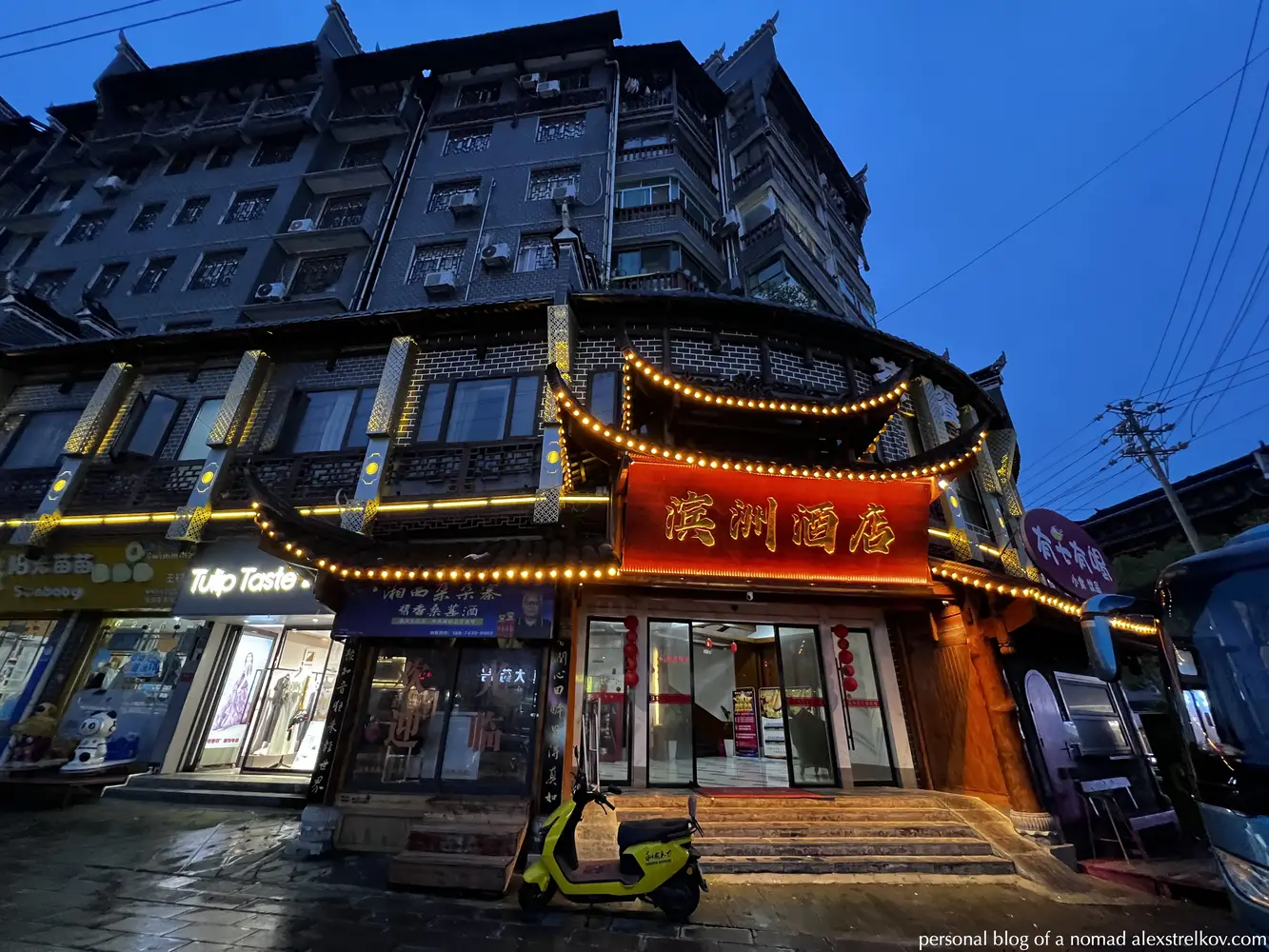
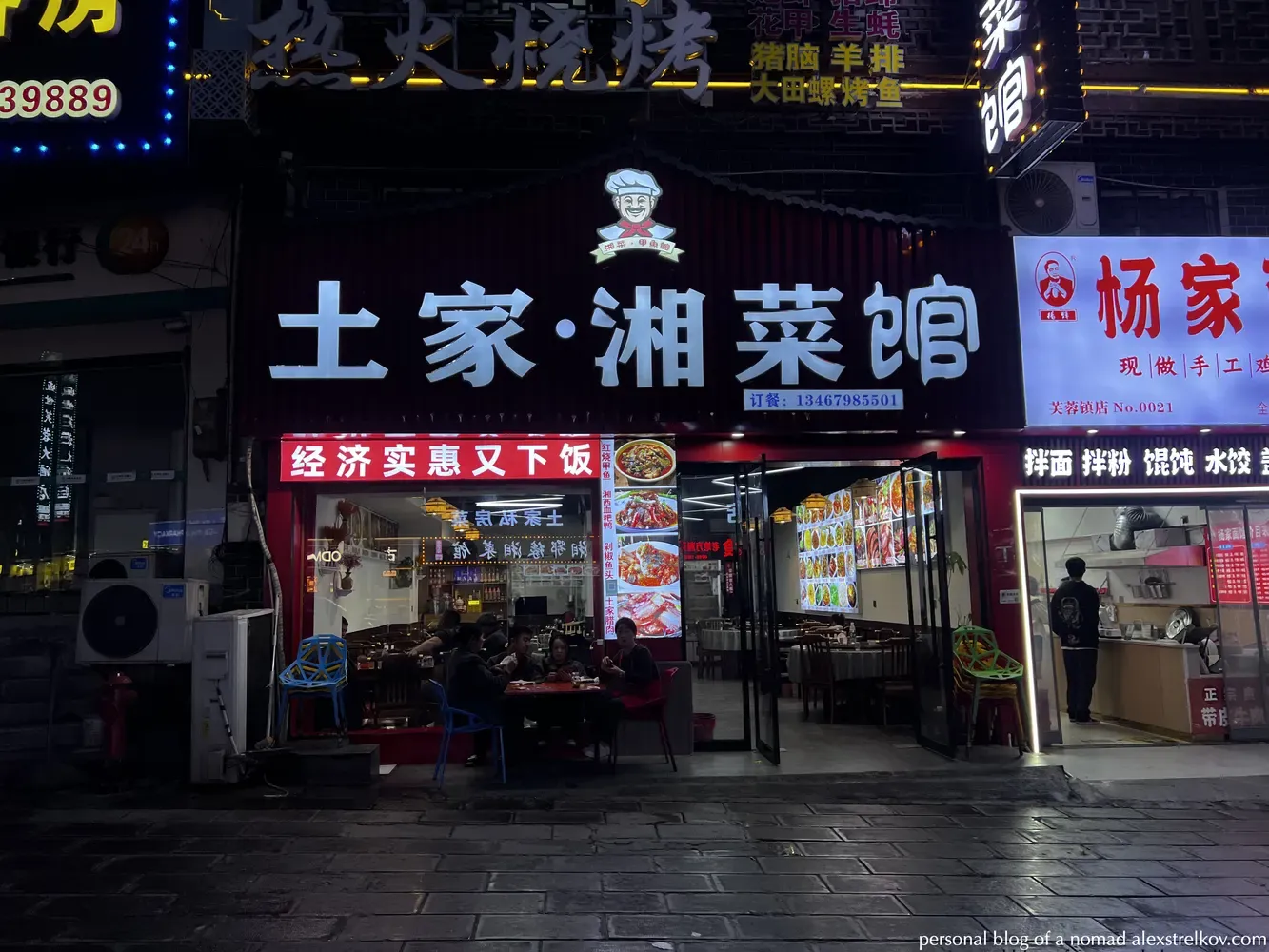
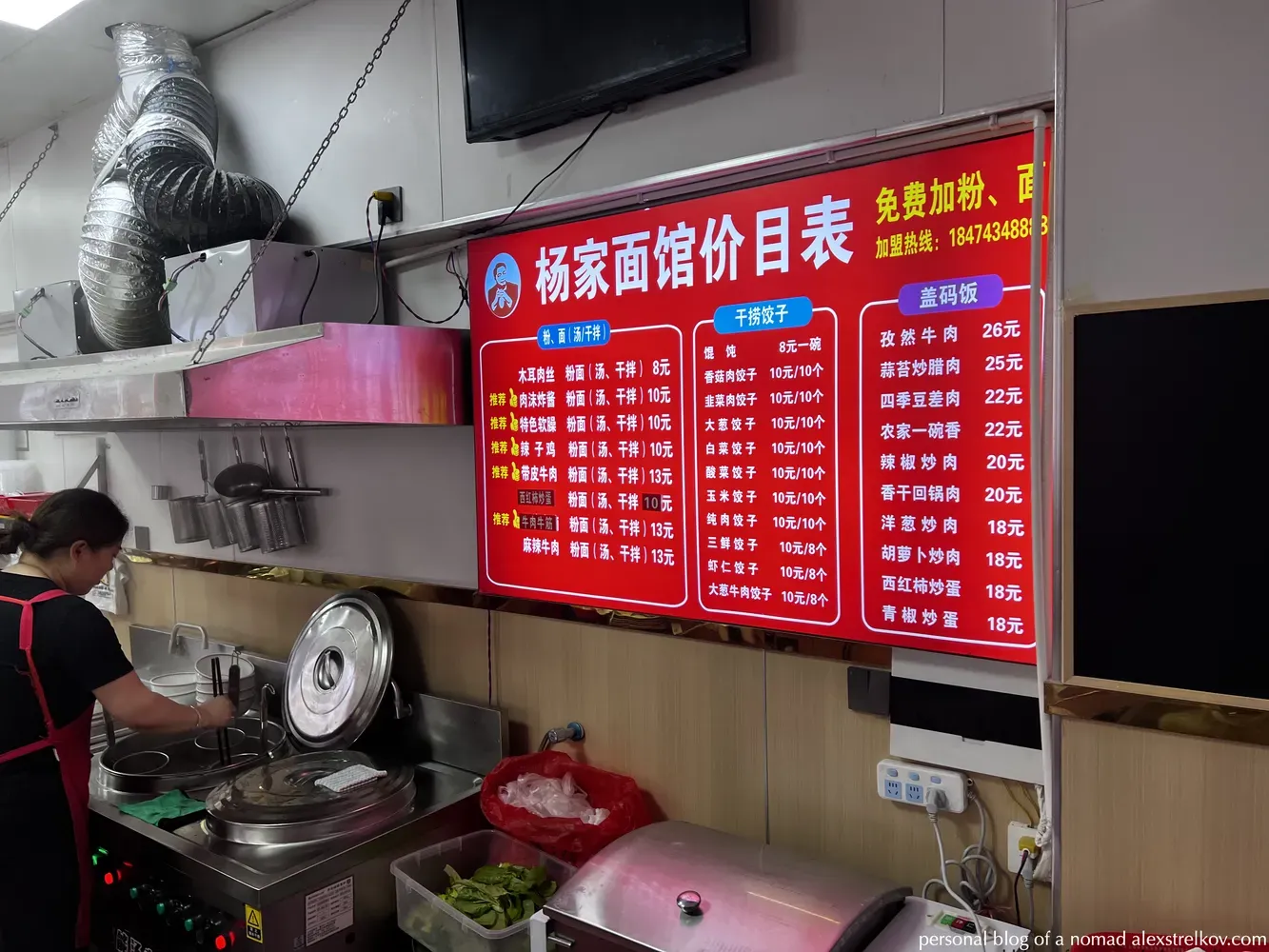
The town is small but functional — corner shops, local Chinese food joints, a handful of larger hotels. One of the most visible is Jin Jiang International Hotel (锦江国际酒店). I didn't stay there, but a full review is coming to the blog soon — watch for it.
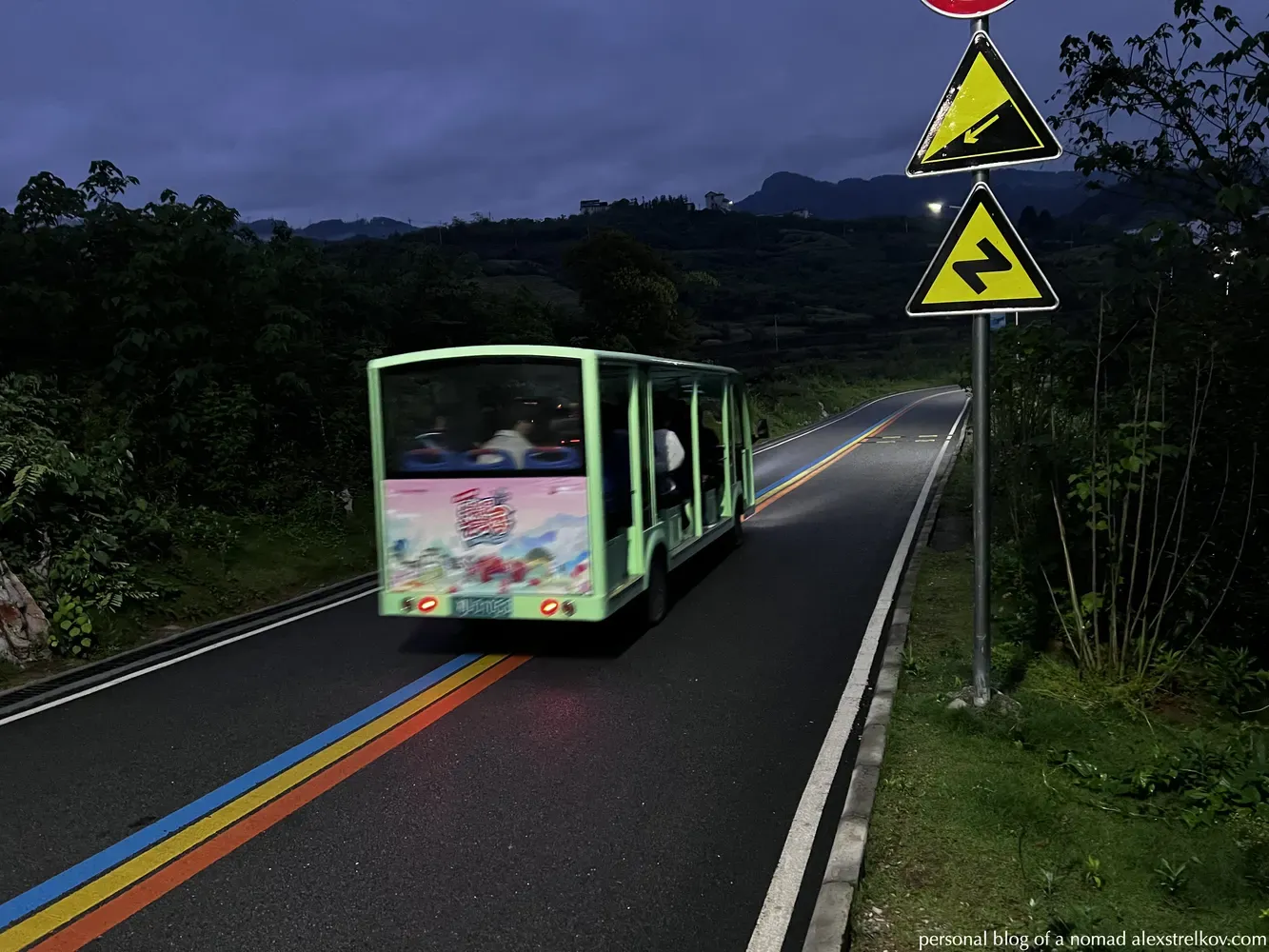
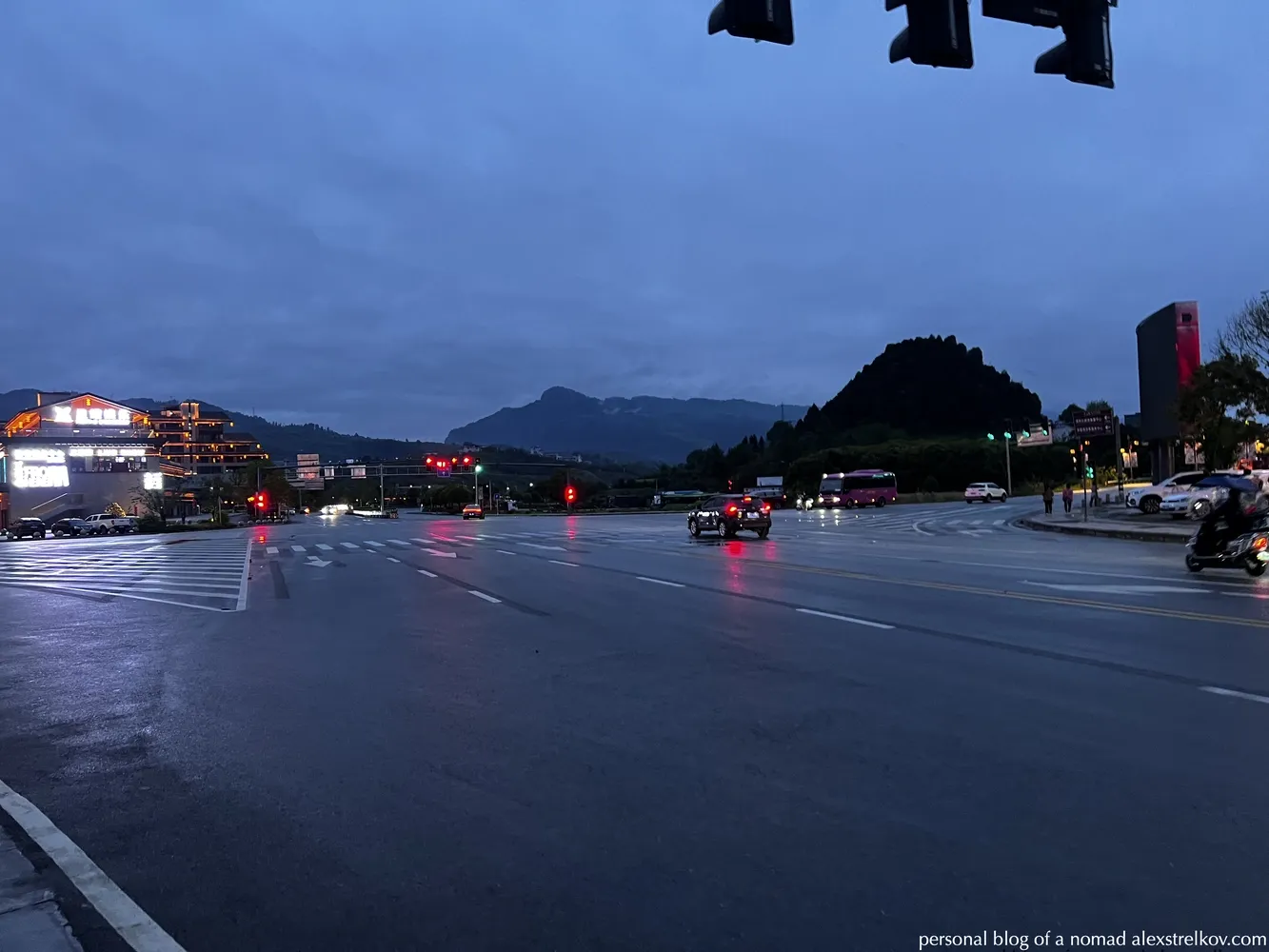
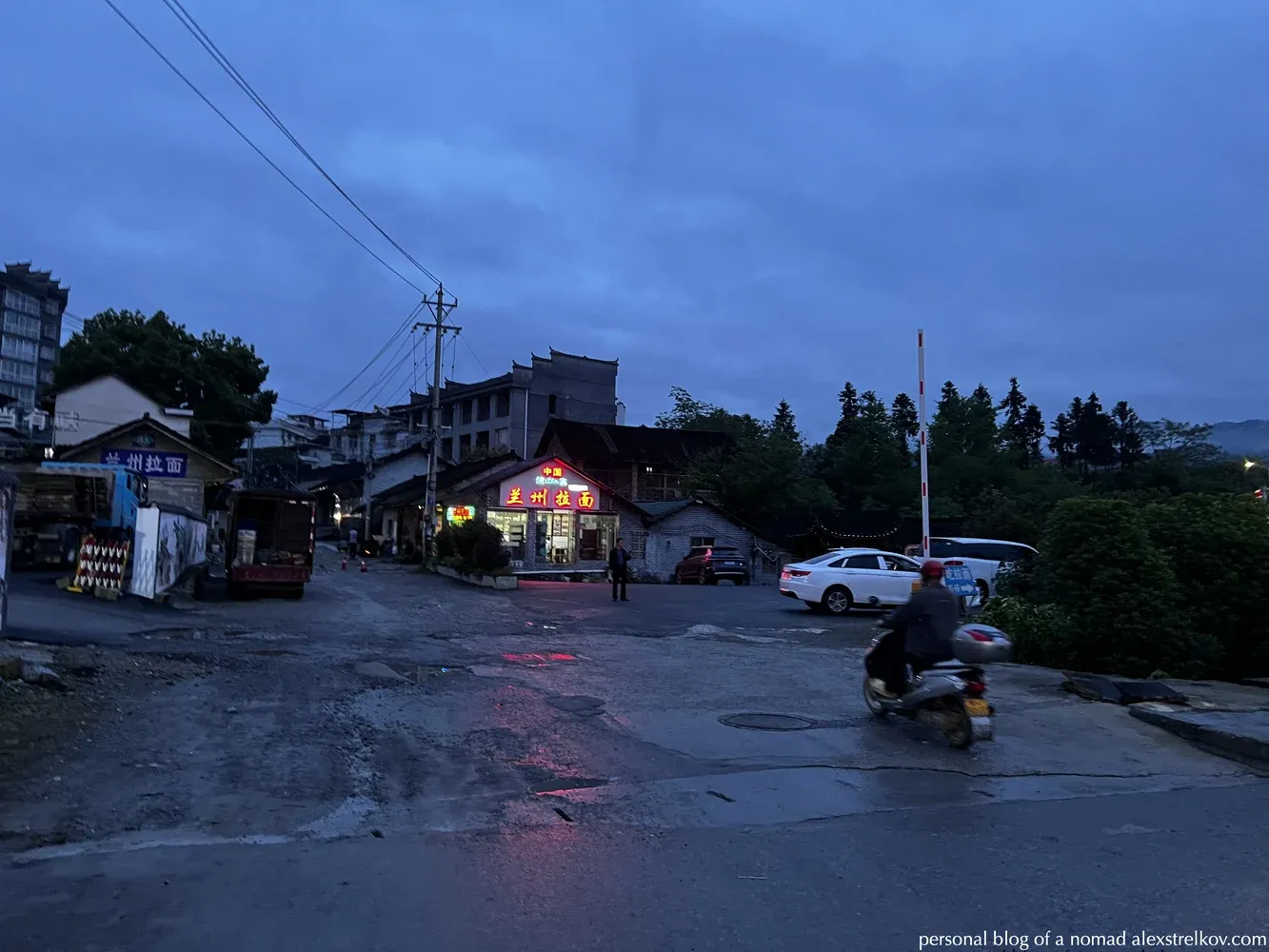
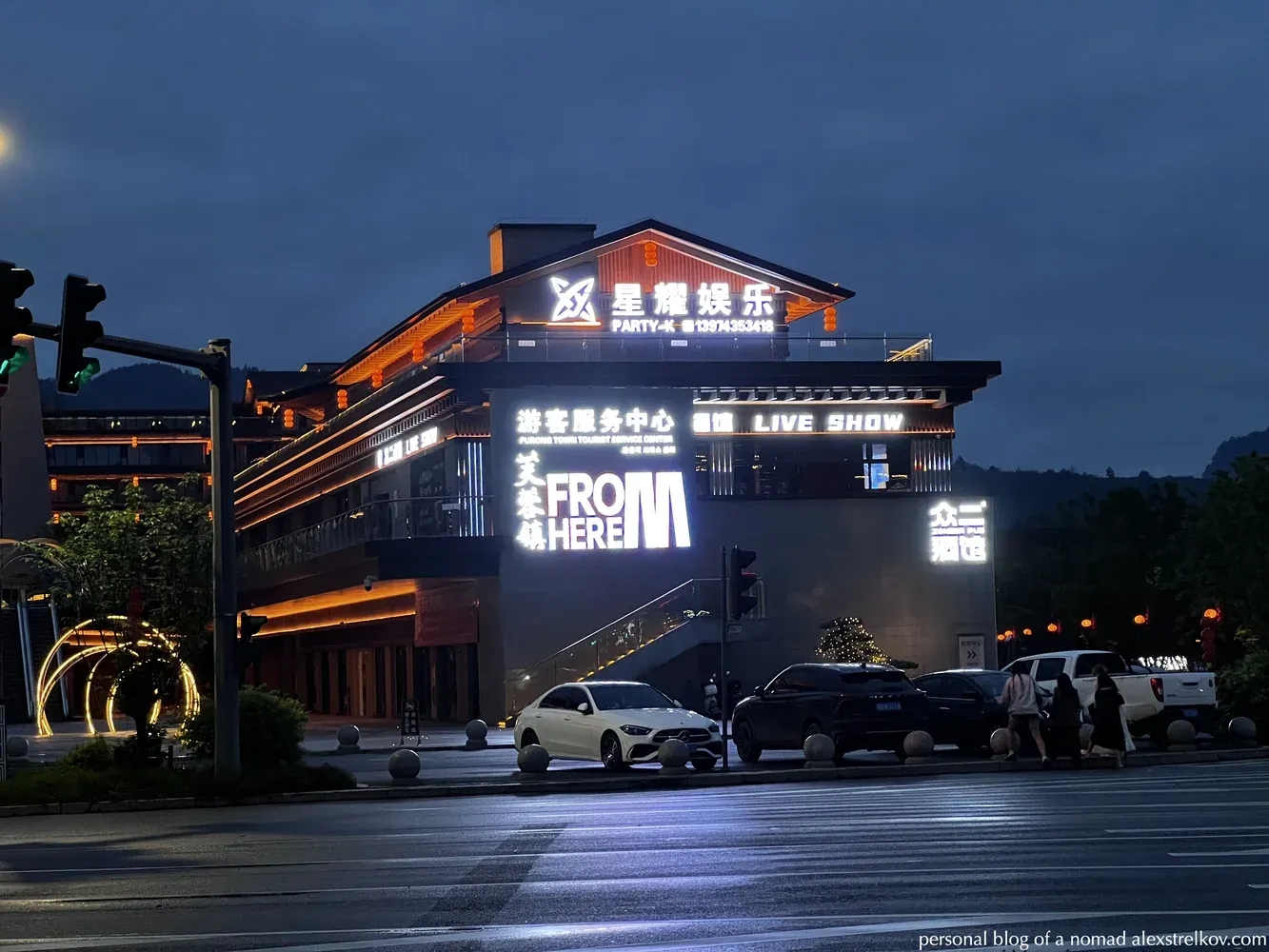
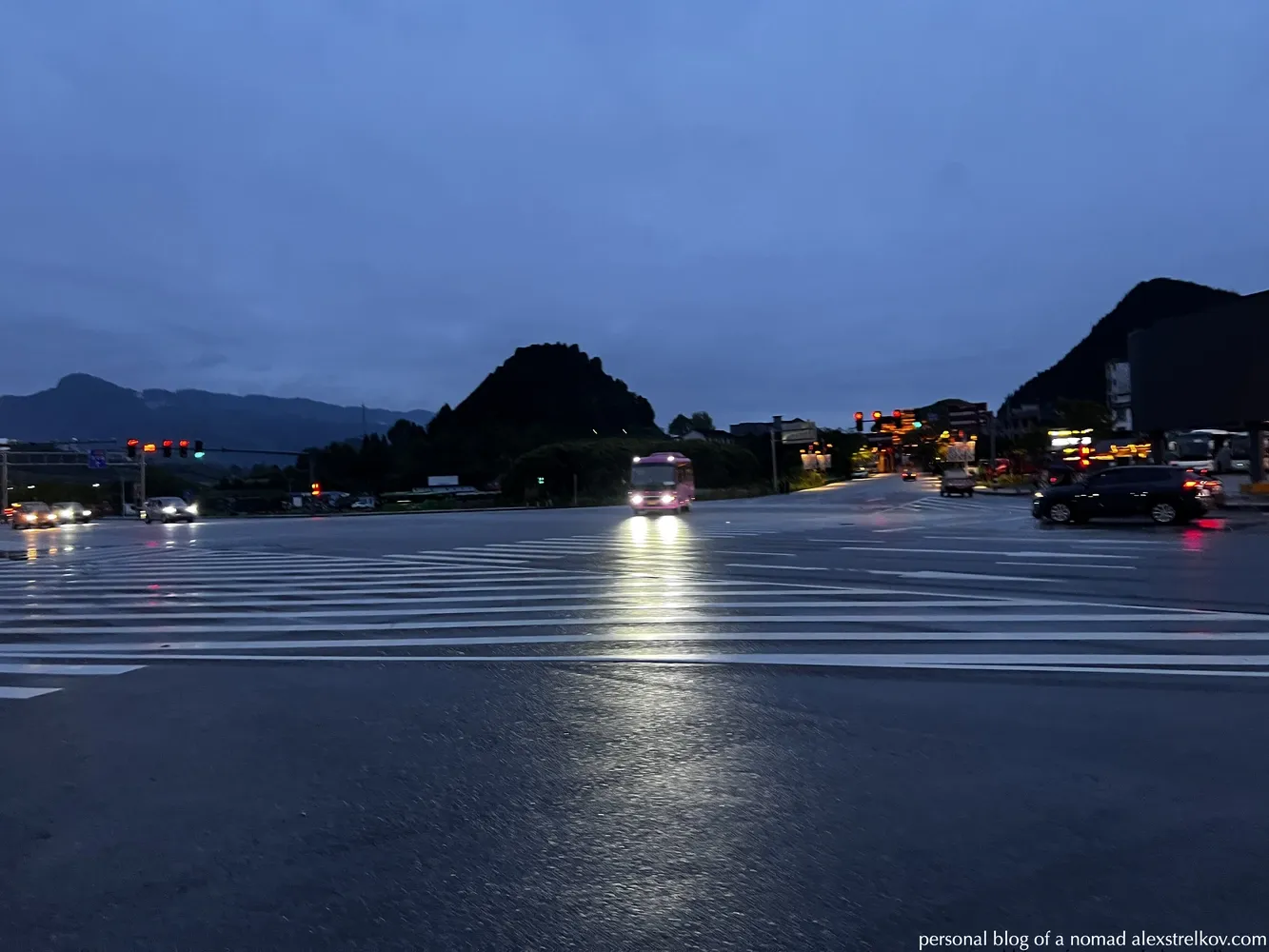
The best thing to do here is walk. Head downhill from the upper residential part of town toward the ancient village — that's where the landscape gradually shifts. Apartment blocks give way to wooden Tujia houses, asphalt turns to stone, and a completely different story begins.

Is It Worth Stopping?
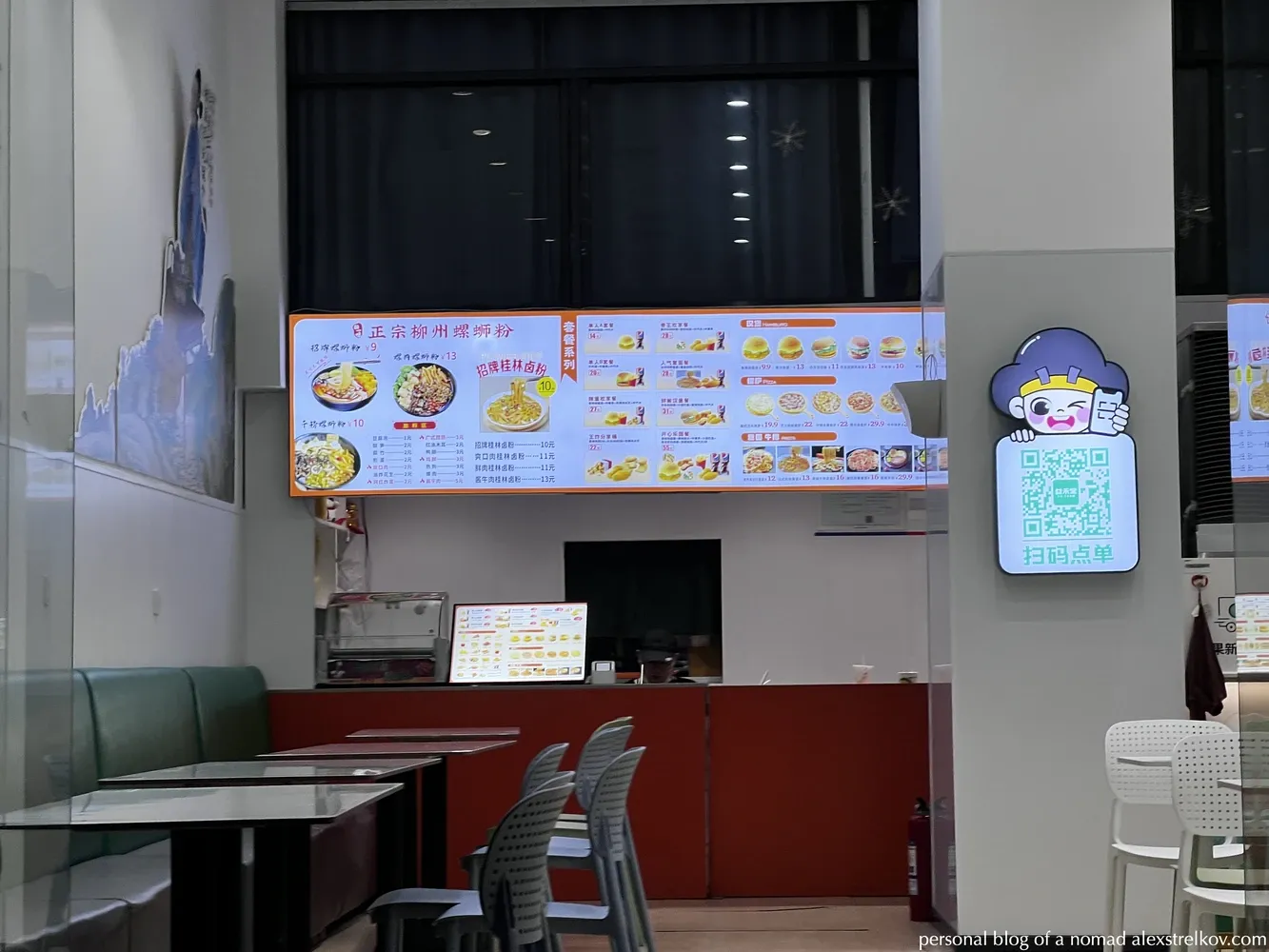
If you're traveling by motorbike or car — yes, easily. This part of town is more practical than the bottom near the waterfall, where everything is set up for organized tour groups. Real cafés, actual grocery shops, no tourist markup.
If you're moving between Zhangjiajie and Fenghuang — one night makes sense. The town itself won't hold you, and it's not trying to. It's simply a place from which walking downhill is interesting.
Tourist buses from across the region drop Chinese visitors here by the dozen — straight down to the village. In three days, I didn't see a single other European.
I saved the map of exactly where I was staying — up here between the station and the tourist village, in the part that guidebooks don't usually mention.
The ancient village with the waterfall is a different story entirely. That article is coming next.