Lao Cai, Vietnam: The Transit City That Deserves a Day
Most travelers pass through Lao Cai without stopping. That's a mistake. A personal look at this border city between Vietnam and China — its streets, food, people, and 200 PM2.5 air.
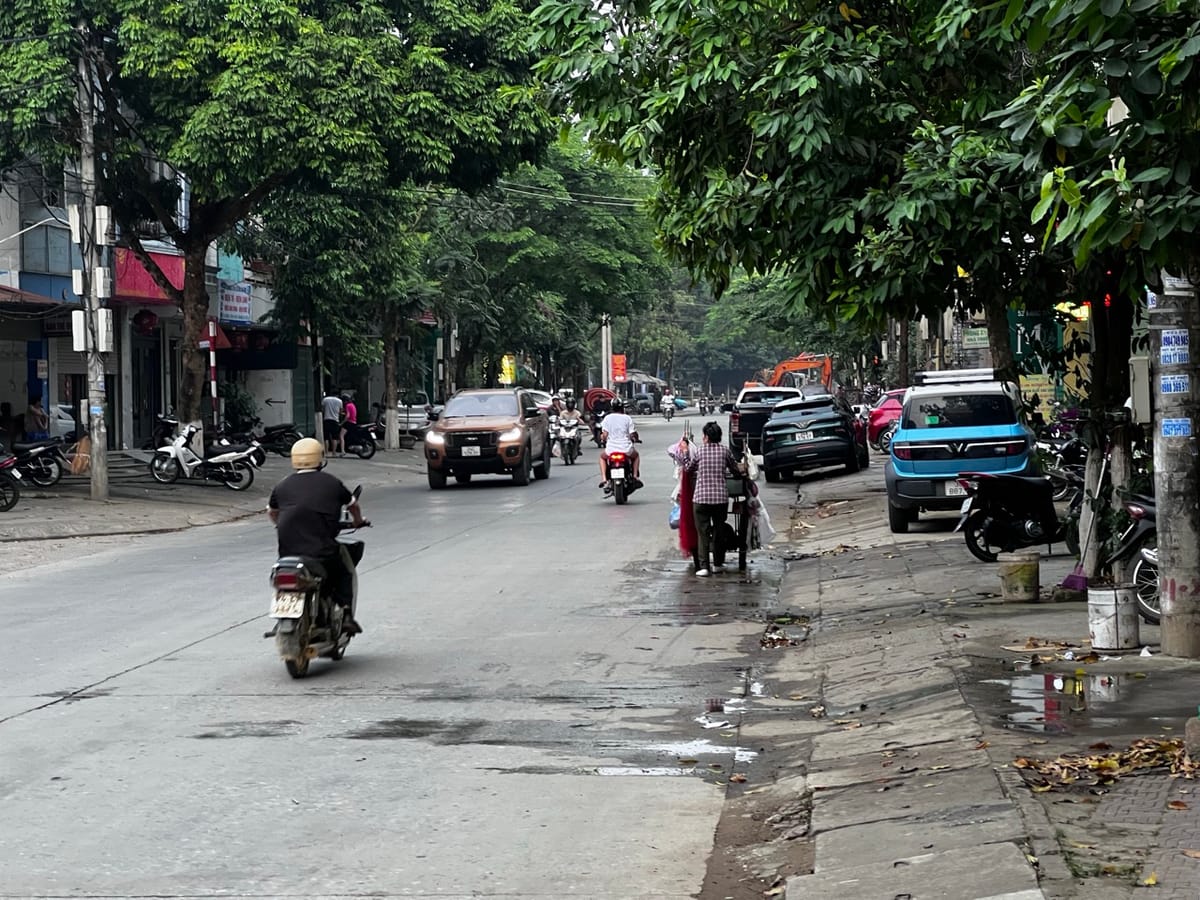
Most travelers blow through Lao Cai without a second thought. The trains to Sapa leave from here. The border crossing into China is here. It's a logistics node, a dot on the map you pass through, not stop at.
I thought the same — until I walked out the door.
It was mid-April. The sky was white, not from clouds but from haze. PM2.5 levels here at this time of year run between 100 and 200 — farmers in the surrounding provinces burn their agricultural fields after harvest, and the smoke settles into the valleys. If you have asthma or sensitive lungs, factor that in. For everyone else, it's just the familiar Asian air: coal, frying oil, diesel, and somewhere underneath it all, mountains.
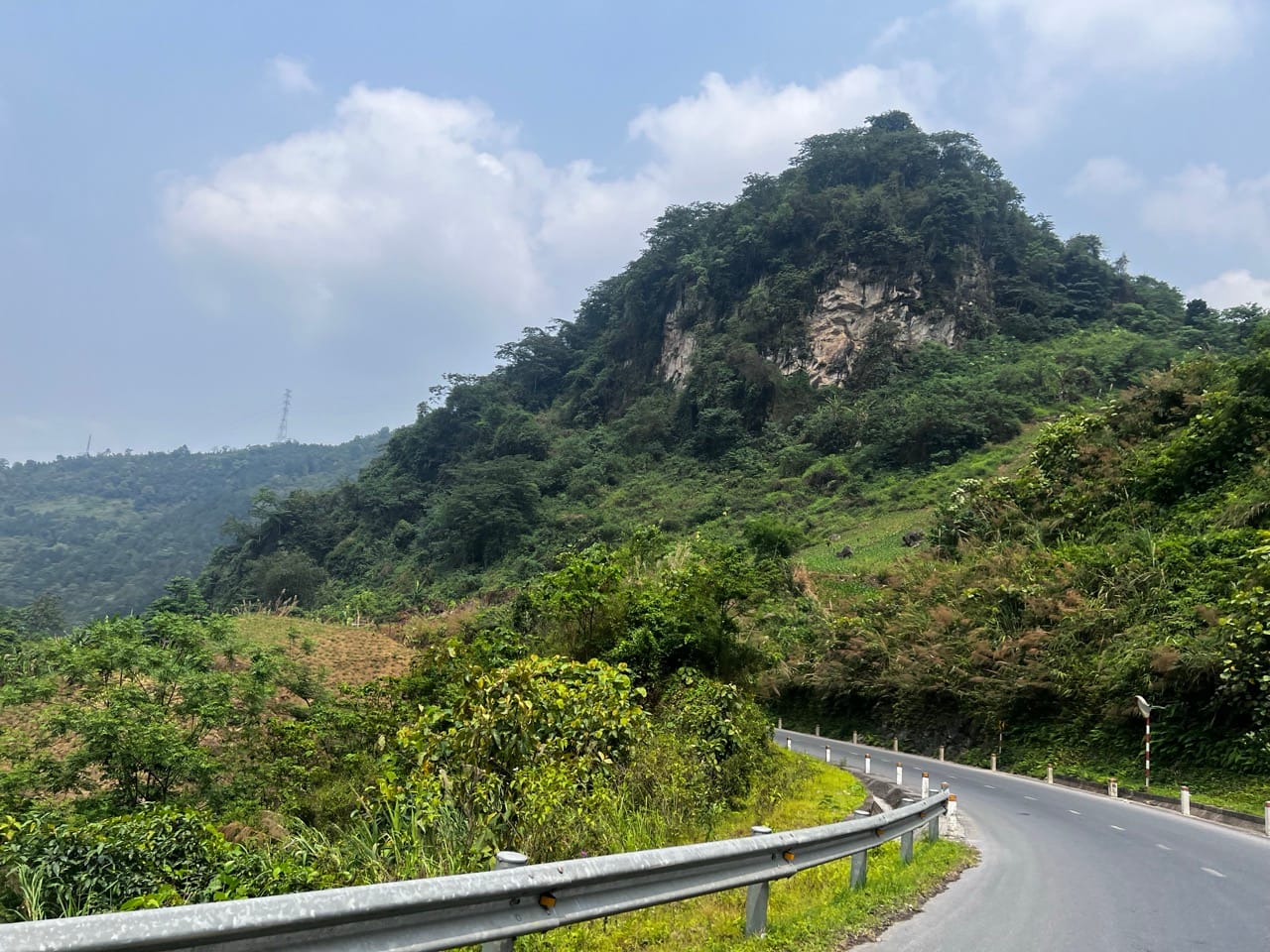
Two Countries, One Street
Lao Cai sits right on the Chinese border, and you feel it — not in the architecture, which is typically Vietnamese: narrow tube houses, faded paint, open shopfronts. You feel it in the logic of the place. How streets are organized. Where priorities are set.
Outside the police station, there's a red sign with a citizen complaint box and a message about helping people in need. Communist aesthetics here aren't decorative — they're operational. This is a working border city between two communist states, and that shapes everything from how the public space is designed to how the locals carry themselves.
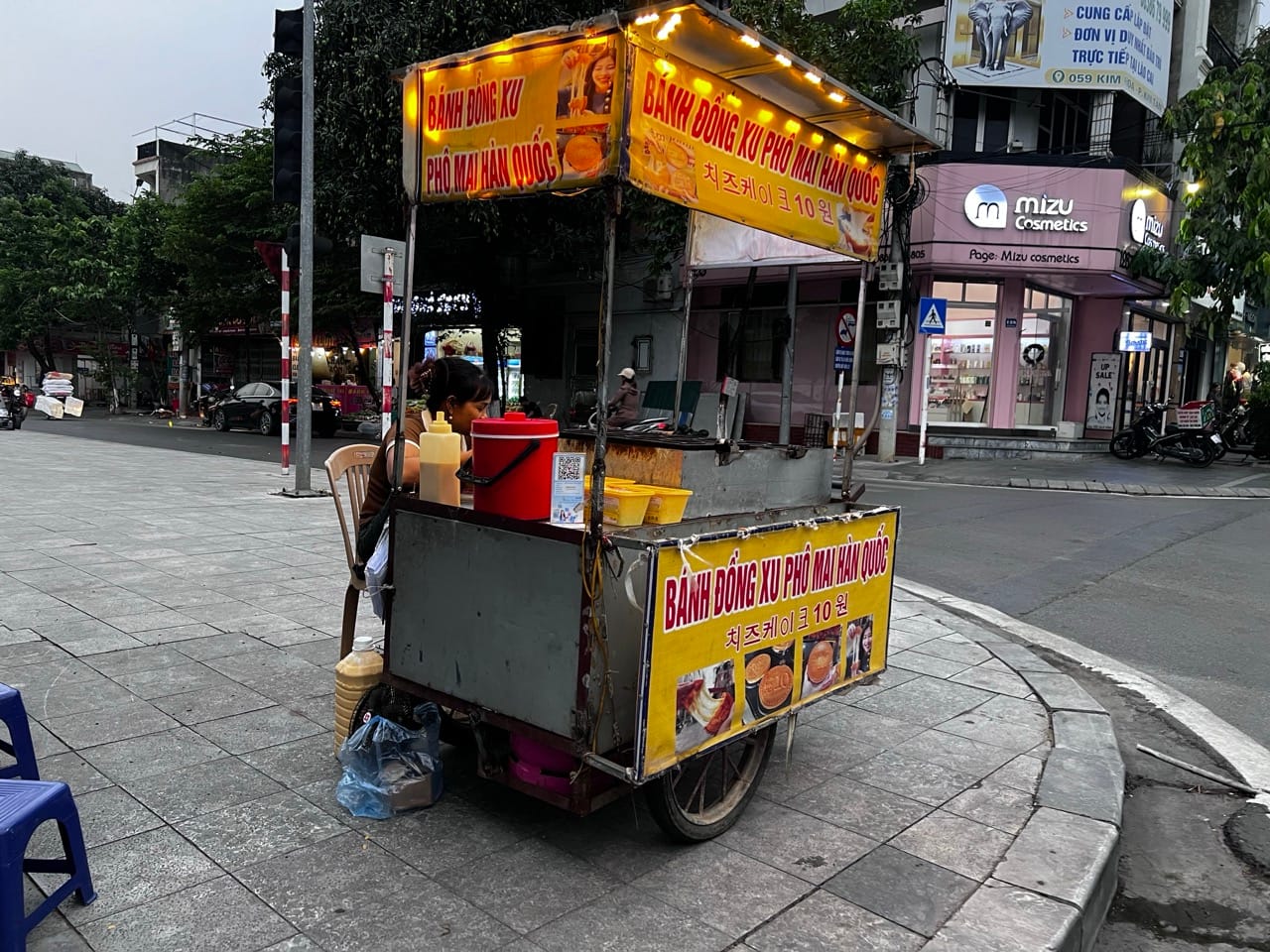
Walk a few blocks and you'll find a street cart with Vietnamese bánh next to a stall with Korean lettering selling bánh đồng xu phô mai Hàn Quốc — Korean-style coin-shaped rice cakes with cheese. Korean pop culture has reached the northernmost city in the country.
A City Building Itself
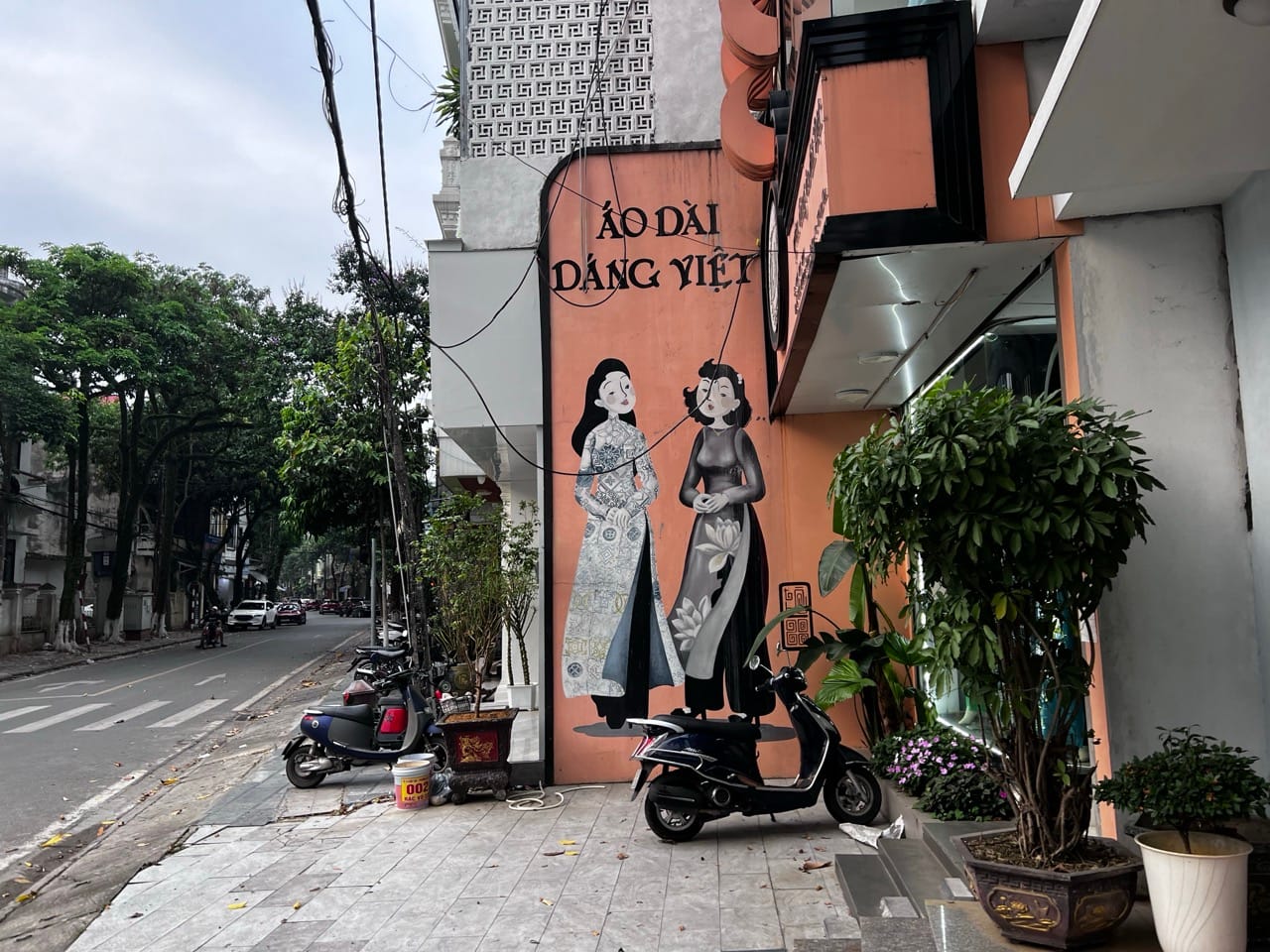
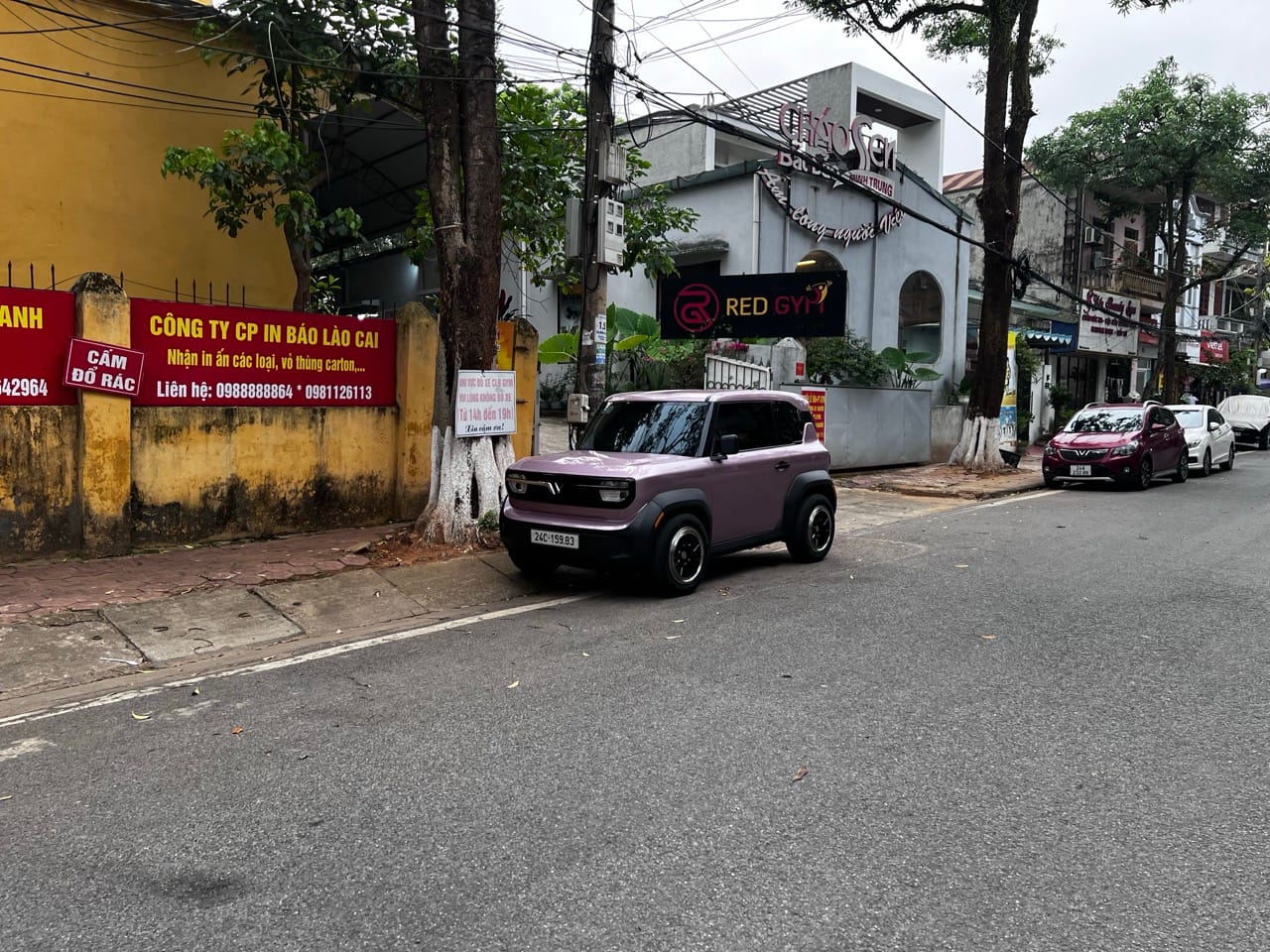
Lao Cai is clearly spending money on itself. On several streets simultaneously, workers are repaving sidewalks, relaying pipes, running cables. Excavators operate next to fruit sellers and repair shops with a casualness that suggests this is simply the permanent state of the city: always mid-construction, always functioning.
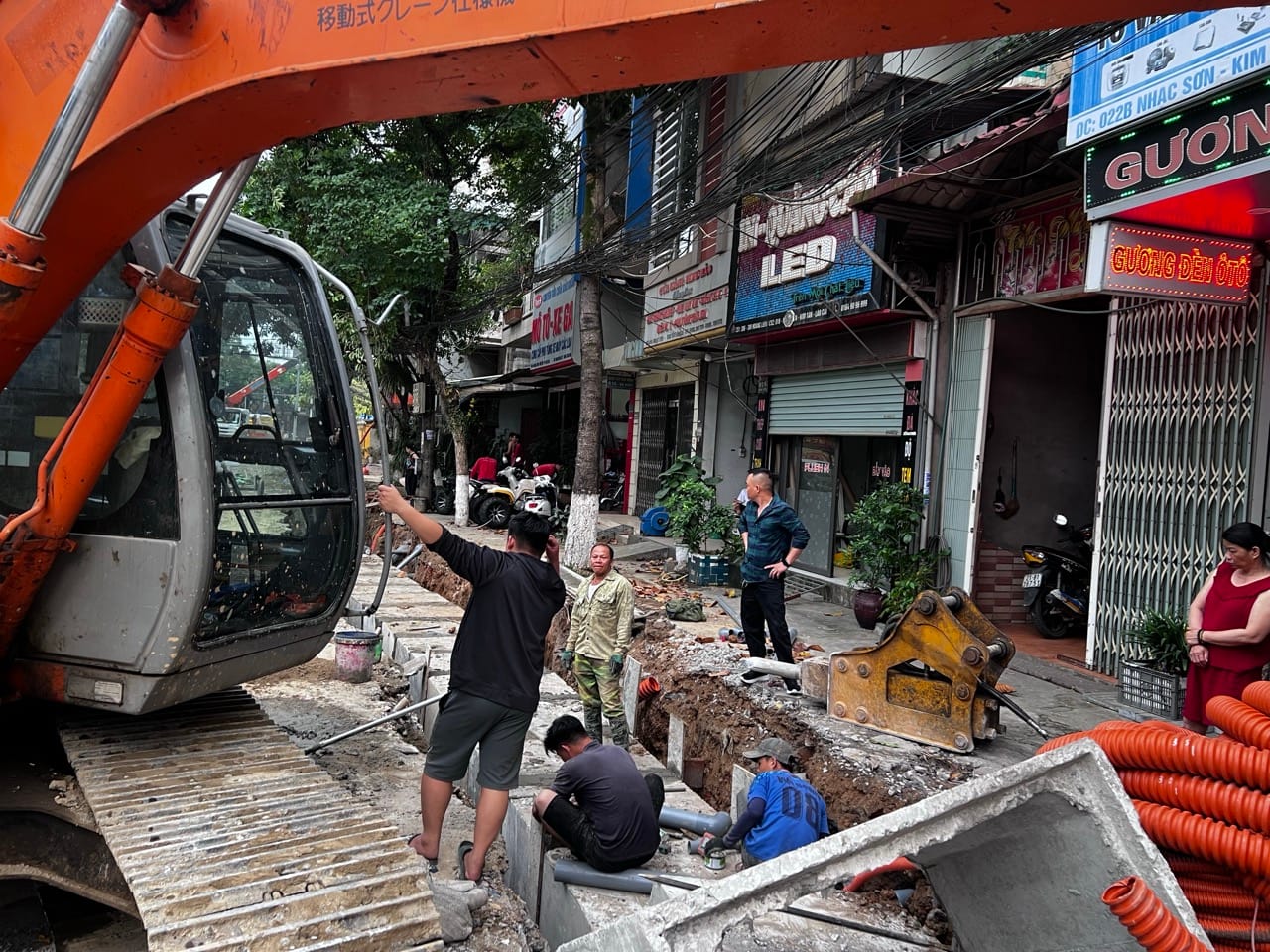
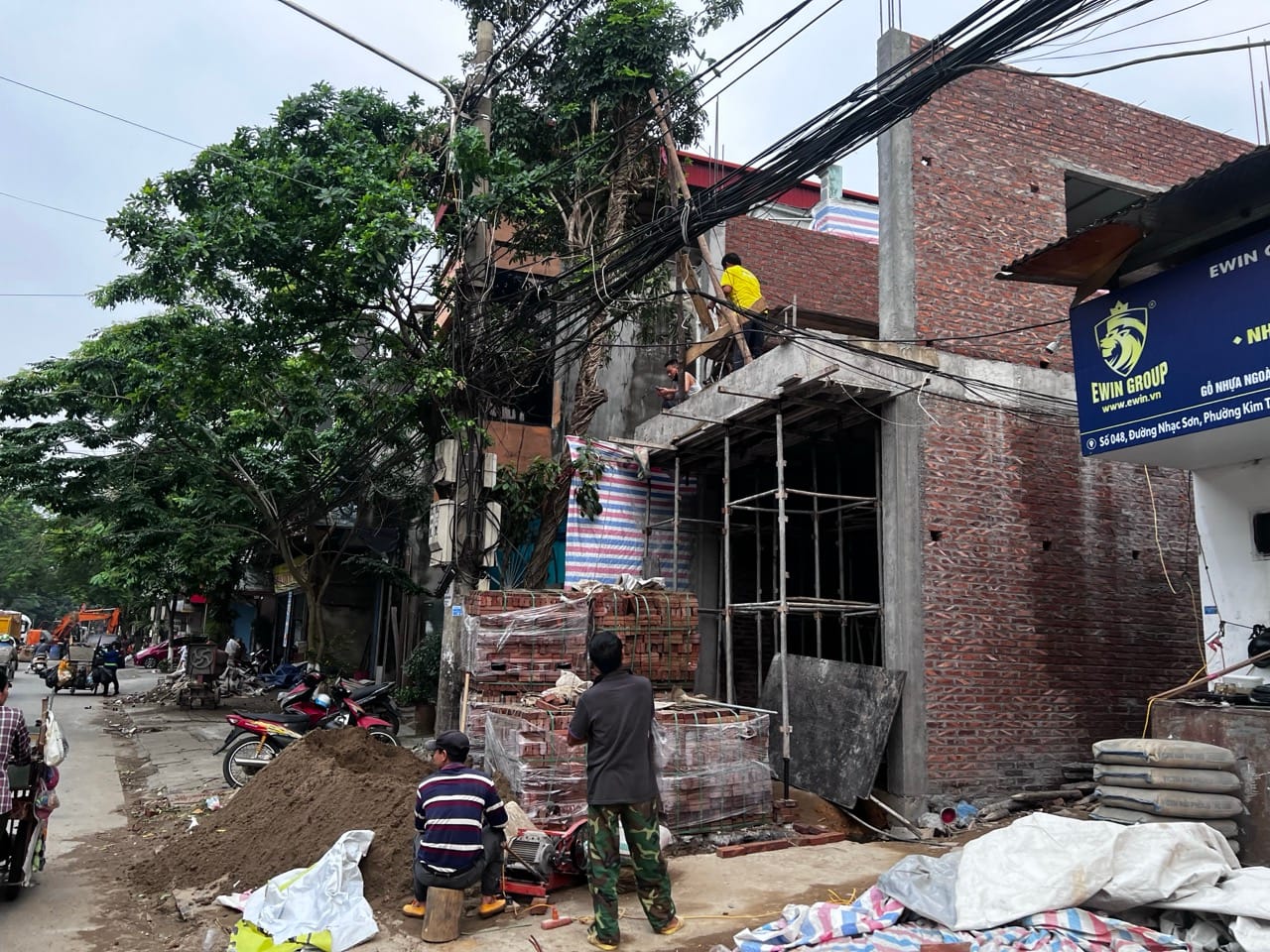
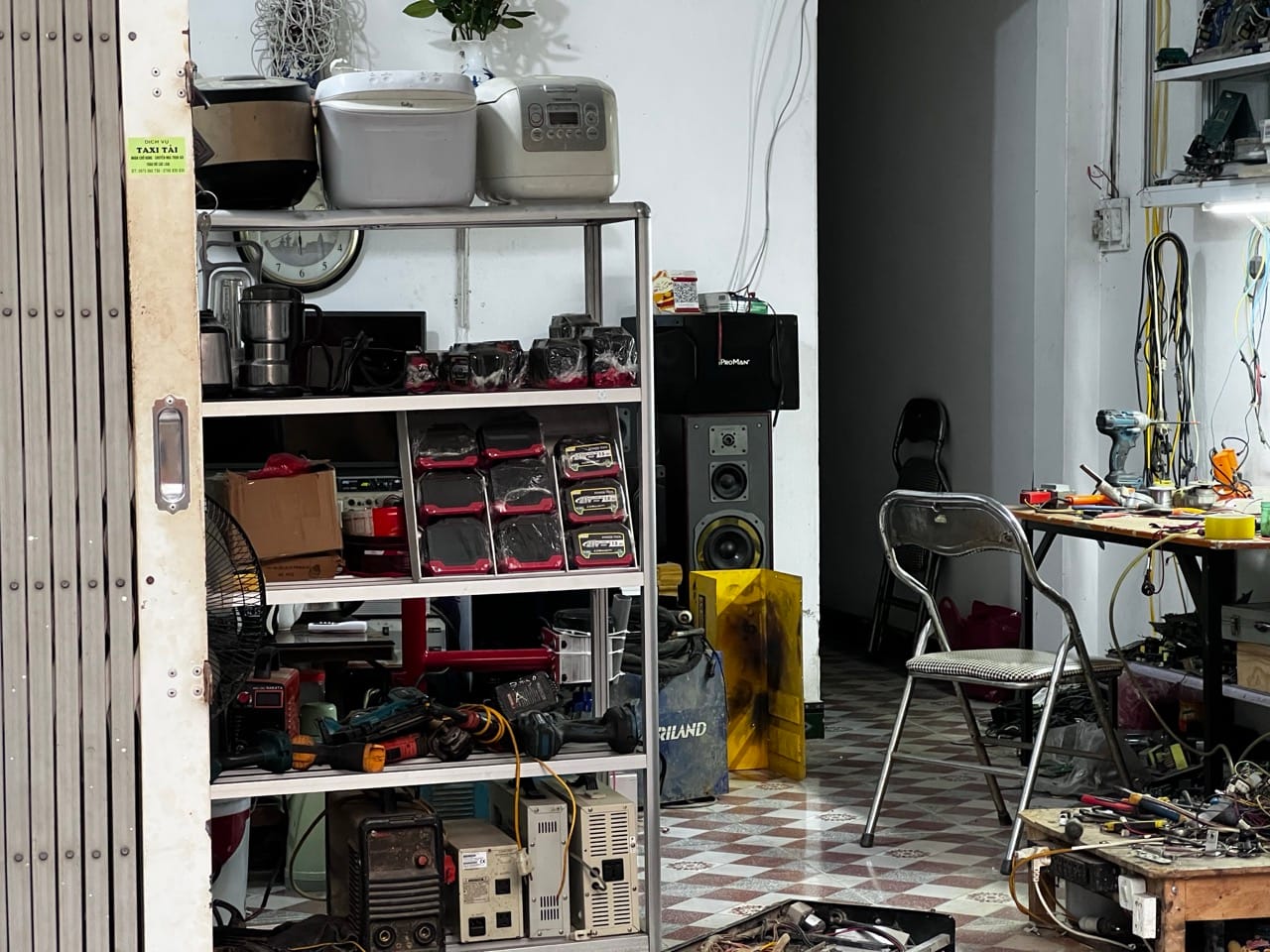
Along the sidewalks: repair workshops. Rice cookers and angle grinders on the same shelf. A welding machine next to a Bluetooth speaker. Nobody throws things away here — they fix them.
The Street Is the Restaurant
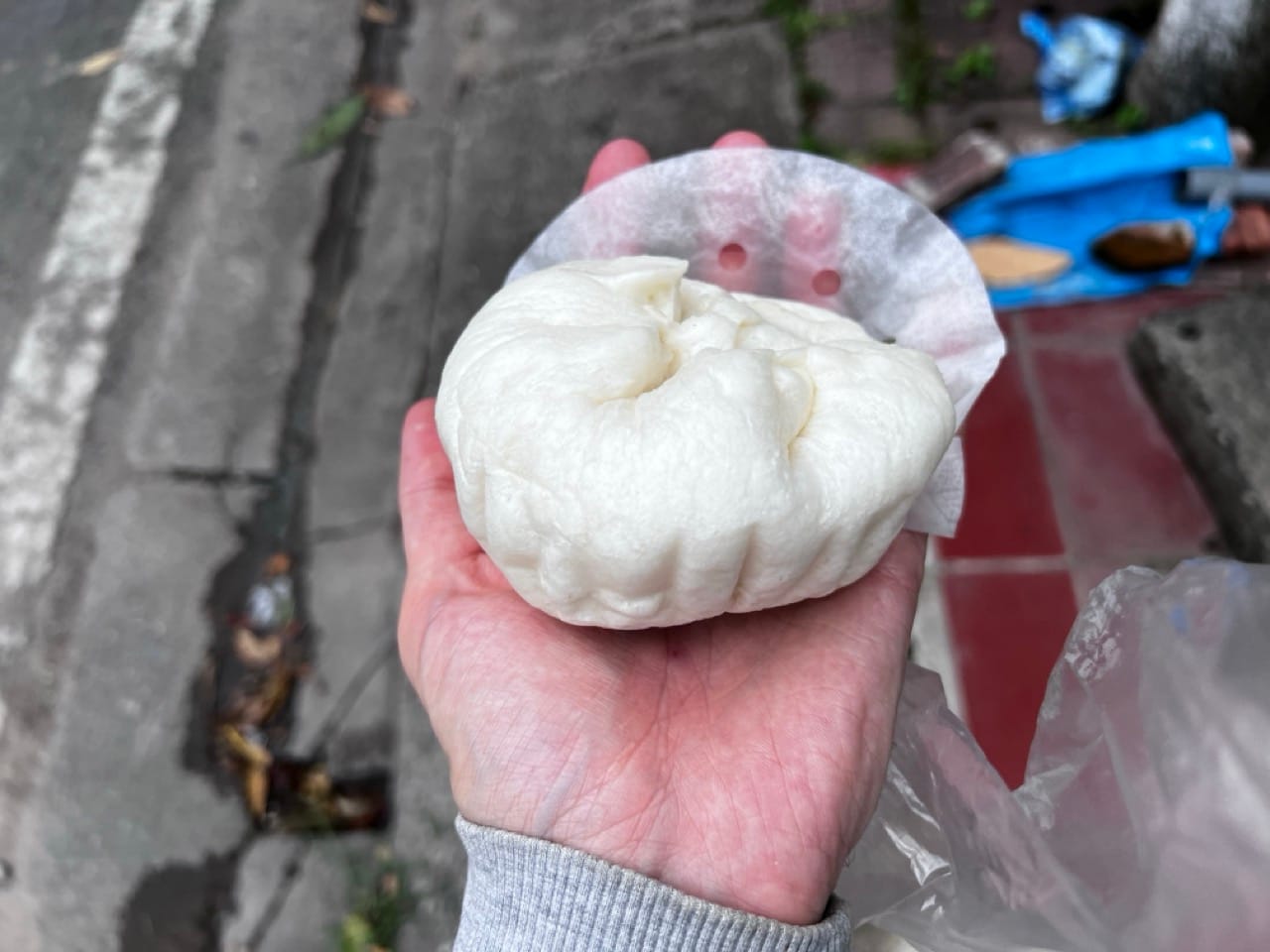
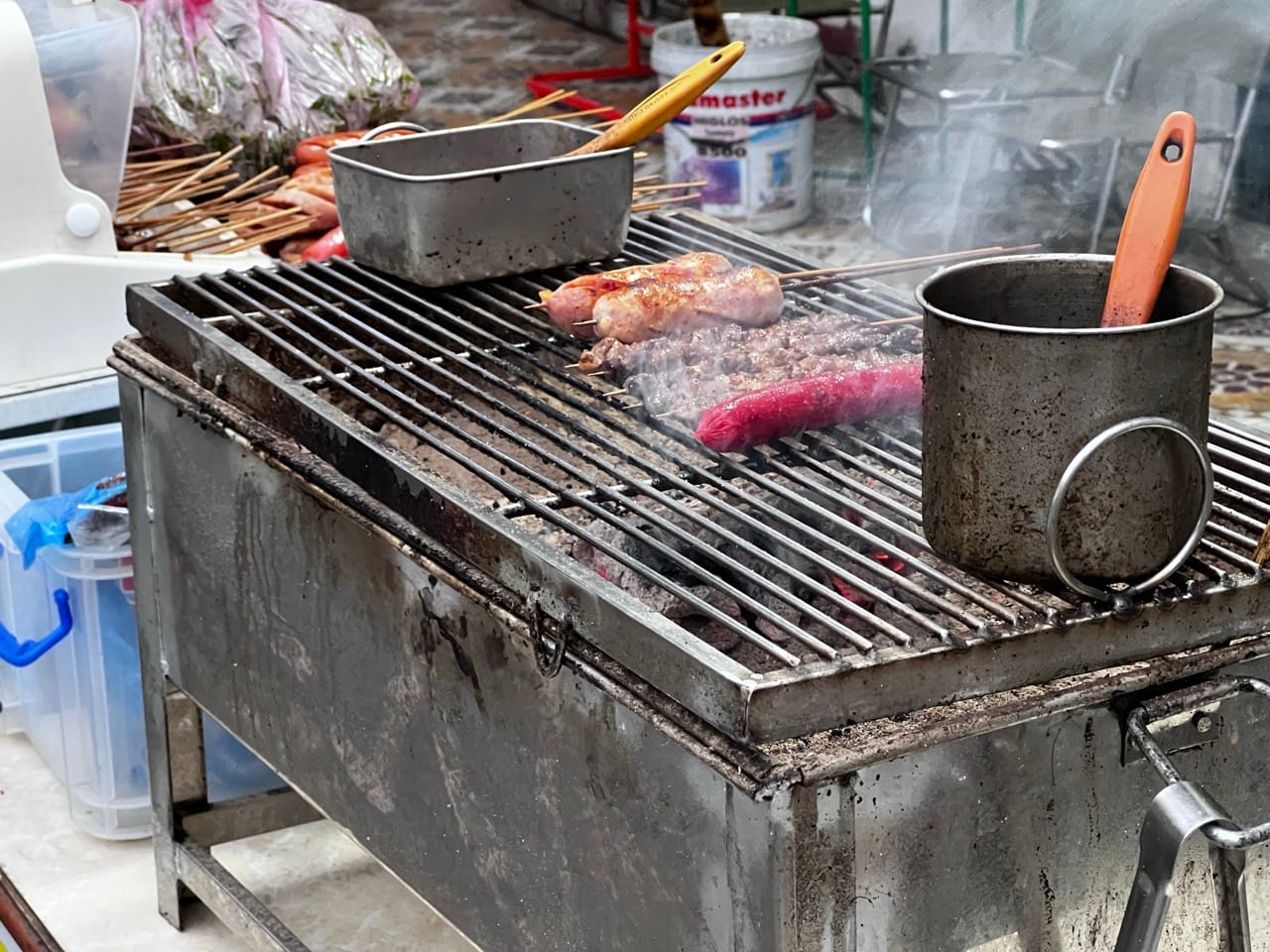
Street food in Lao Cai isn't a tourist attraction. It's just food. Bánh bao (steamed buns with pork filling) appear in the morning; grilled skewers show up in the evening. I bought a bun from a woman who stands in the same spot every day. Hot, dense, meat-filled — 10,000 dong. Less than fifty cents.
Details You Only See on Foot
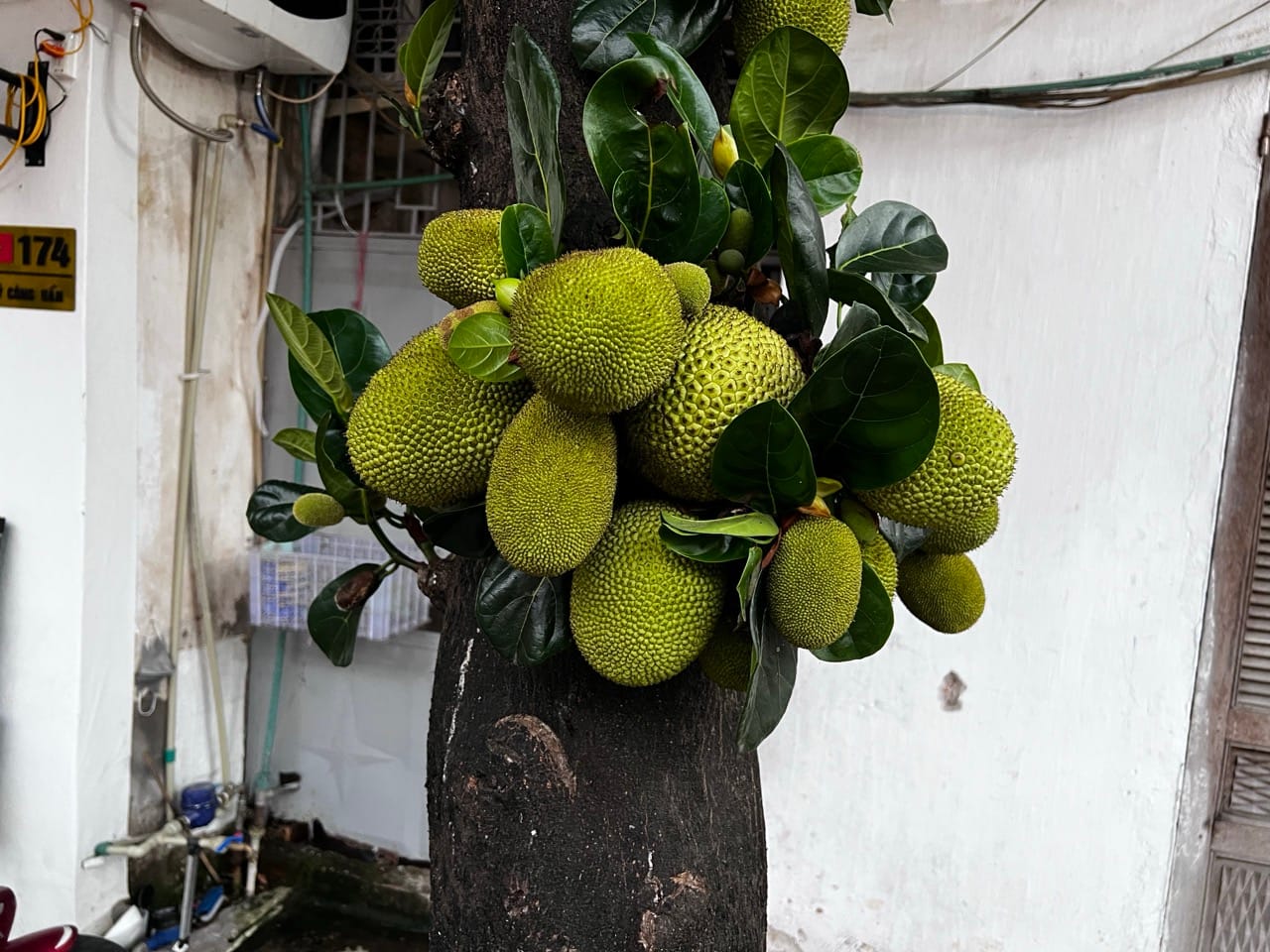
In the middle of a residential block, a jackfruit tree is growing out of an ordinary courtyard. Twenty green bulbs hanging off the trunk at house number 174. It's not a park or a garden — just a yard. Just a jackfruit tree.
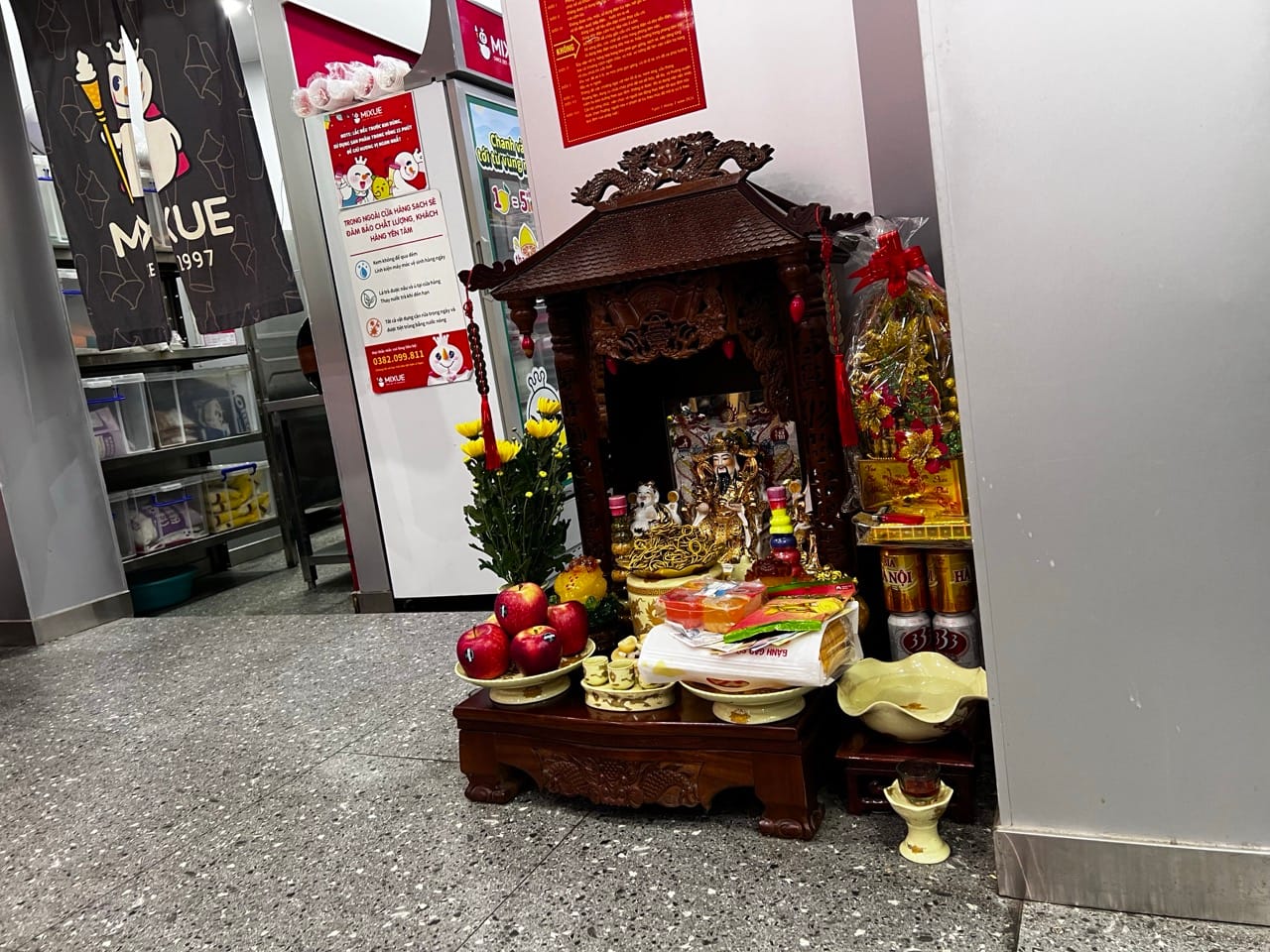
A spirit altar in a Mixue ice cream franchise — this is standard across Vietnam. Cafés, shops, hair salons, private homes: the altar for the god of fortune (thần tài) is as normal as a cash register.
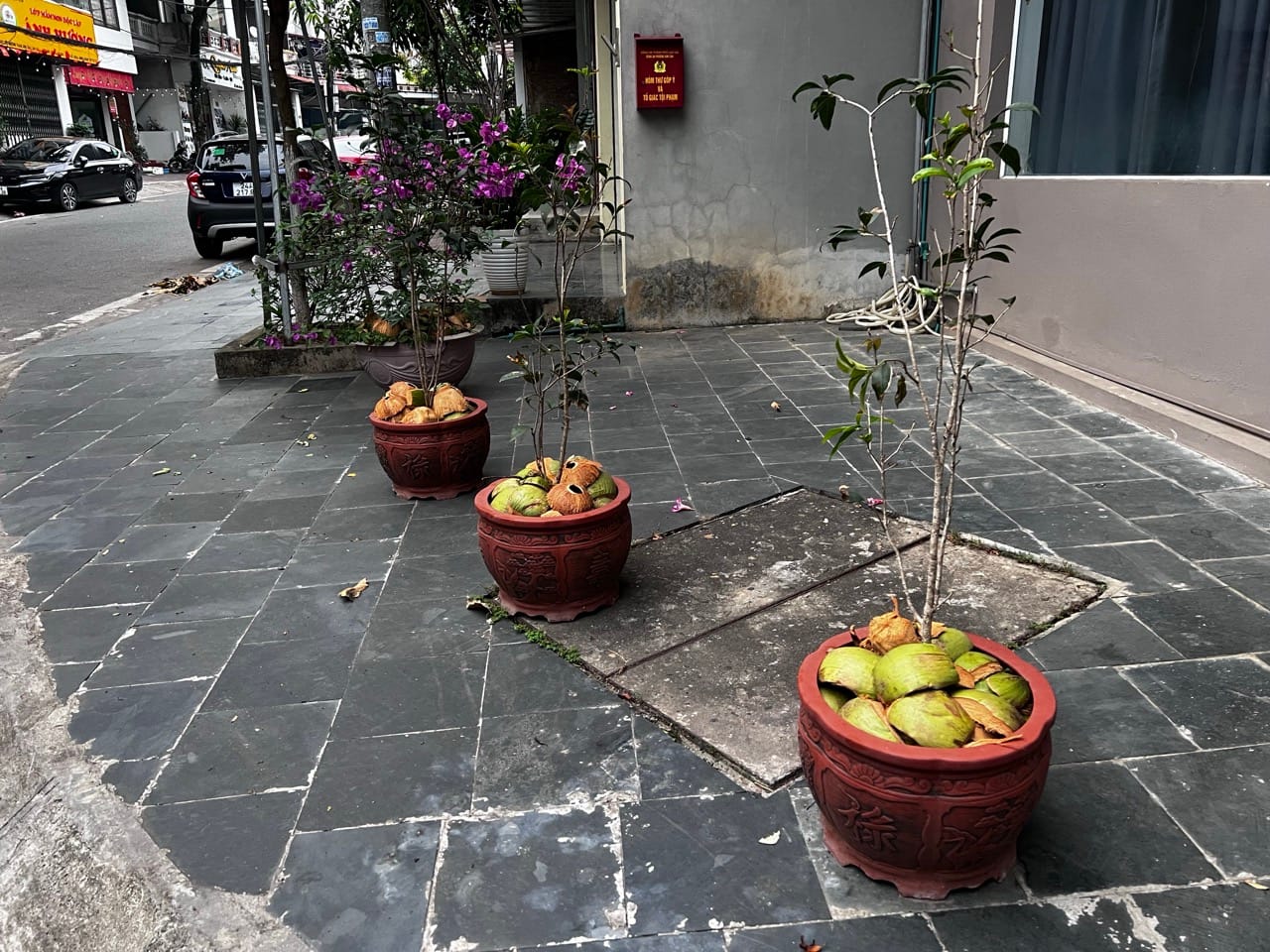
Outside one house, someone has arranged ceramic pots along the sidewalk edge — coconut shells sitting on top of the soil, a plant growing out of each one. Not a shop display, not a garden. Just a neighbor's idea of how a sidewalk should look.
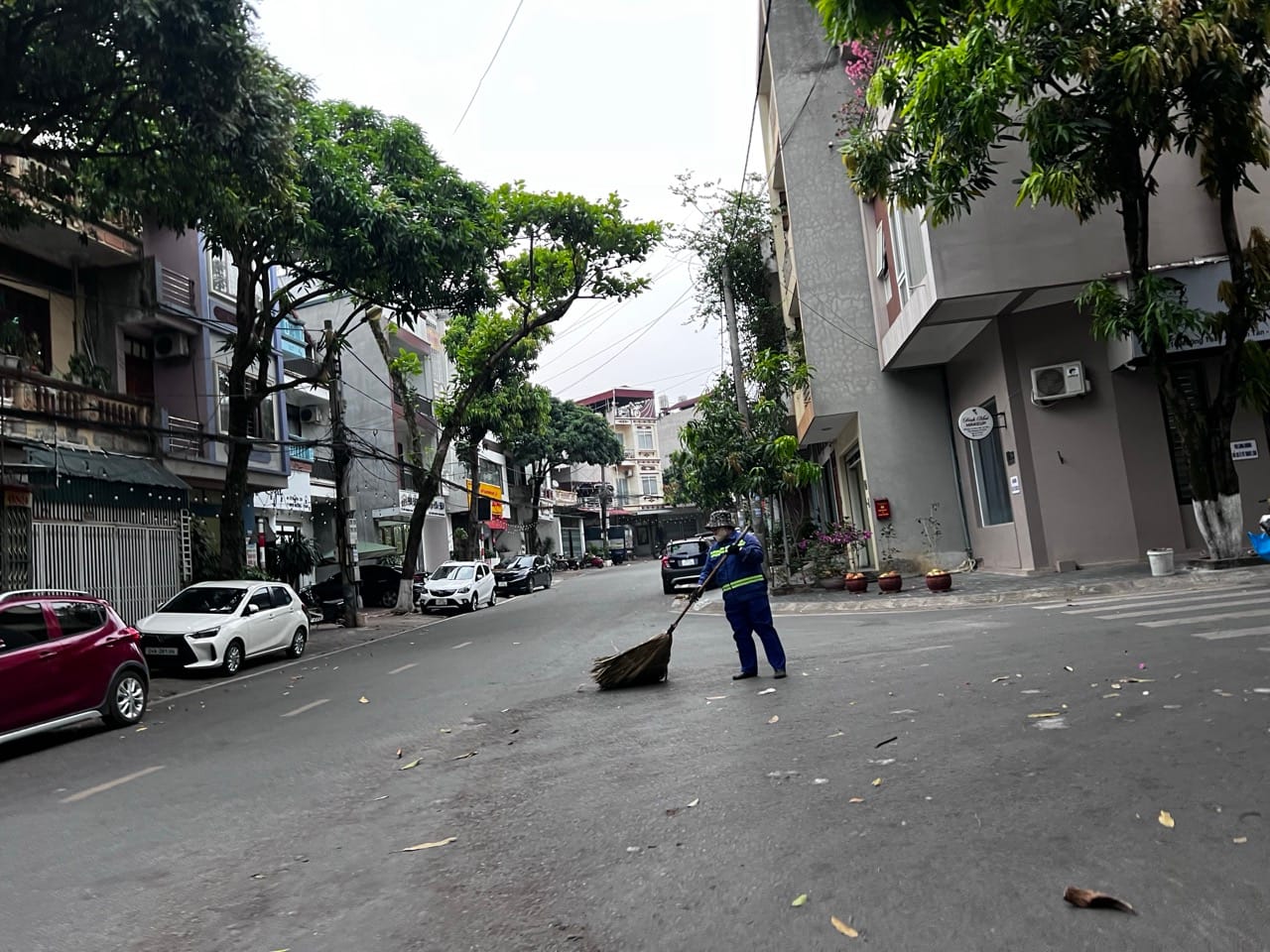
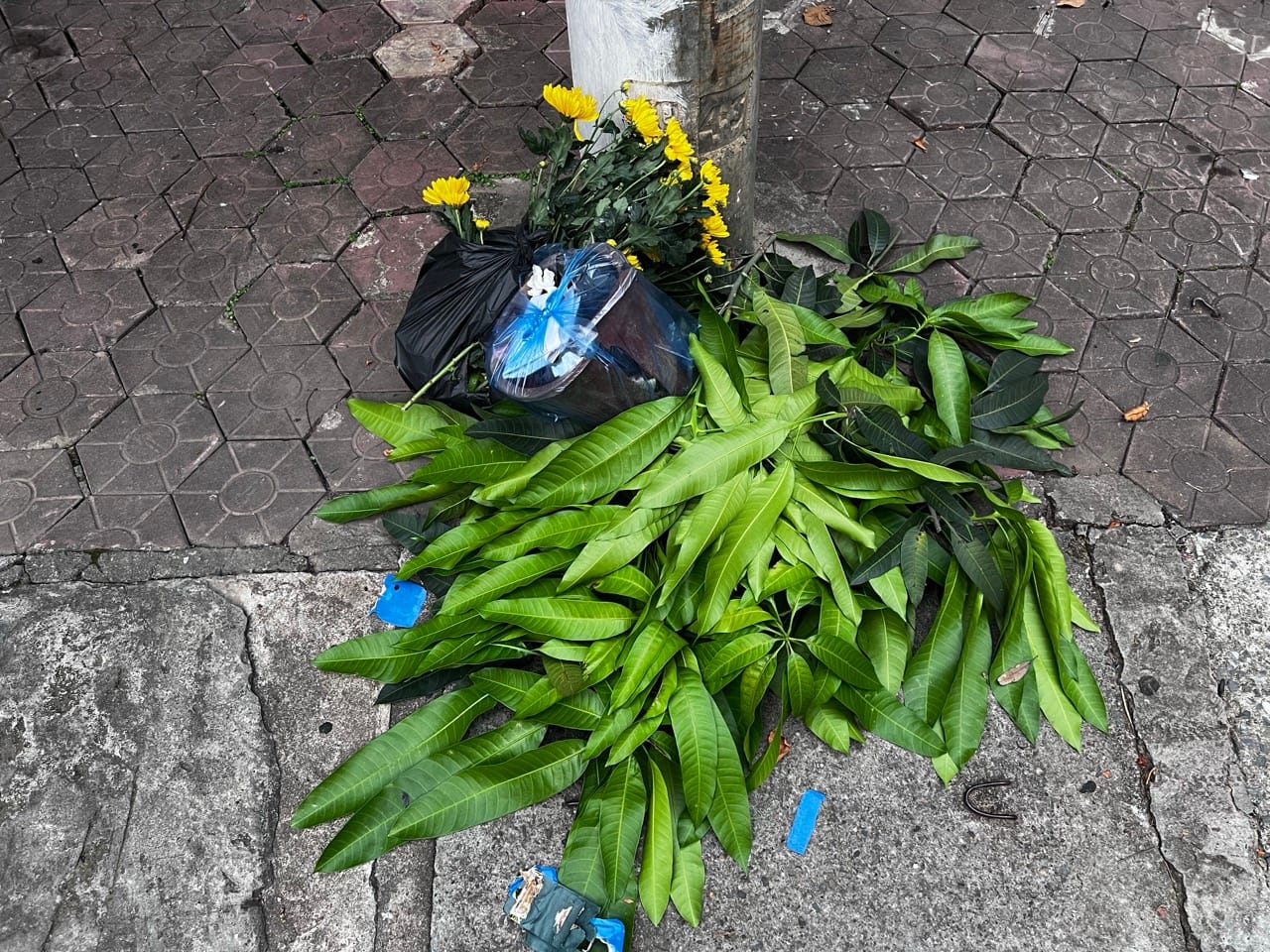
Instead of the usual sidewalk trash piles, neatly raked heaps of cut leaves. Almost decorative. Every morning, women in blue coveralls sweep the streets with twig brooms. The city actually tries to keep itself clean — not perfectly, but noticeably.
The People
There are almost no foreign-looking visitors here — not the European or American backpacker kind. That's immediately obvious. Kids say hello and ask "Where are you from?" in English, which you don't hear often in Vietnam outside the tourist circuit. Adults smile and leave you alone.
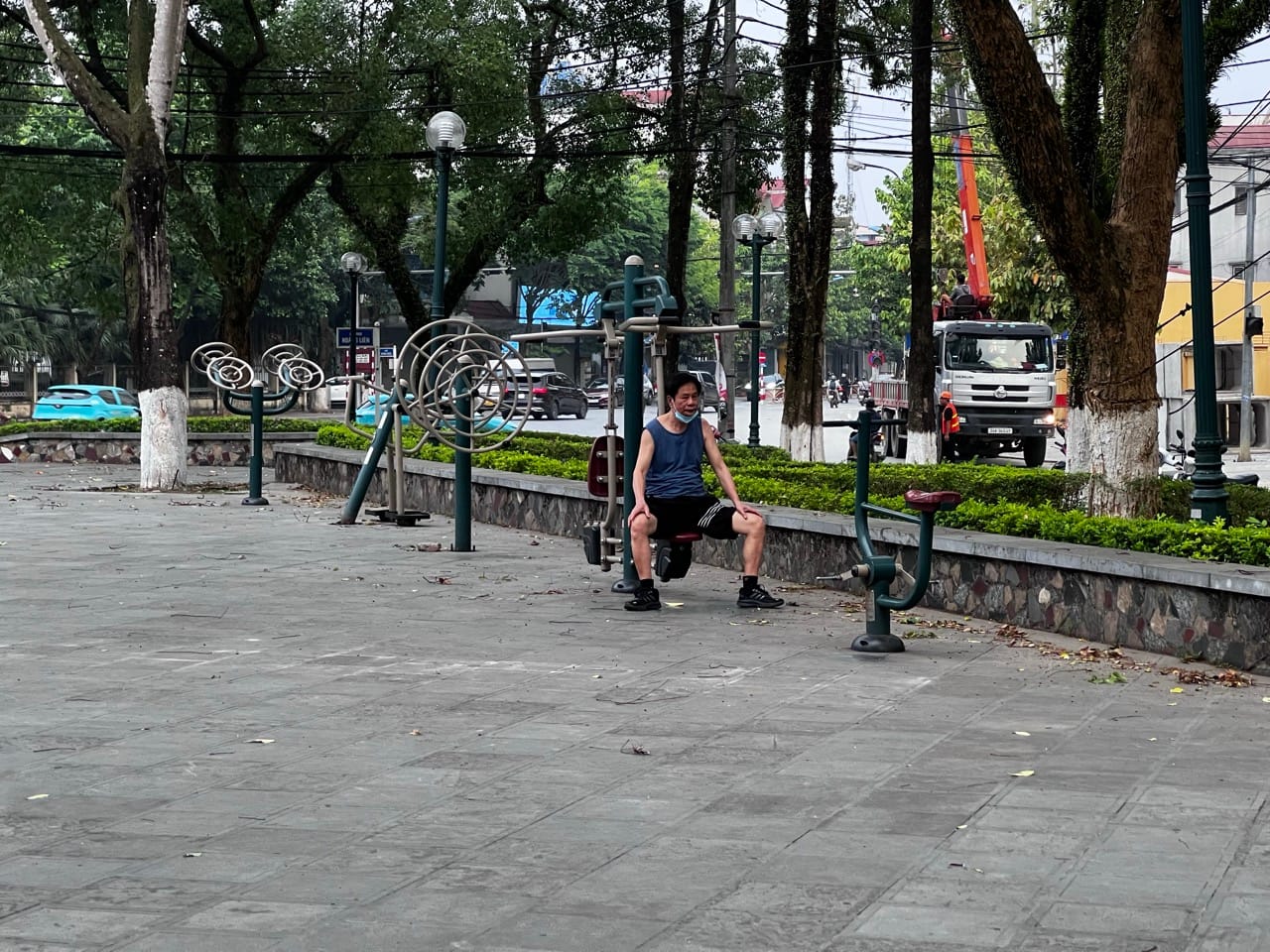
In the public exercise park, an older man works through his routine on Soviet-looking metal machines. Mornings and evenings, locals show up here — it's ritual, not sport.
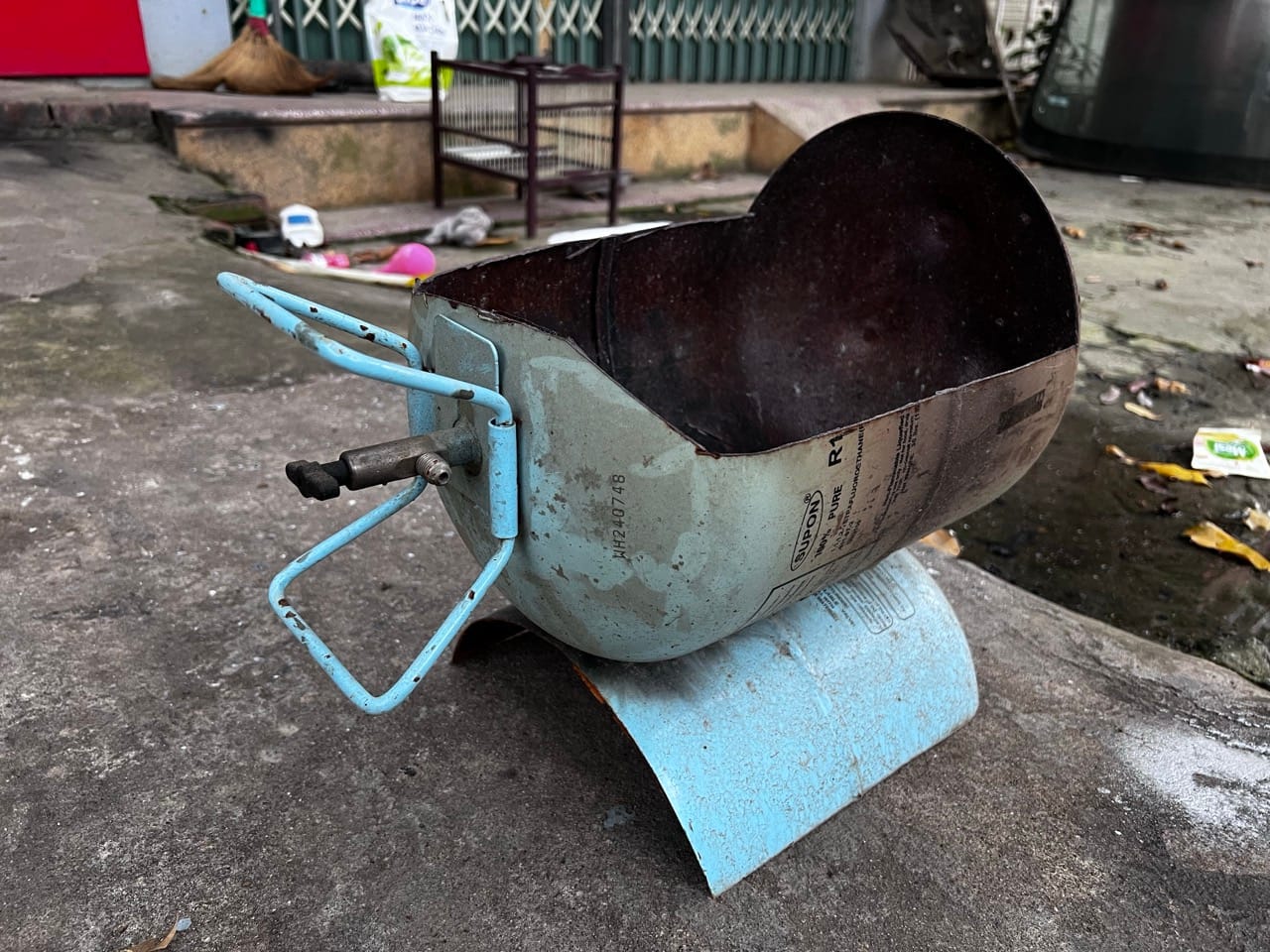
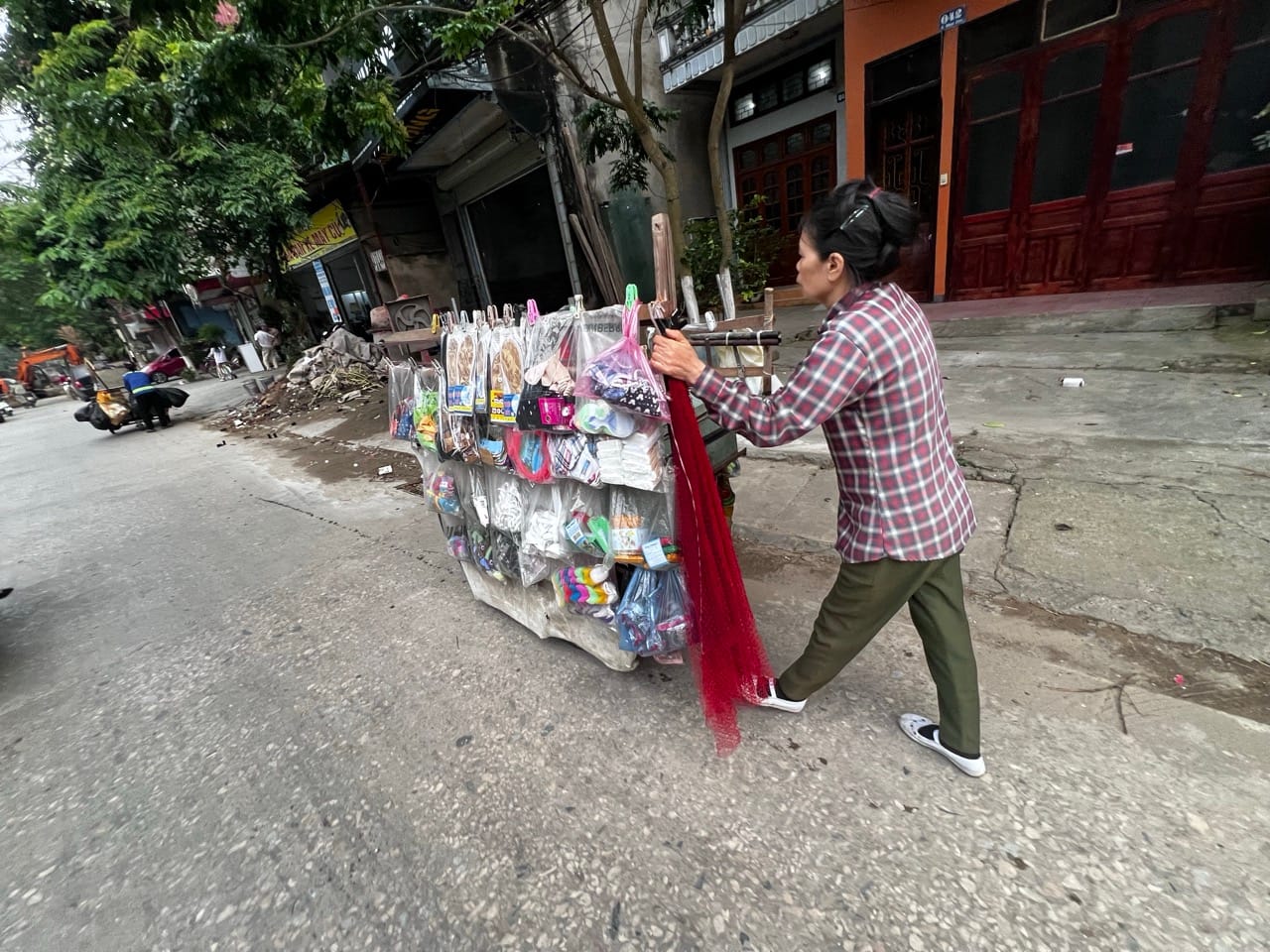
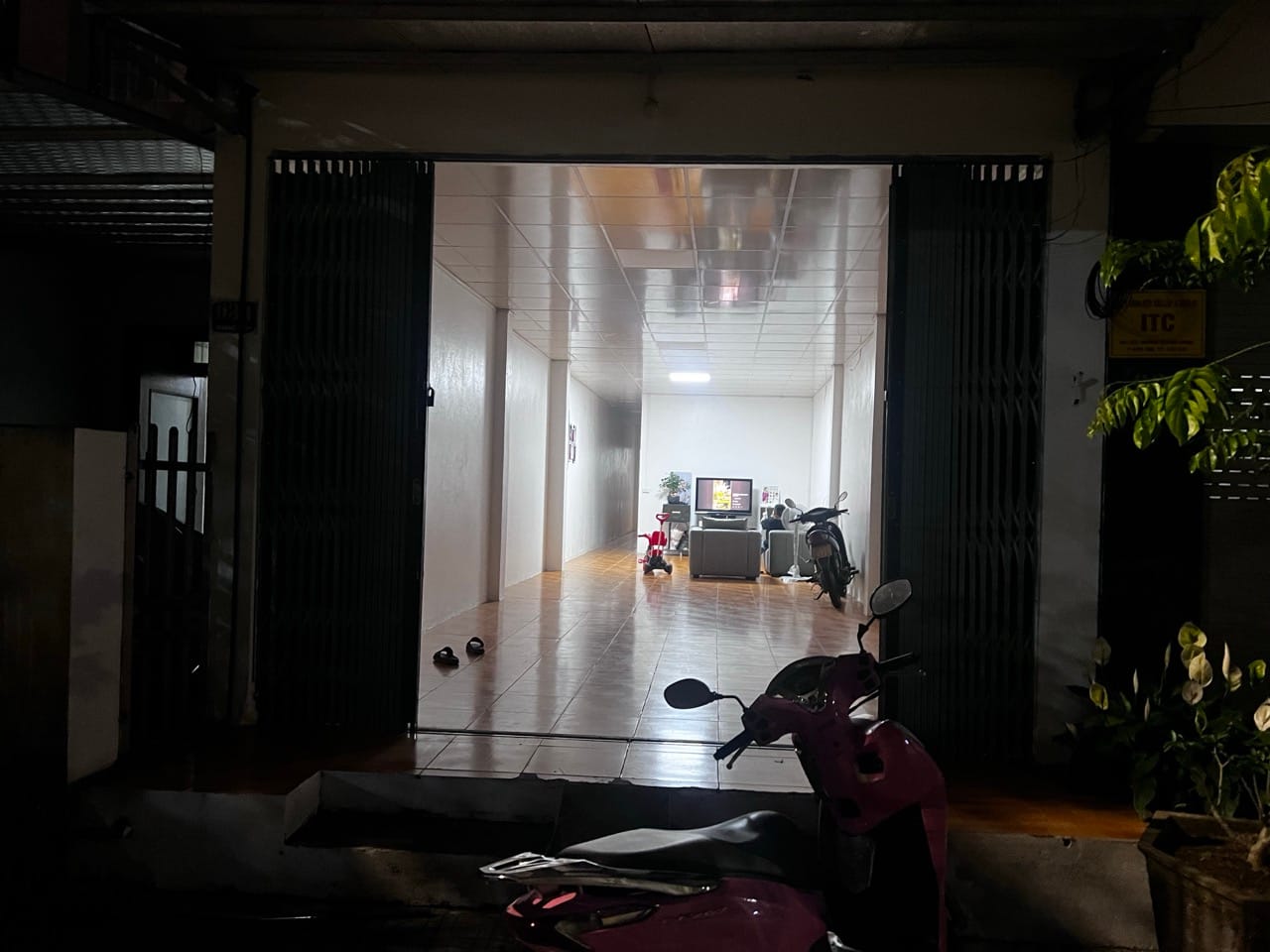
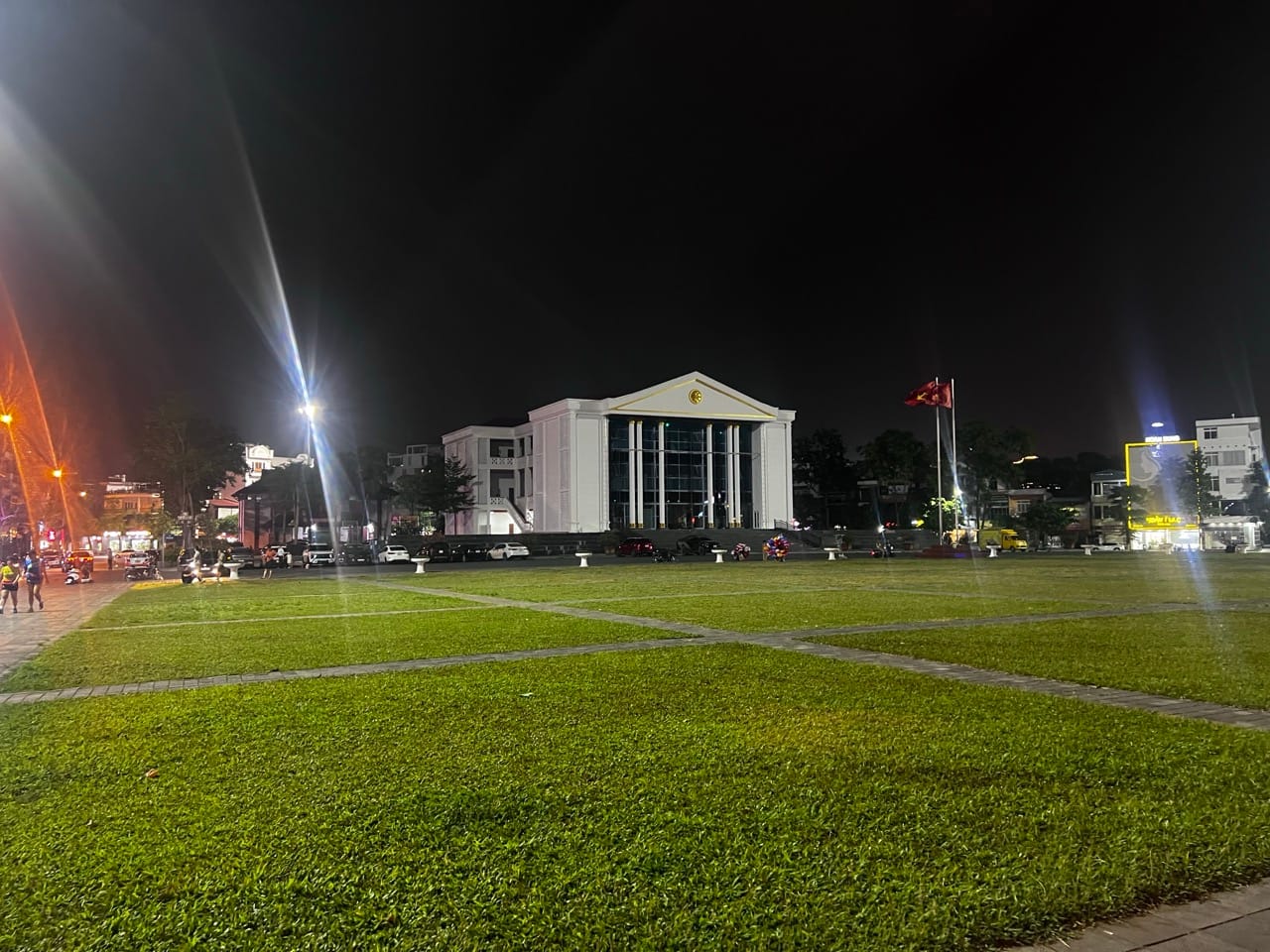
Life flows slowly in this city.

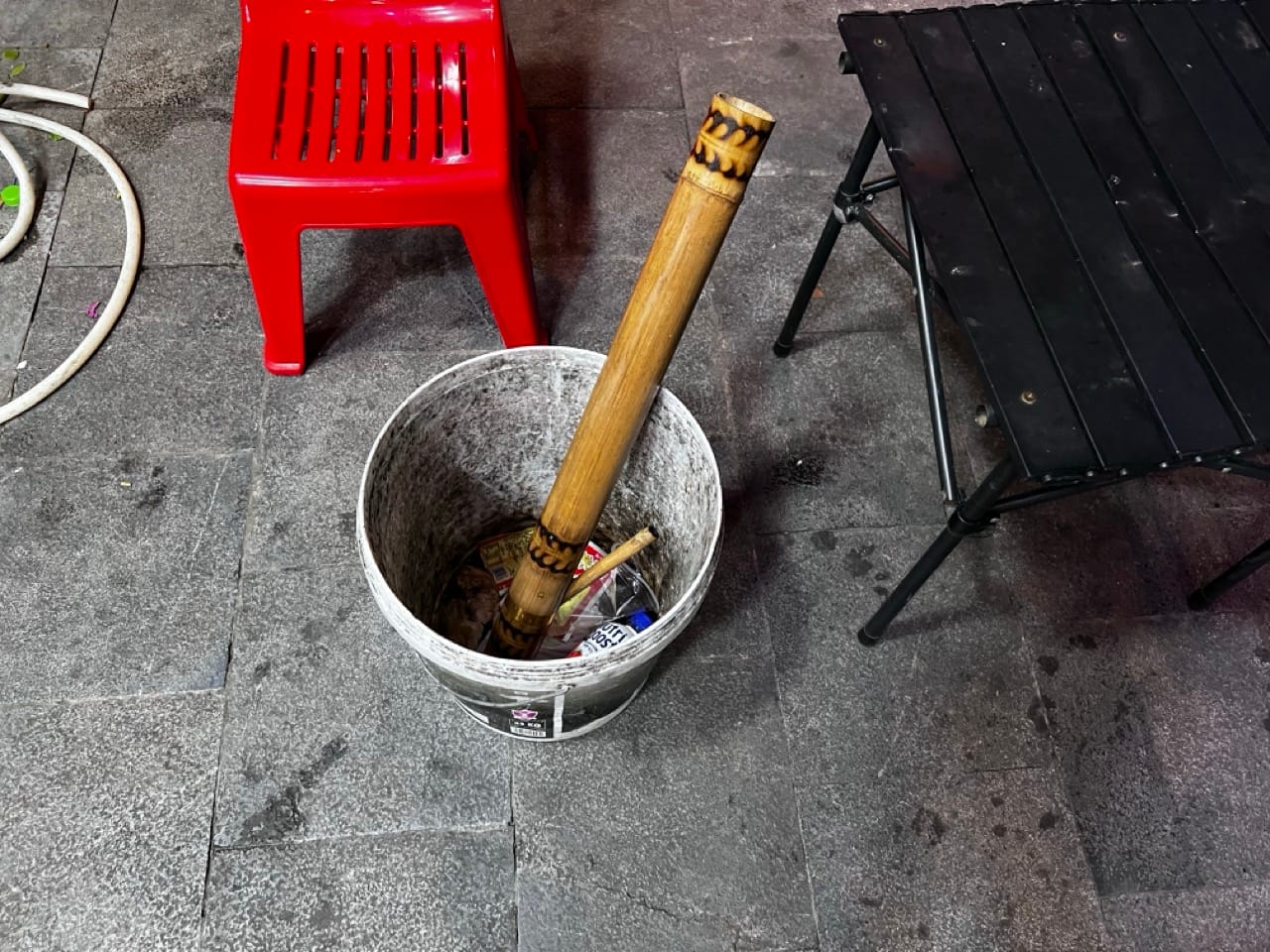
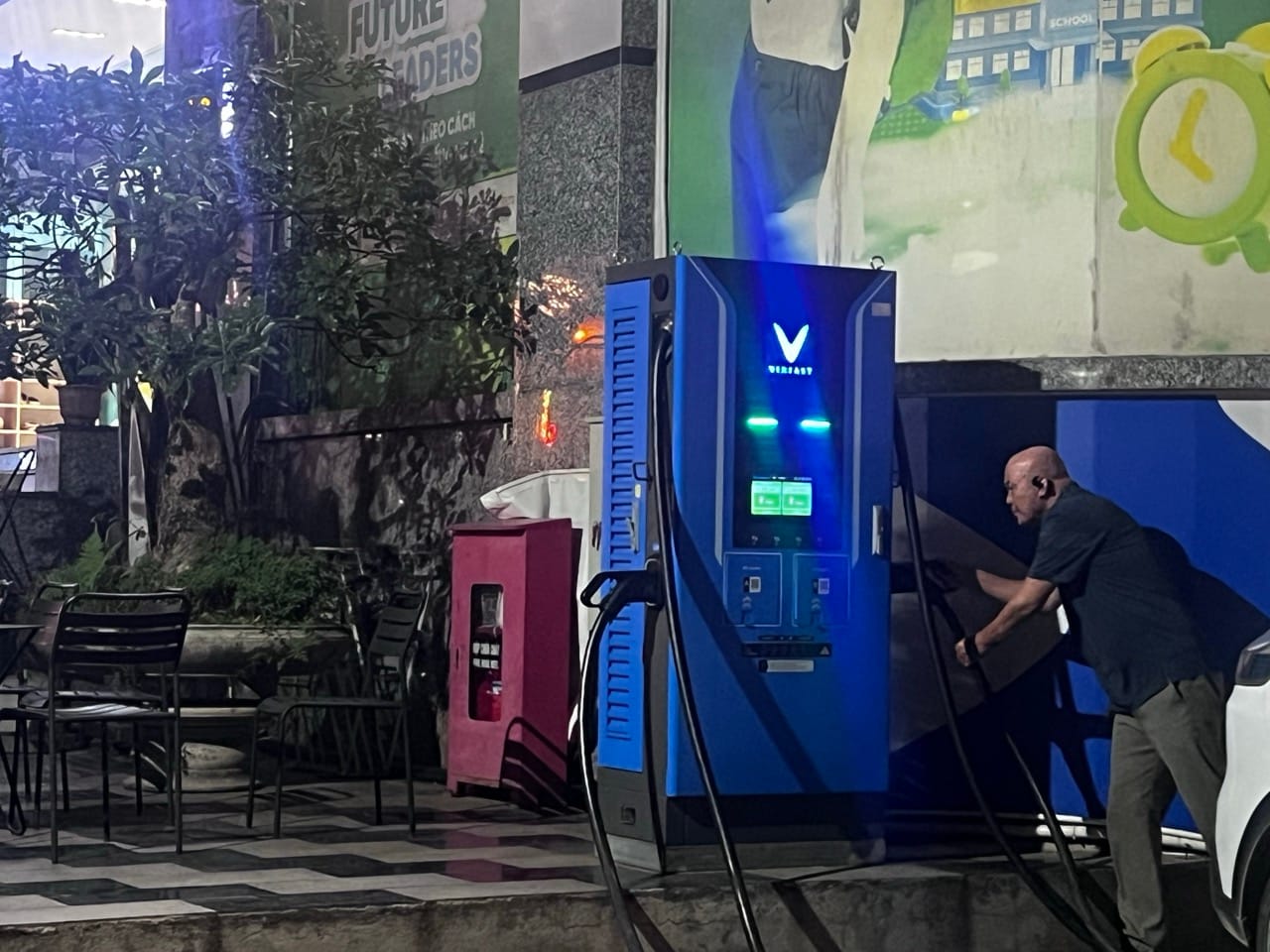
The Bamboo Pipe and the EV Charger
Two images that seem to contradict each other — both are real.
The Hotel With the Birds
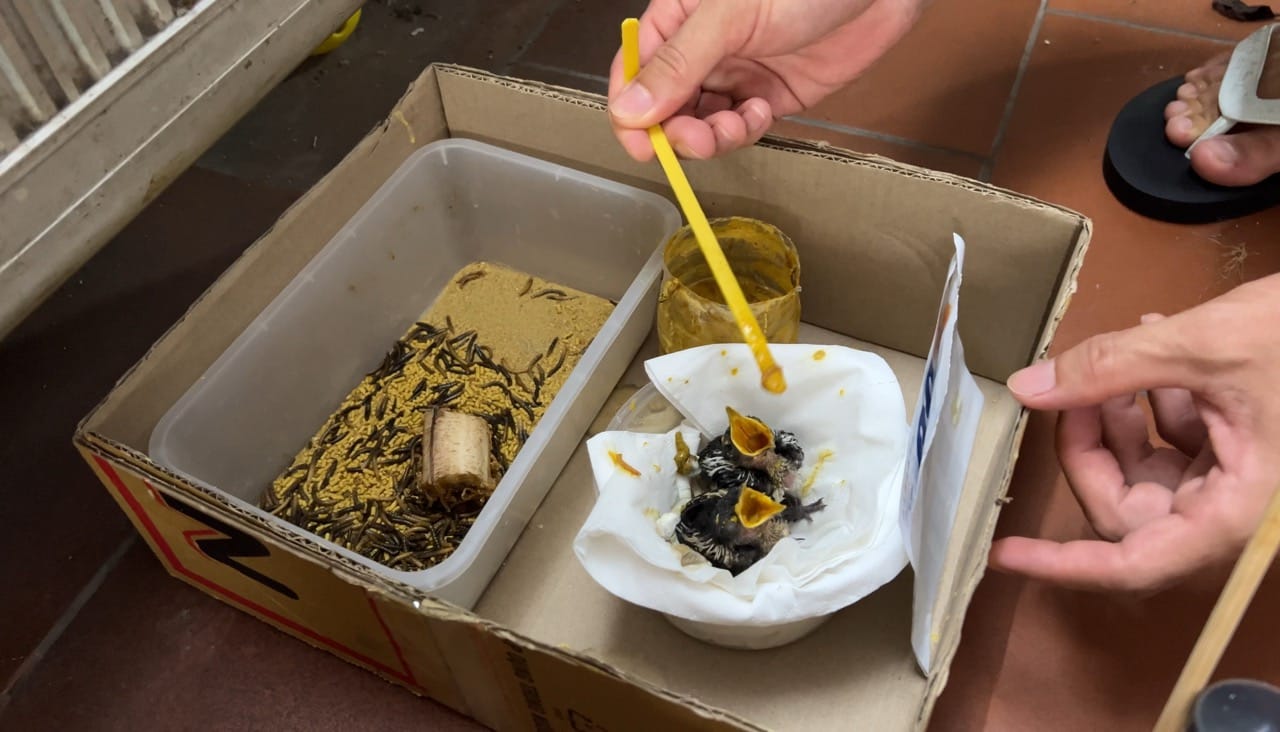
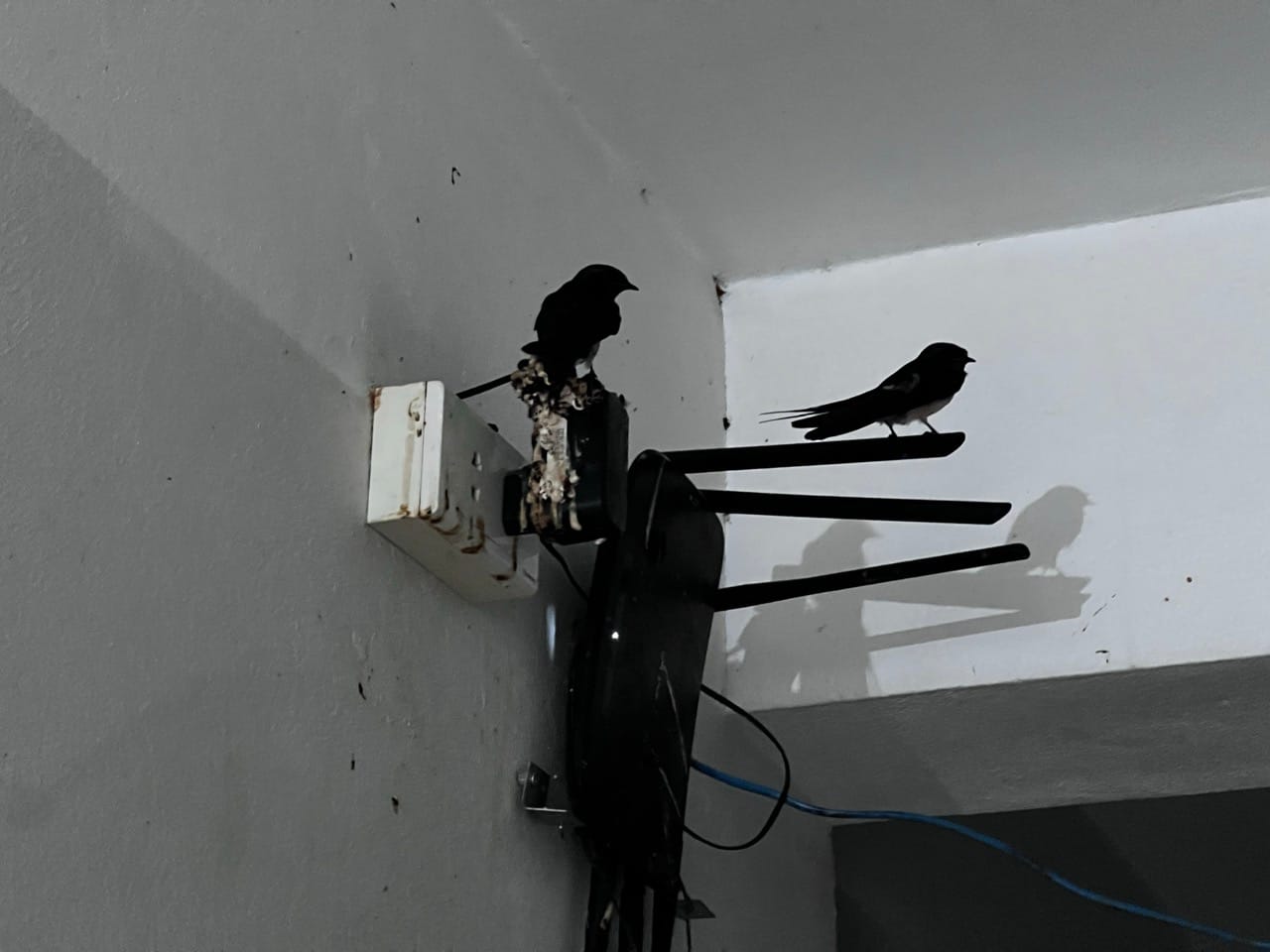
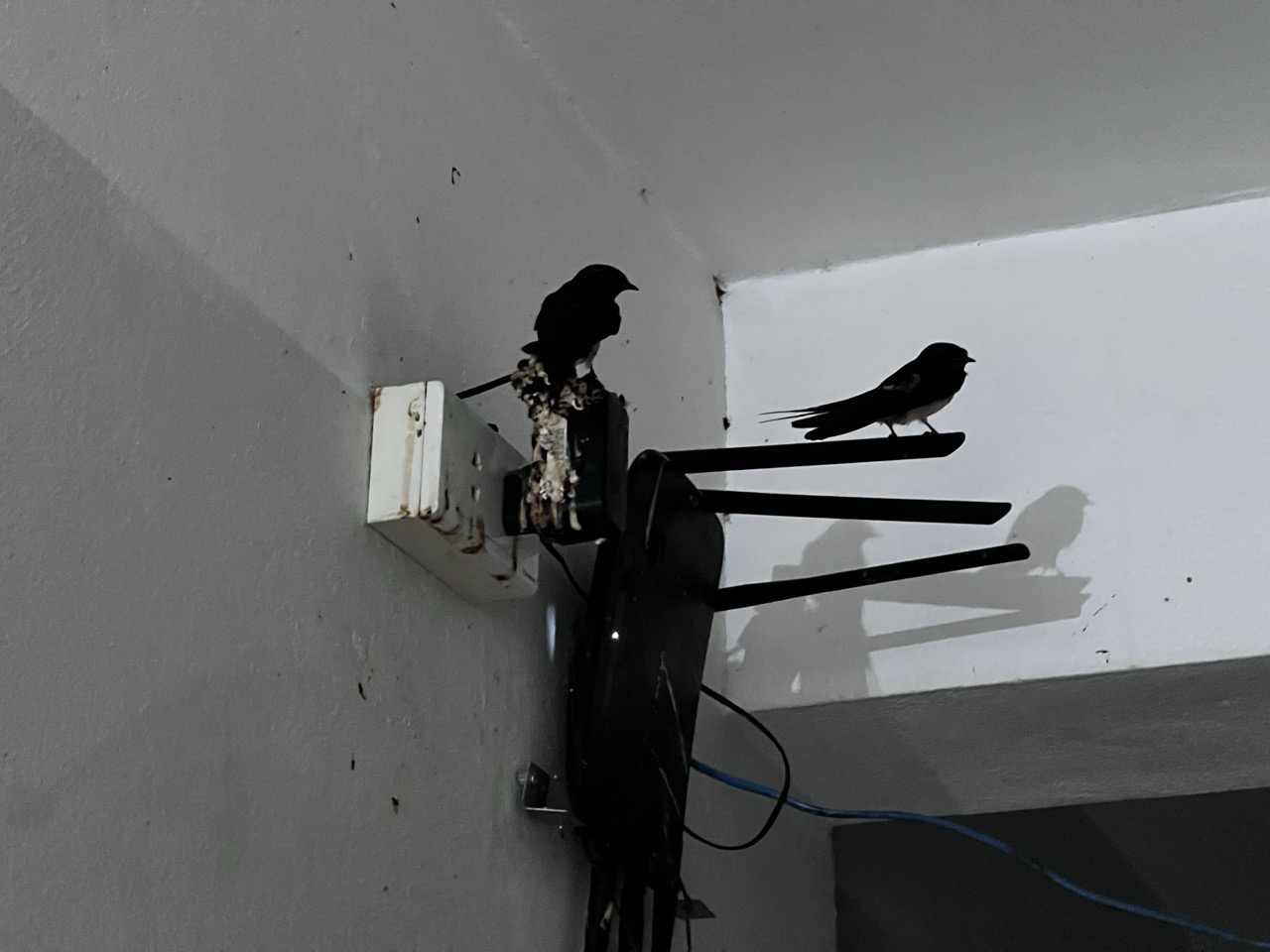
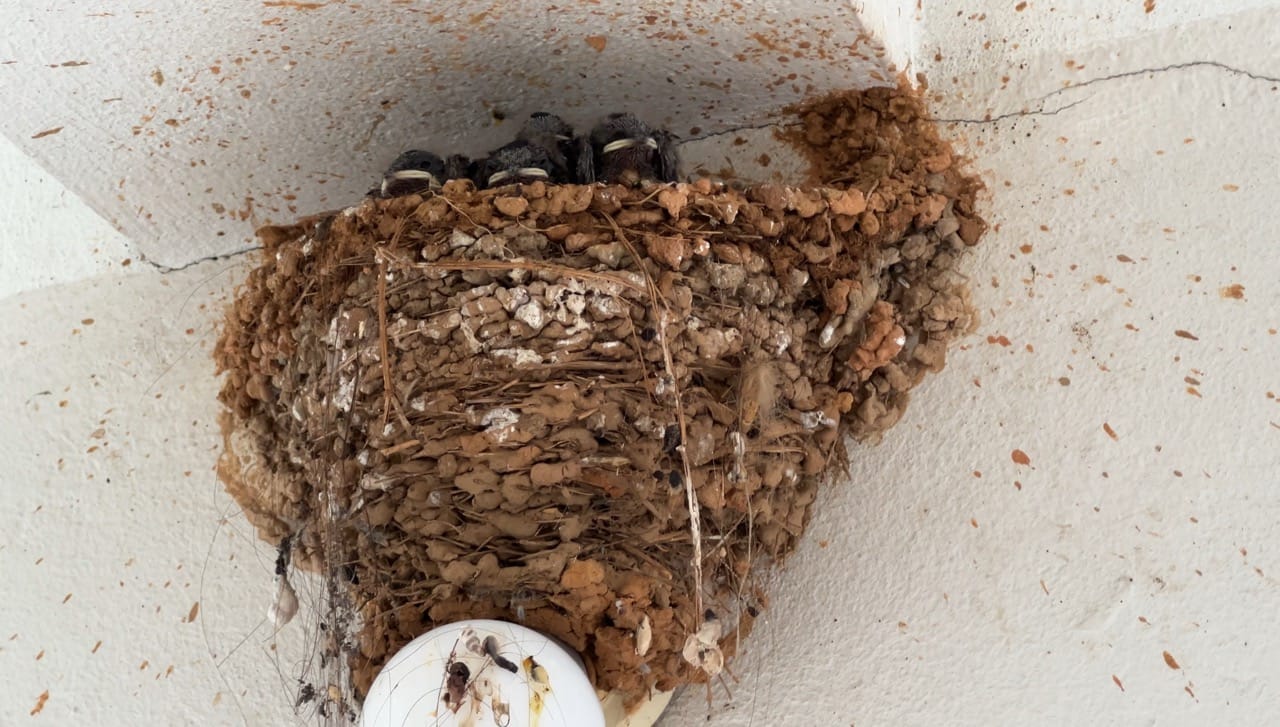
Hoàng Xuân Hotel is probably the cheapest place to stay in Lao Cai — and also the most specific. The owner is a bird person. Not casually: the corridors are home to pigeons of various ages, from a few days old to a couple of weeks, in makeshift enclosures along the hallways. The fifth floor had its own situation: a pair of swallows had built a mud nest in the ceiling corner right above my room door, with chicks inside. The parents rotated shifts through the night. Nobody seemed bothered by this, least of all the hotel staff.
Think of it less as a guesthouse and more as a birdhouse that also rents rooms. The rooms themselves are fine — basic, clean, perfectly acceptable. But if you need silence, check elsewhere. If you find this kind of thing charming rather than annoying, you'll probably enjoy it.
Looking to book in Lao Cai — or anywhere else on your trip? I use Trip.com for travel bookings. Sign up with my link and get up to 20% off your first booking.
→ Get your discount on Trip.com
Should You Go?
Not specifically — Lao Cai doesn't compete with Sapa for scenery and doesn't offer a standalone tourist program. But if you're passing through anyway, stay a day. Go out in the morning while the streets are still empty and the sweepers are working, get a bánh bao for 10,000 dong, and walk without a plan. The city lives its own life and makes no attempt to pull you into it. That, in itself, is a kind of freedom that's increasingly hard to find.
Visited: mid-April 2026. Air quality was poor (PM2.5: 100–200). Best time to visit would be outside agricultural burning season — roughly November through February.
Useful Services I've Been Using for 6 Years of Travel
These are the platforms I actually use when planning and booking trips — nothing I don't rely on personally.
Klook — activities, day trips, and experiences across Asia and beyond. Good for booking entrance tickets, tours, and transport passes in advance. I use it especially in cities where showing up without a reservation means waiting in line for two hours.
Tiqets — instant mobile tickets for museums and attractions worldwide. The tickets go straight to your phone, no printing, no queue at the box office.
Kiwitaxi — airport and intercity transfers in 100+ countries, with English-speaking drivers. Useful when you arrive somewhere late at night and don't want to figure out local apps from scratch.
Aviasales — flight search aggregator I use to compare prices across airlines and booking agencies. Often finds combinations that other search engines miss entirely.