Hekou: The Chinese City Most Backpackers Ignore — and Shouldn't
A Chinese border town most backpackers skip. Here's why staying a few days in Hekou beats turning straight back to Vietnam.
Most travelers show up in Hekou for exactly one day or less. They cross the border from the Vietnamese side at Lao Cai, do their visa run, and turn straight back around. For them, the city exists only as a passport stamp. That's a mistake, and I'll try to explain why.
Hekou is a small border town in Yunnan Province, around 100,000 residents. The Nanxi River separates it from Vietnam by the width of a single bridge.
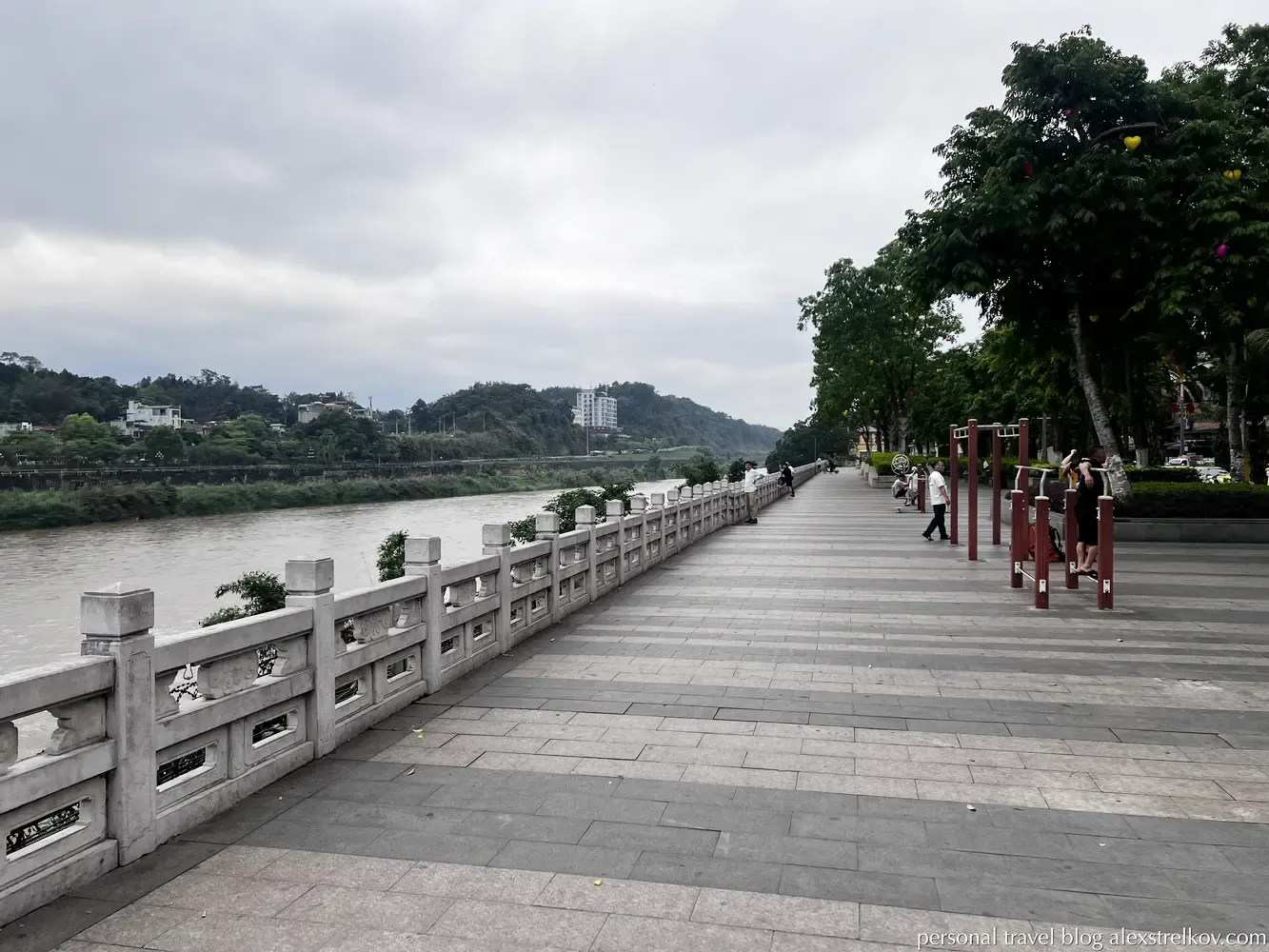
But cross that bridge, and you land in a different universe — not just a different country. Different rhythm, different smell, different logic to how a city works.
 Alex Strelkov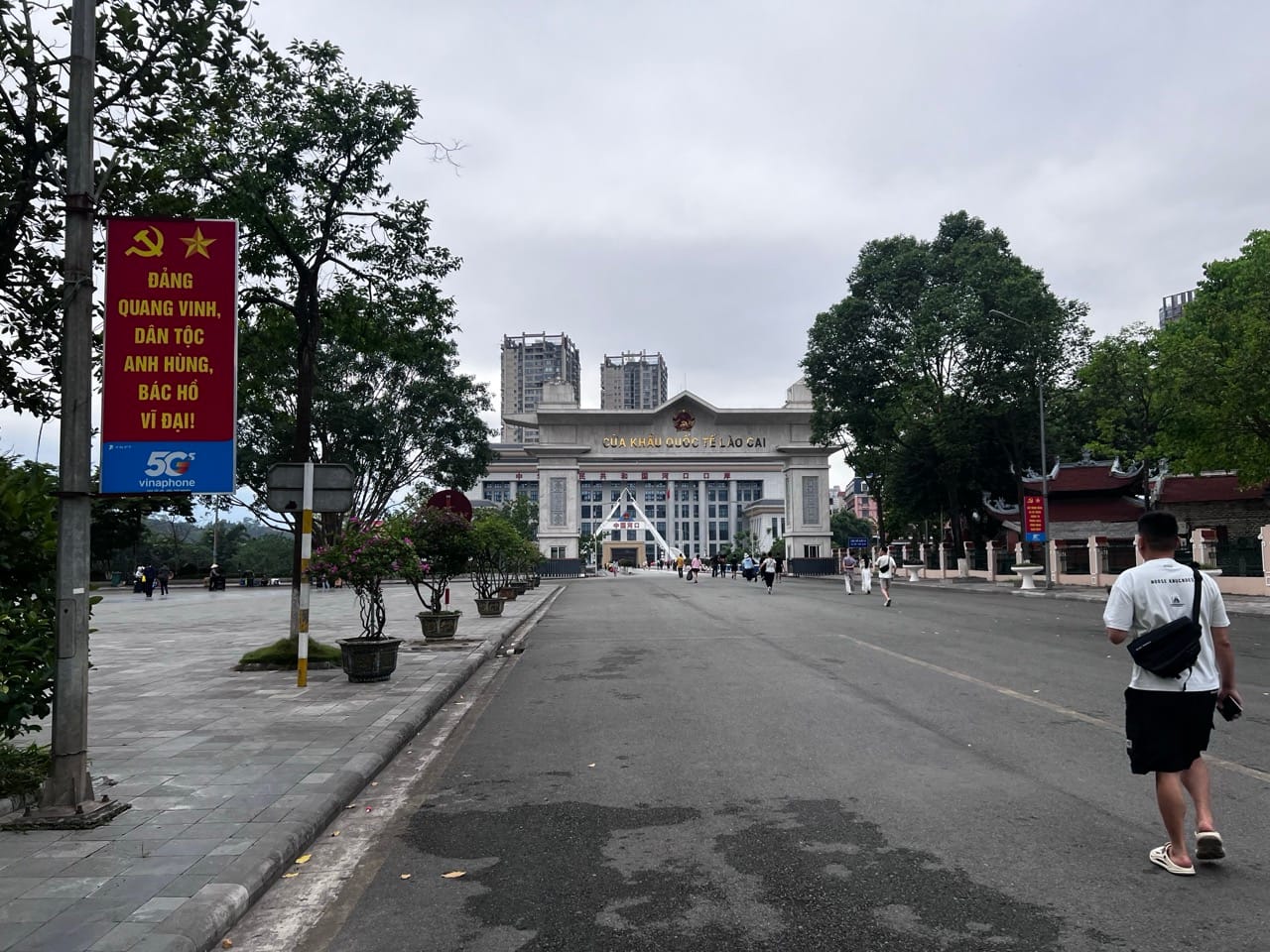
Read about the pedestrian border crossing in my other article.
A Contrast You Feel in Your Body
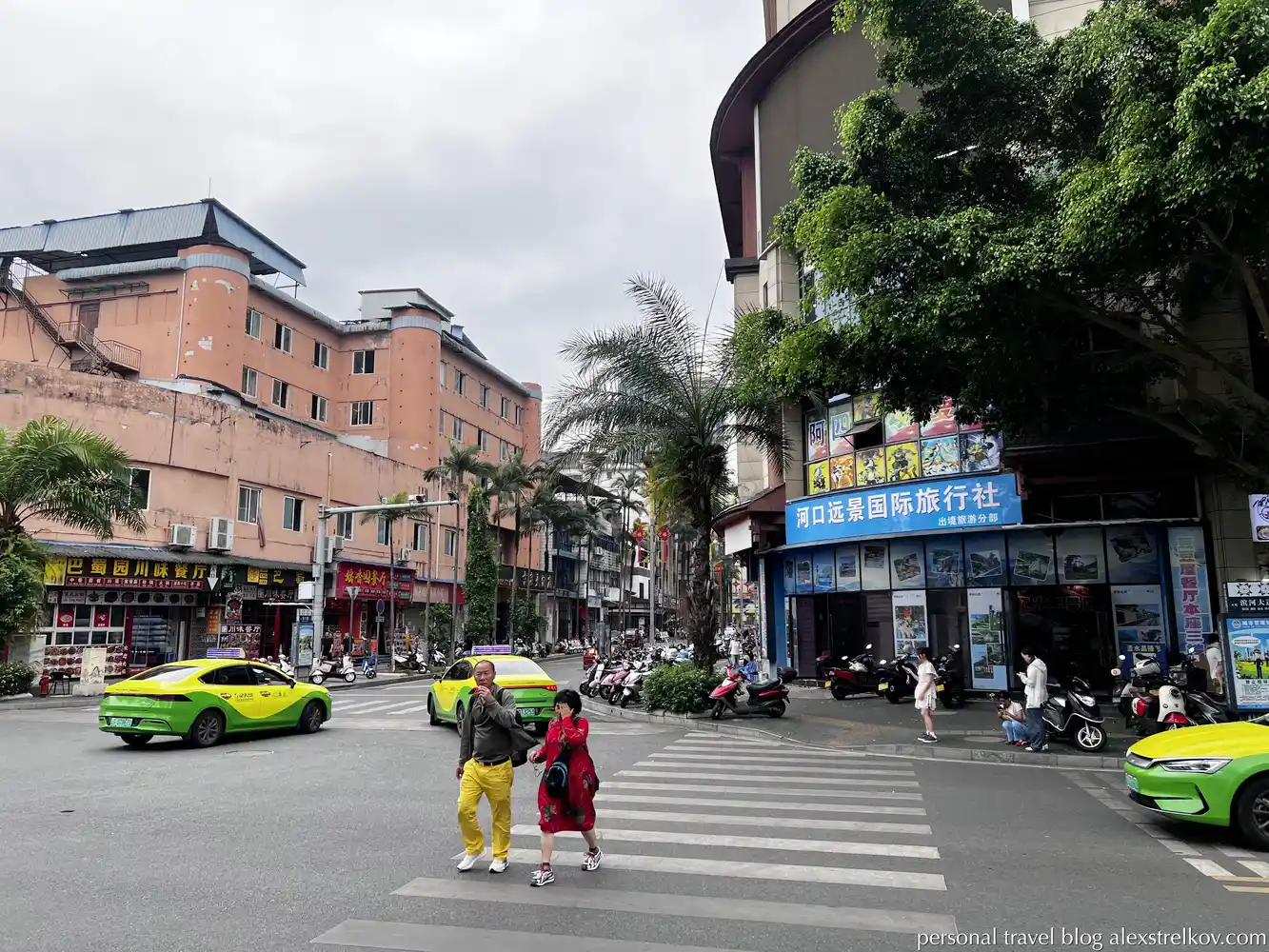
After a few weeks in Vietnam, the difference hits you physically. Over there — constant noise, street food smells, smiles on every corner, and a mild chaos that slowly starts feeling normal. Here — clean. Noticeably clean. People in fluorescent green vests are planting flowers in the road dividers in the middle of a workday.
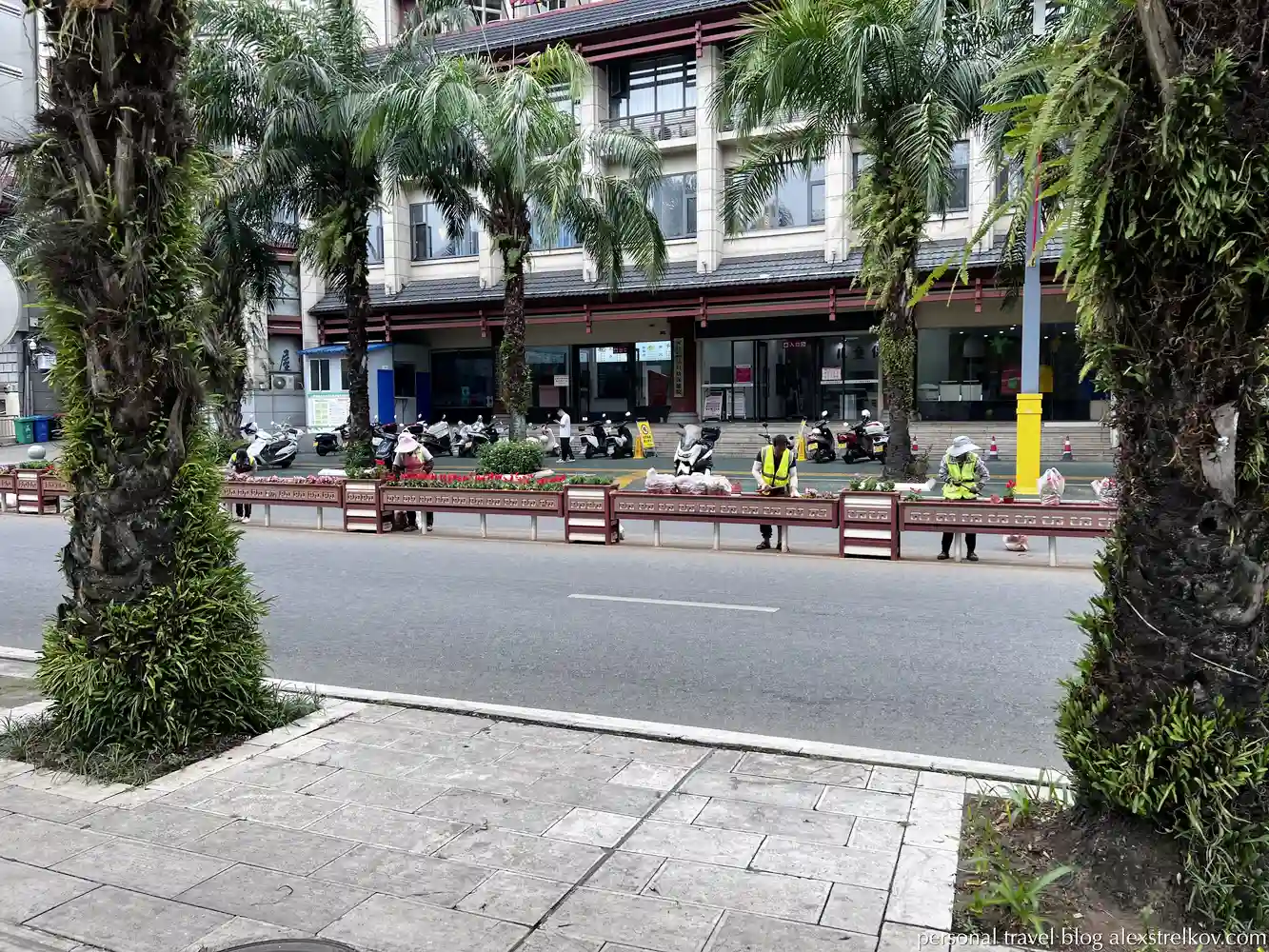
People in Hekou don't rush up to foreigners with questions. After Vietnamese friendliness, this can feel like coldness at first — but it isn't. What's actually at work here is "face" (面子, miànzi). In Chinese culture, a public failure — approaching a foreigner and not being able to communicate — is a genuine blow to one's reputation. So most people simply don't risk it. It's not indifference. It's caution.
In border-town Hekou, this effect is especially pronounced: foreigners are rare, almost nobody speaks English, and most locals would rather pretend they didn't notice you than end up in an awkward situation. For a backpacker tired of being a spectacle — honestly, it's a relief.
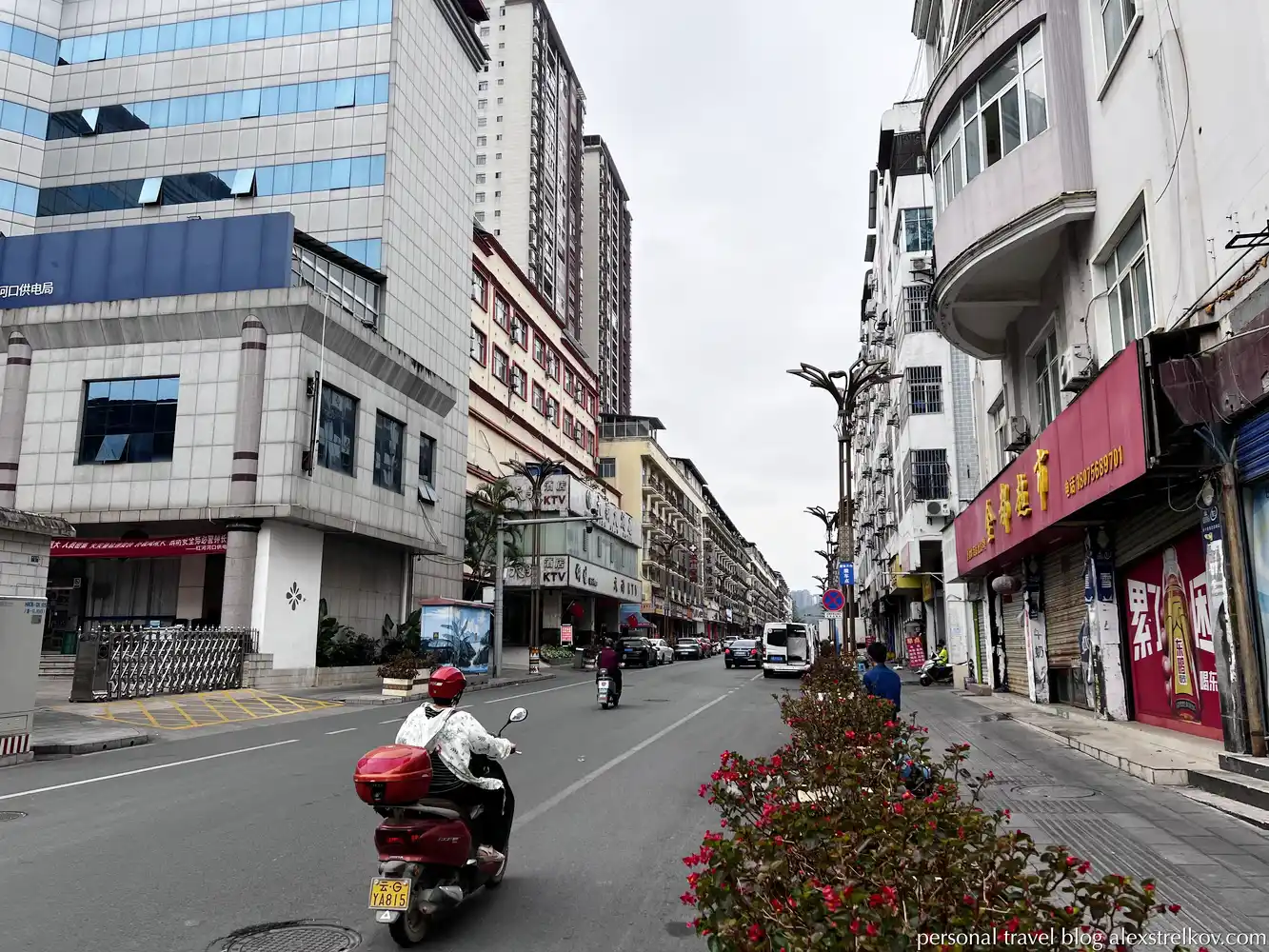
Chess, Cards, and Games on the Sidewalk
China is a country where gambling is officially restricted, but casual games are everywhere. At the market, in the park, near a bus stop — there's always a group going hard at cards, dominoes, or something completely unrecognizable but clearly gripping.
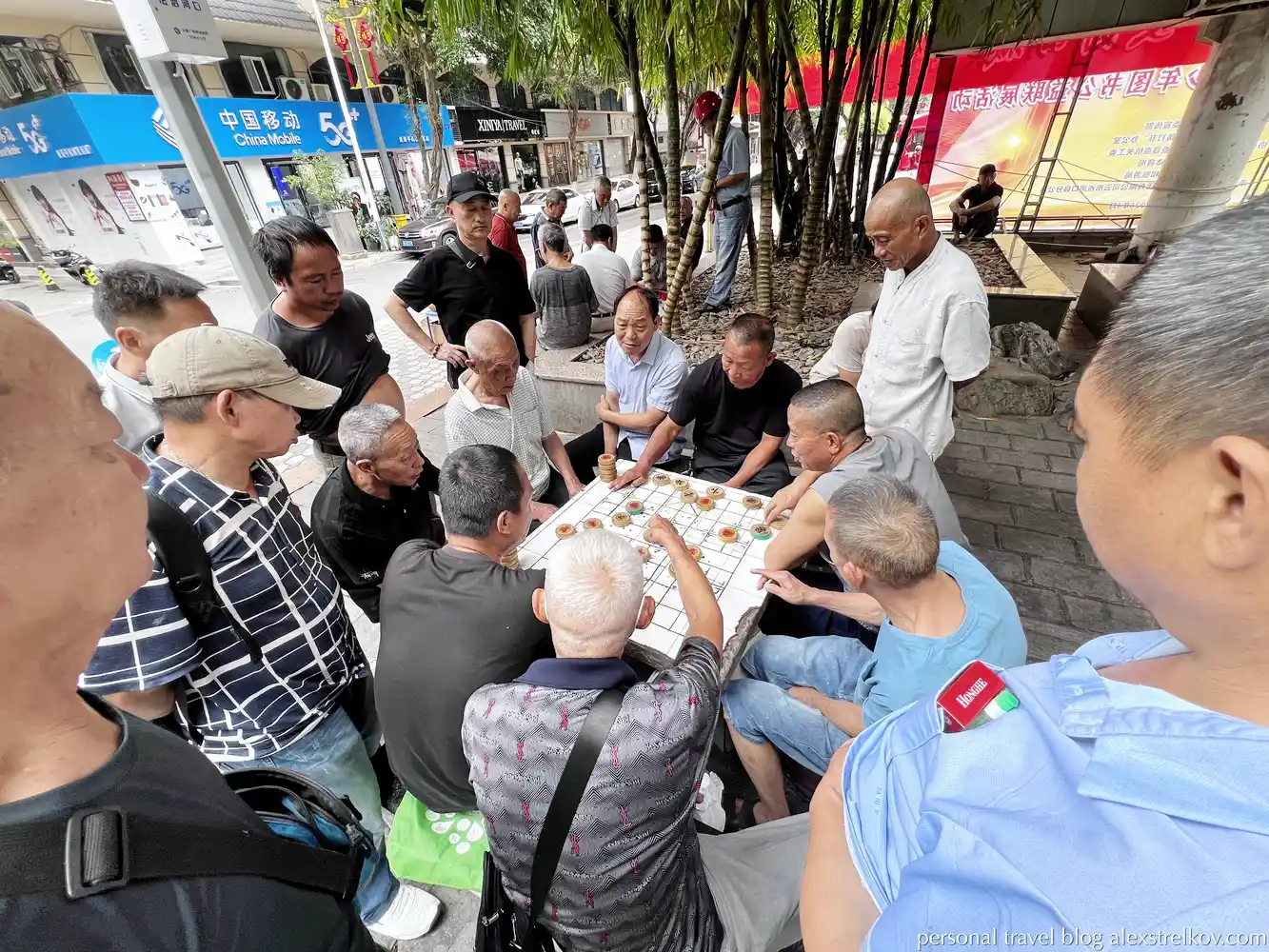
Right in front of a China Mobile sign, I watched several dozen men crowd around a table, completely locked in on a game of xiangqi (象棋) — Chinese chess, over 2,000 years old. The board is split by a "river" into two camps, the pieces are marked with characters, and the rules are their own. This isn't a tourist attraction. It's just Tuesday.
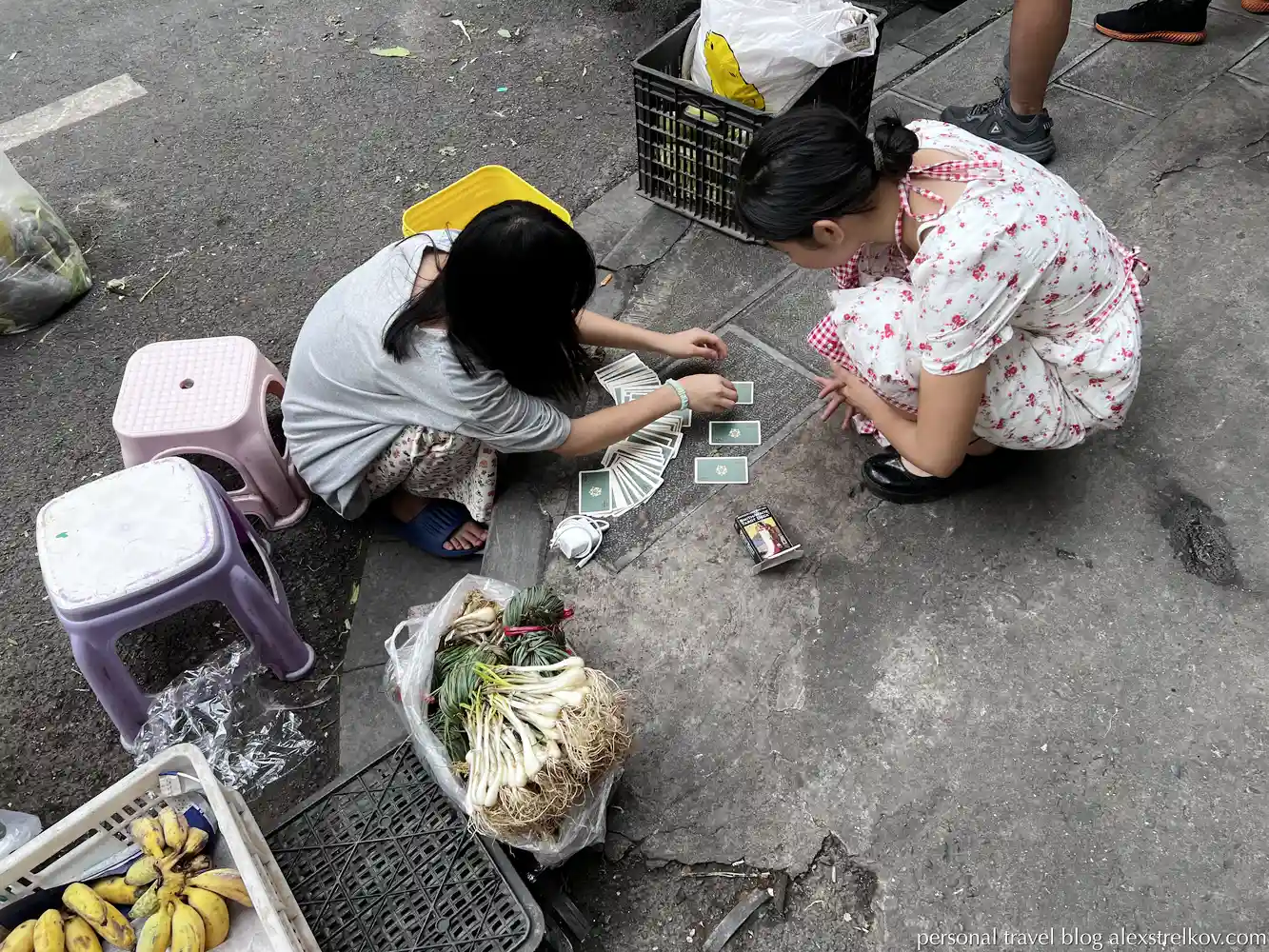
A bit further into the market — two girls dealing cards on the pavement next to a scallion stand. Nobody looks twice. It's just part of the scenery.
The Market: A Sleeping Butcher and a Hundred Kinds of Eggs
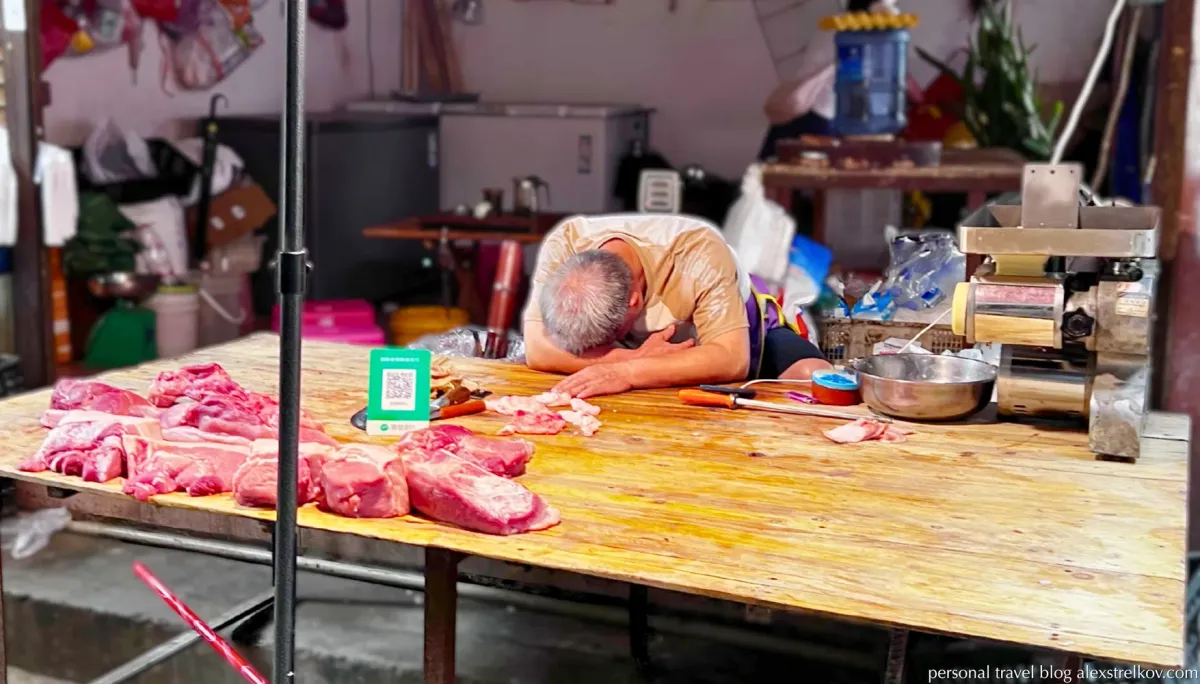
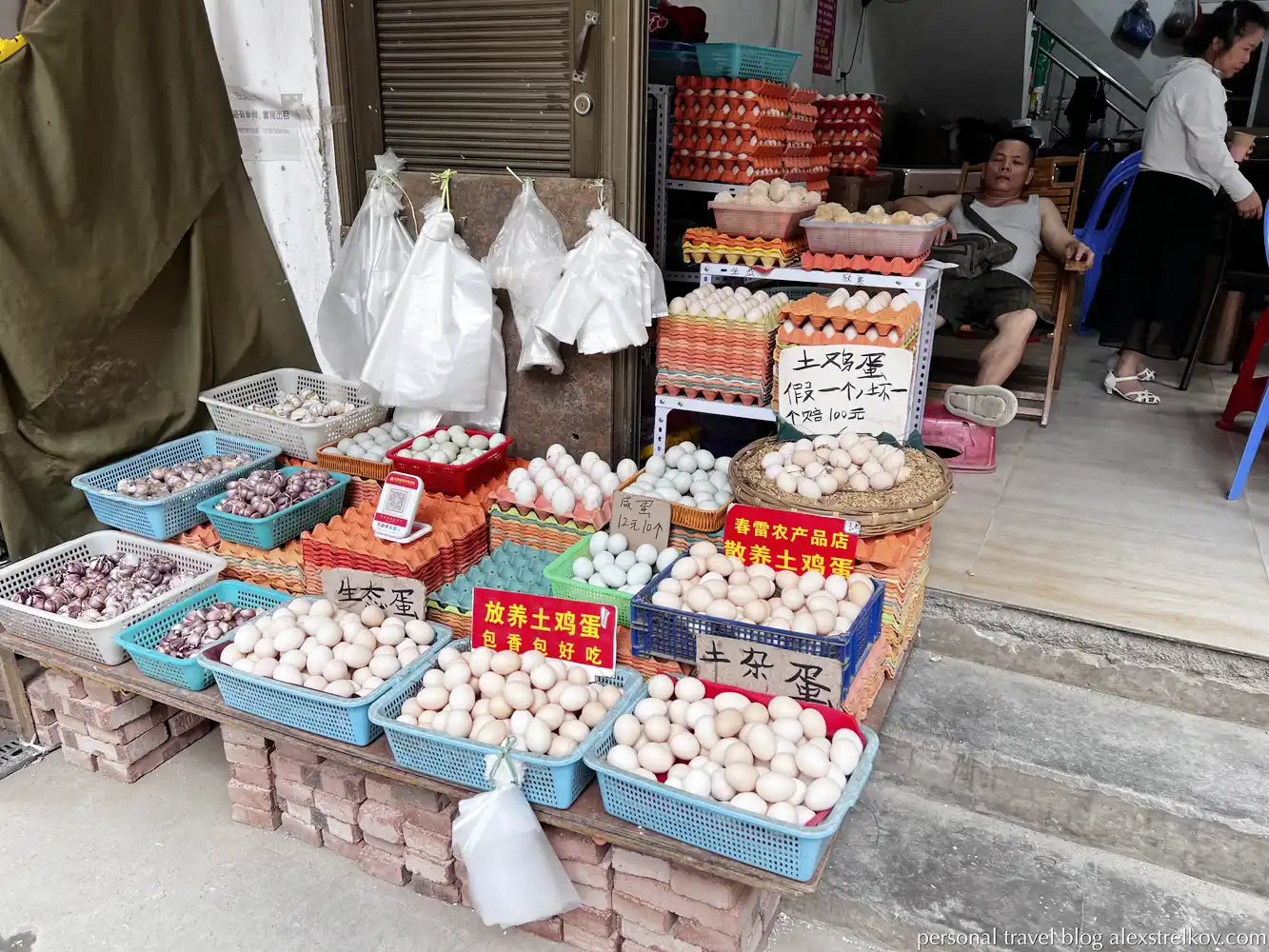
Hekou's market isn't a tourist attraction — it's a regular neighborhood market where people come for groceries. Which is exactly why it's interesting. The meat vendor is asleep directly on his counter, head resting next to cuts of pork. Next to him — an egg stand: free-range, farm, duck, quail, with a handwritten sign that reads: "If it turns out to be fake — penalty of 100 yuan." That level of consumer protection at an open-air market stall is unexpected.
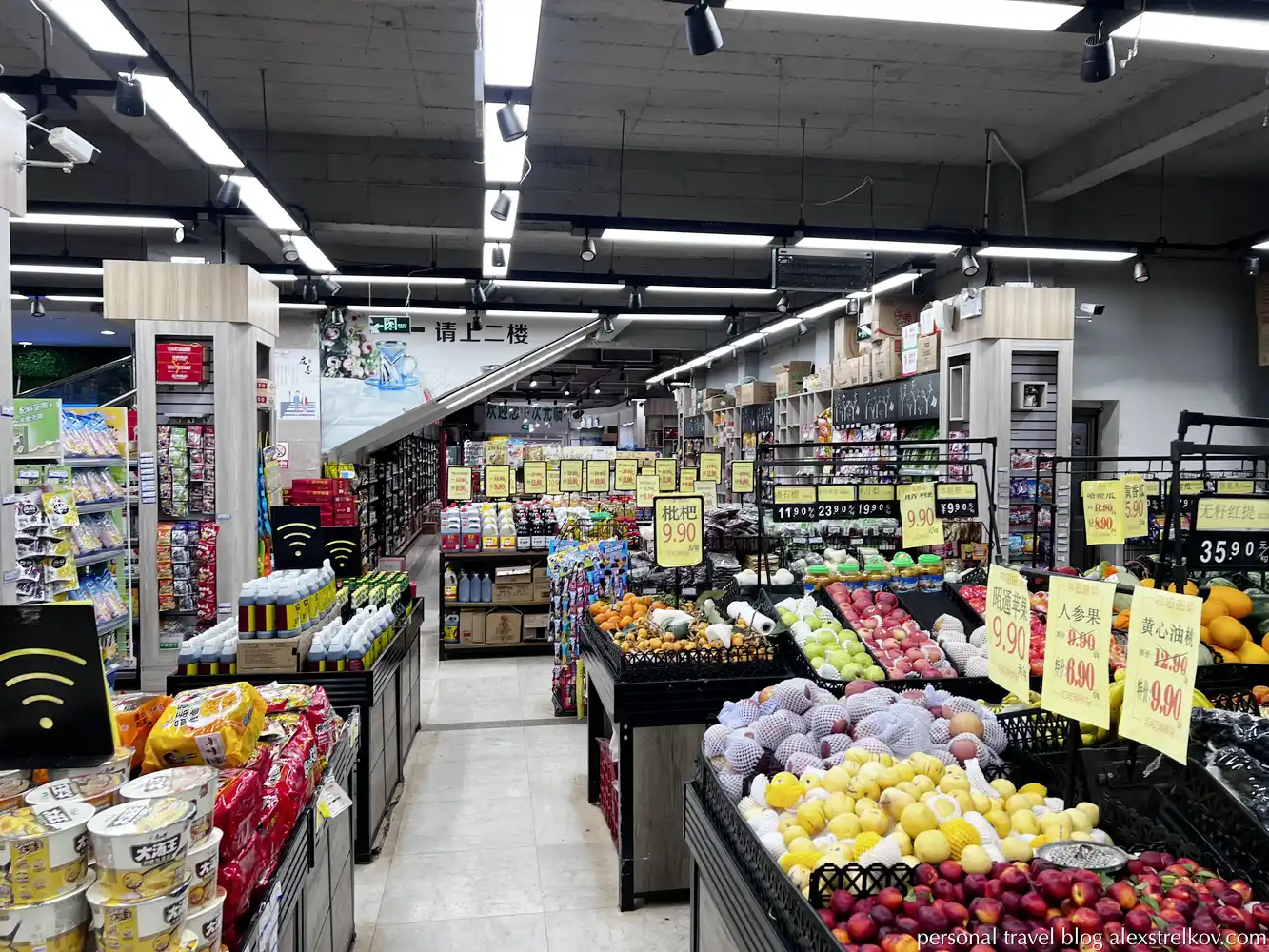
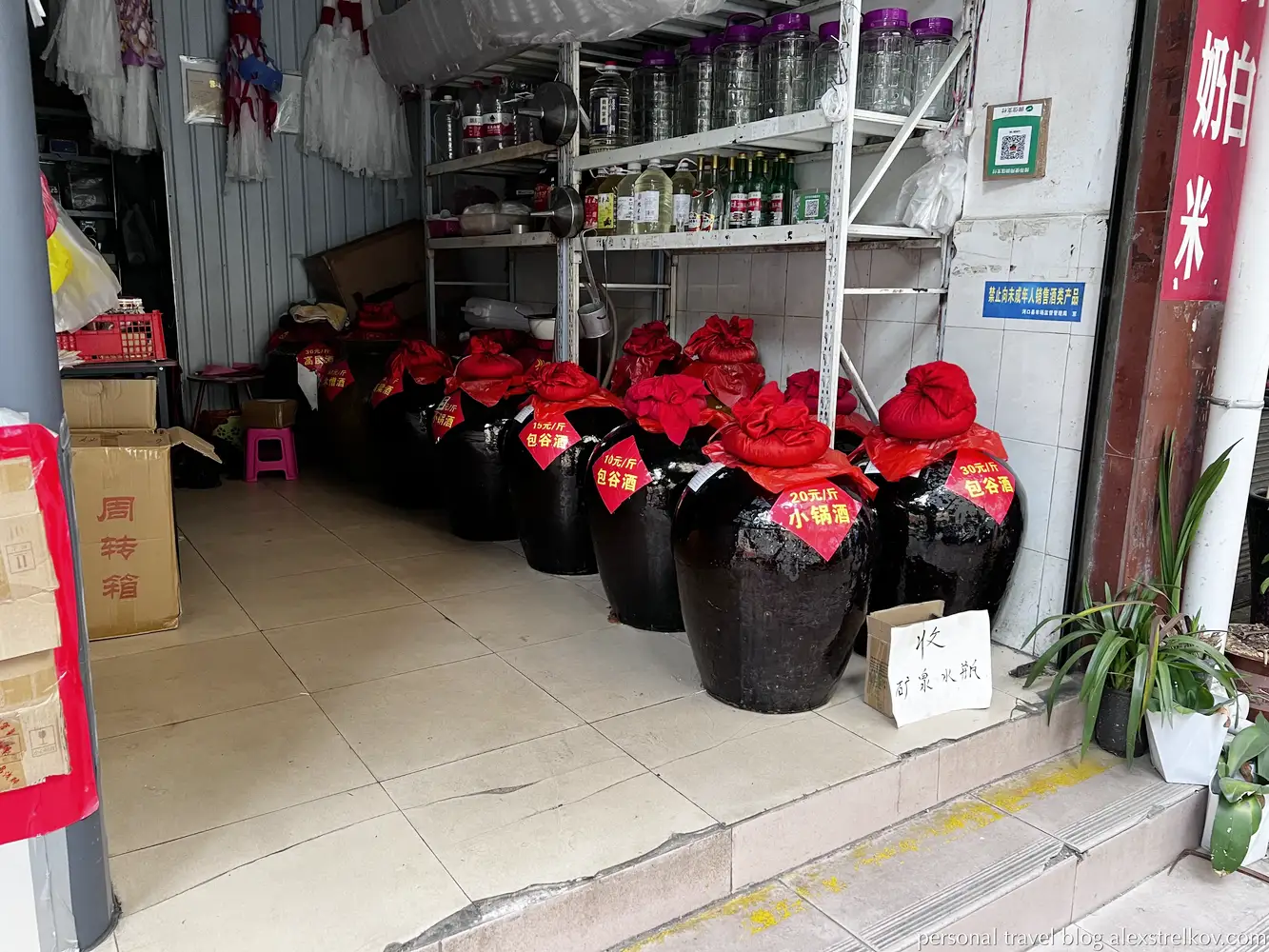
In the shops, the abundance continues in a different format. A huge range of fruit, unfamiliar snacks, local baijiu (白酒) — Chinese grain spirit, typically 50%+ alcohol — sitting in large black ceramic jars tied with red ribbon right by the entrance. Prices on the tags read 10–30 yuan per jin (half a kilo). After the basic corner stores of Vietnam, walking into one of these feels like stepping up a level.
Try the Lemonade. Seriously.
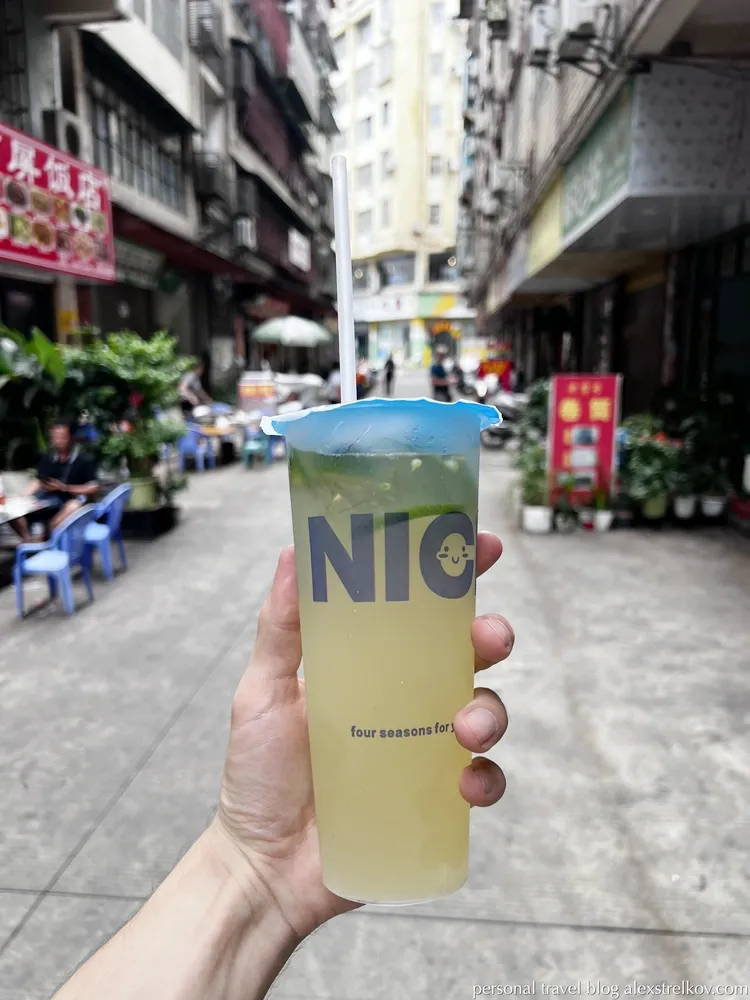
Some things you just have to do. One of them: buy a cup of local nínméng zhī (柠檬汁) — freshly squeezed lime and lemon juice with ice and mint, sold at small cafes and street stalls for around 8–12 yuan. Chinese people love it. I tried it and understood why immediately.
Also worth knowing: self-heating rice and noodles.
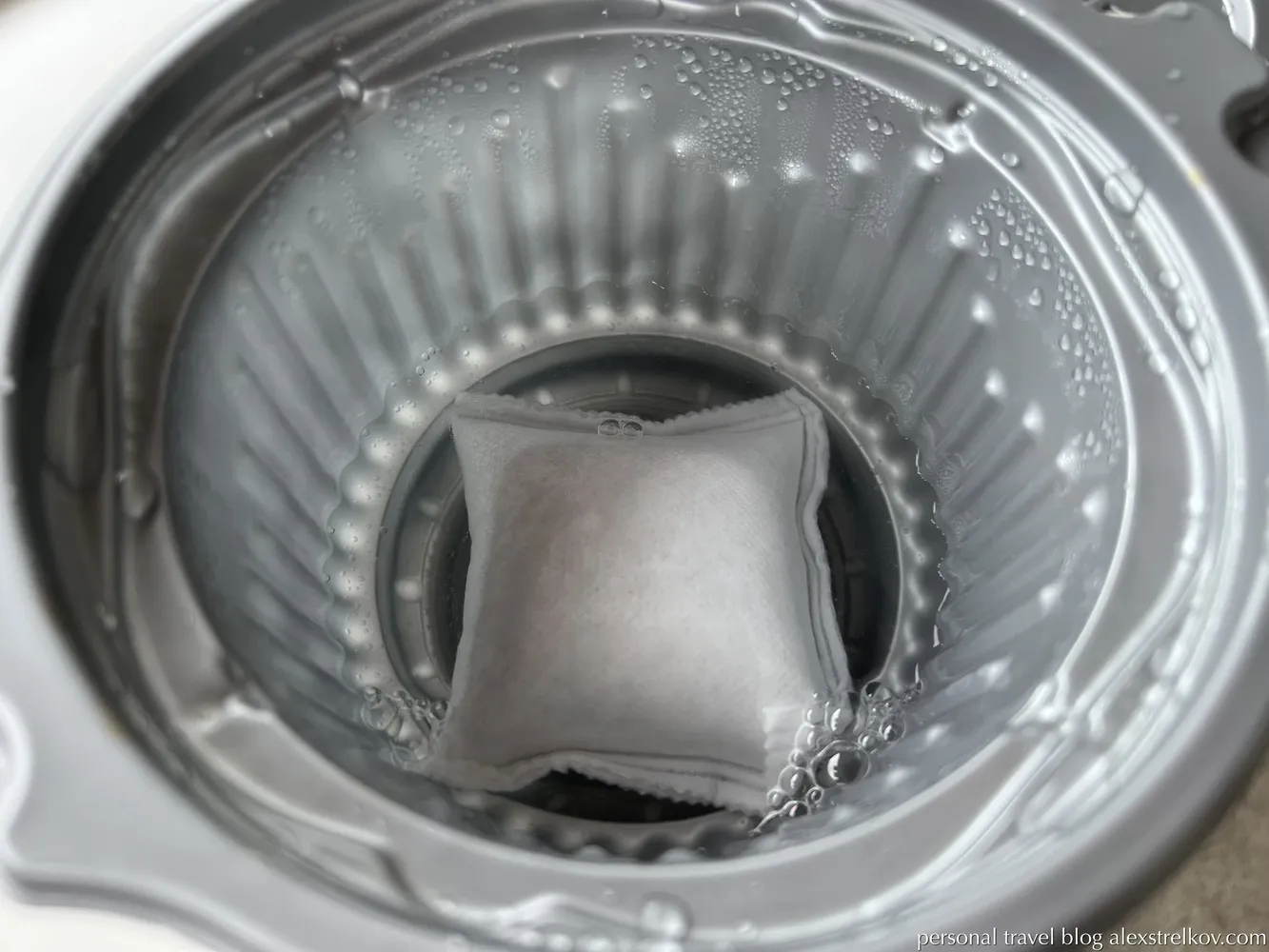
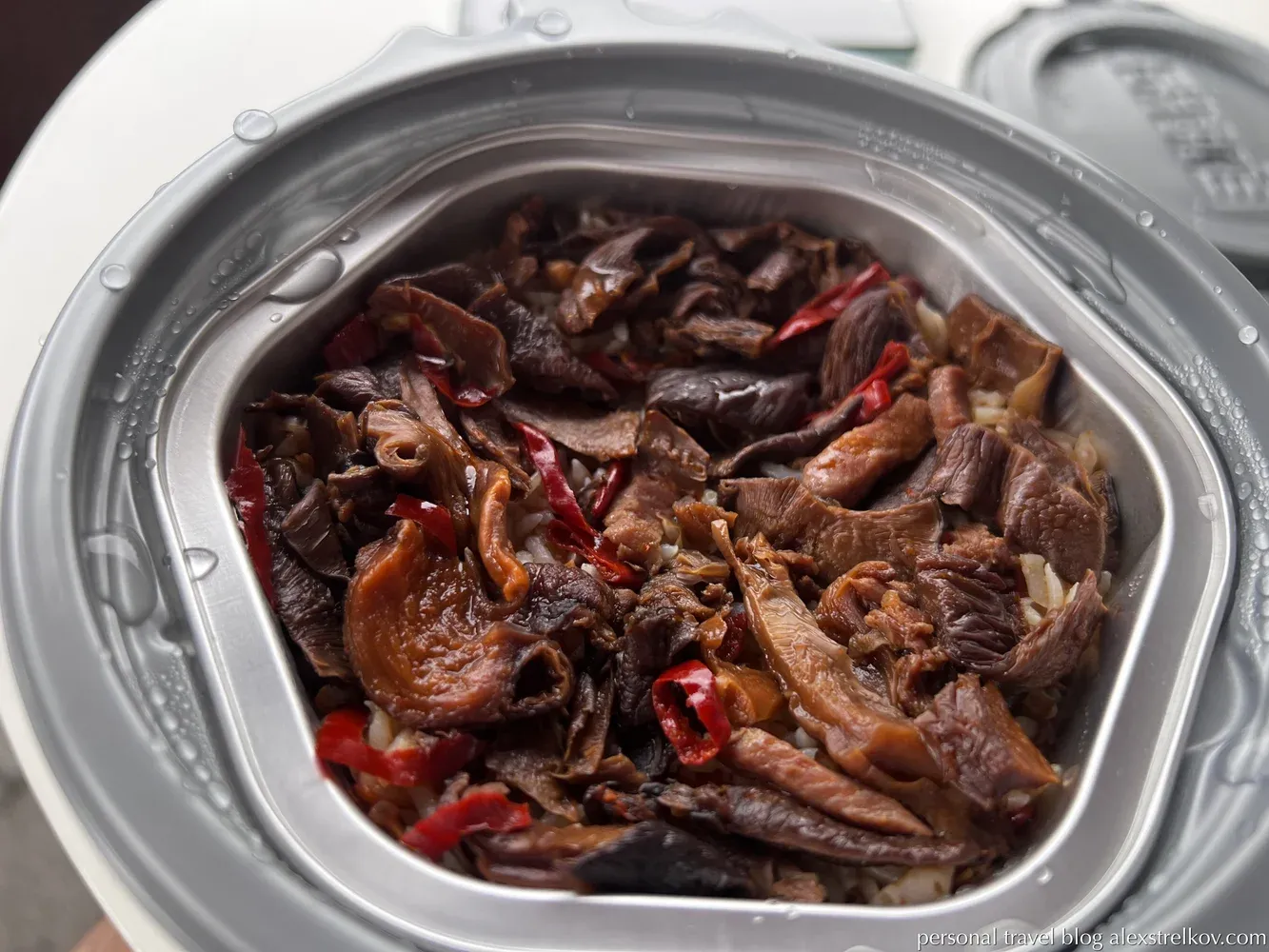
Looks like magic, tastes like instant noodles. But the process alone is worth trying at least once.
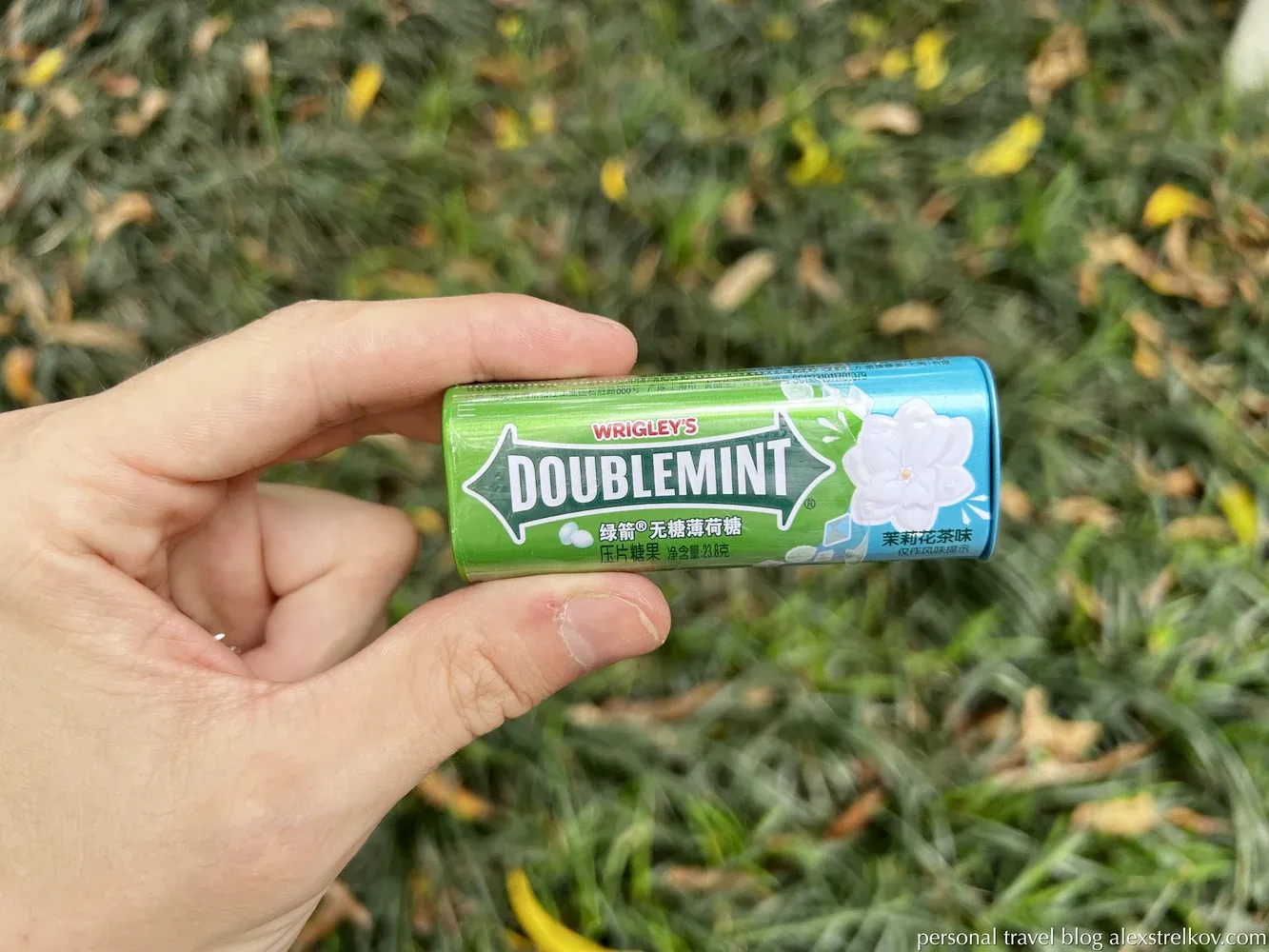
And one more thing to grab at any convenience store: Wrigley's Doublemint mints — sugar-free, jasmine tea flavored. Not gum, actual mints. Half the people who try them are instantly hooked. The other half will feel like they've eaten a toilet freshener. Taste is personal — but you won't know until you try.
Transport, Cameras, and What It Feels Like
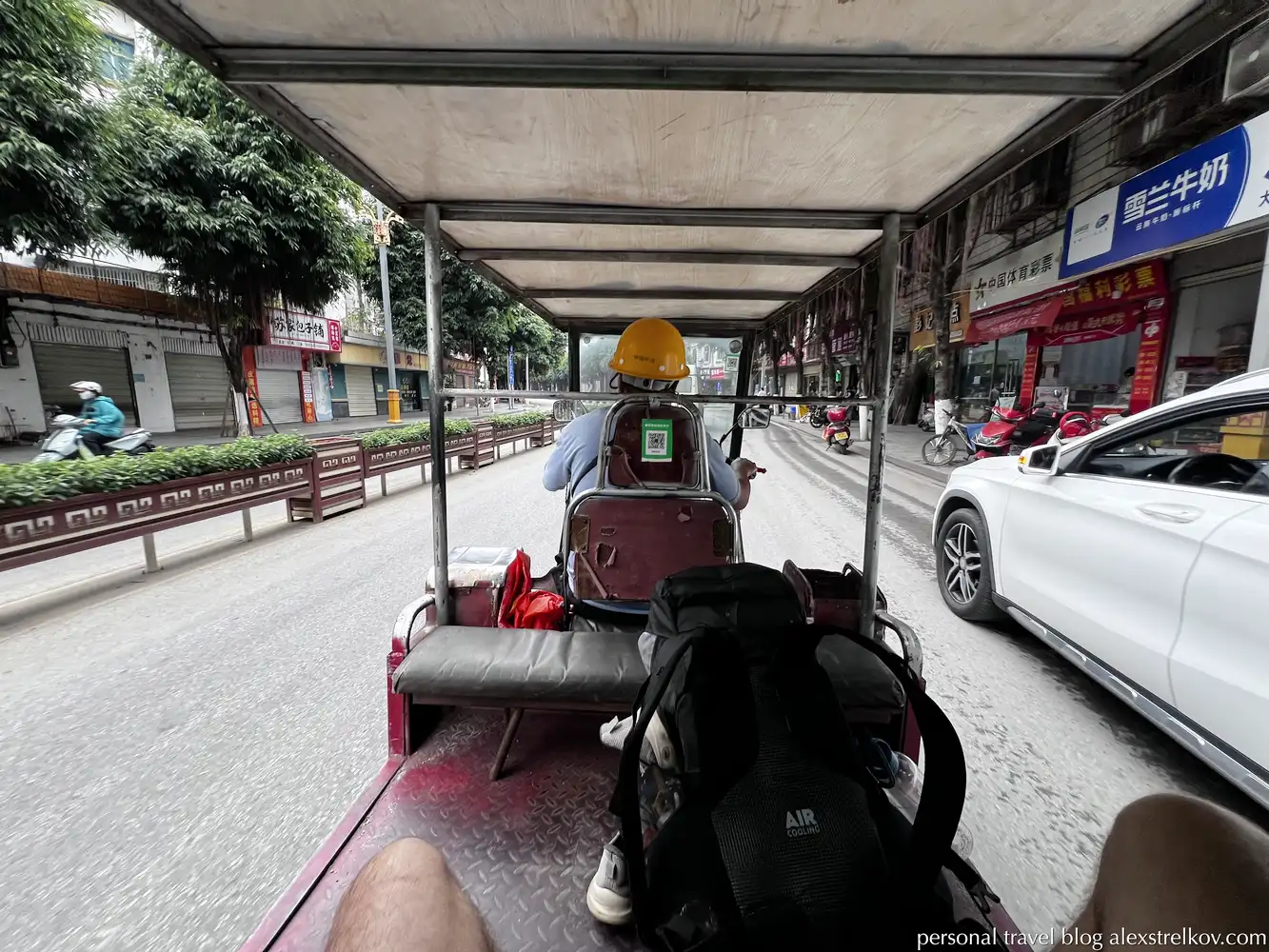
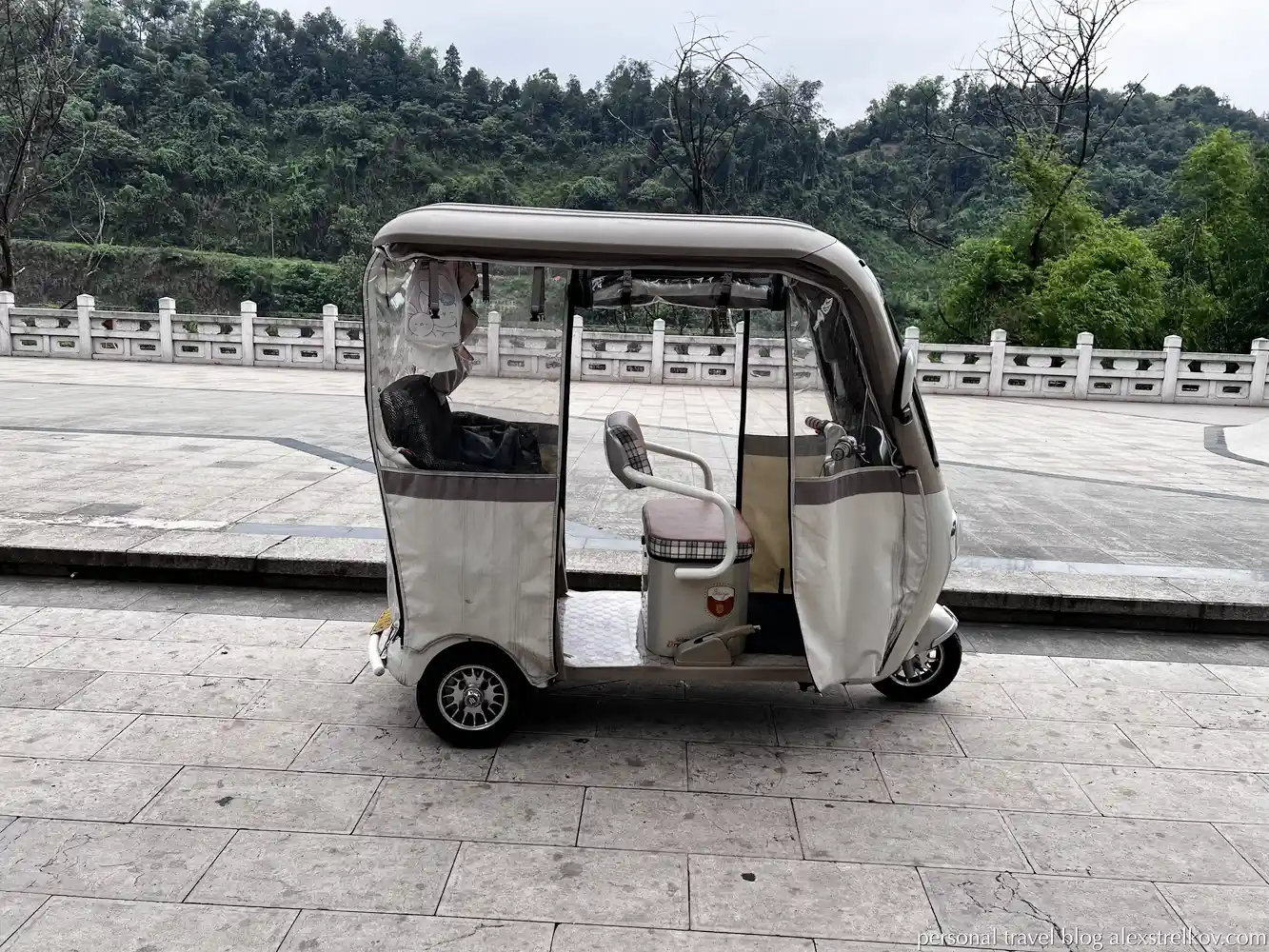
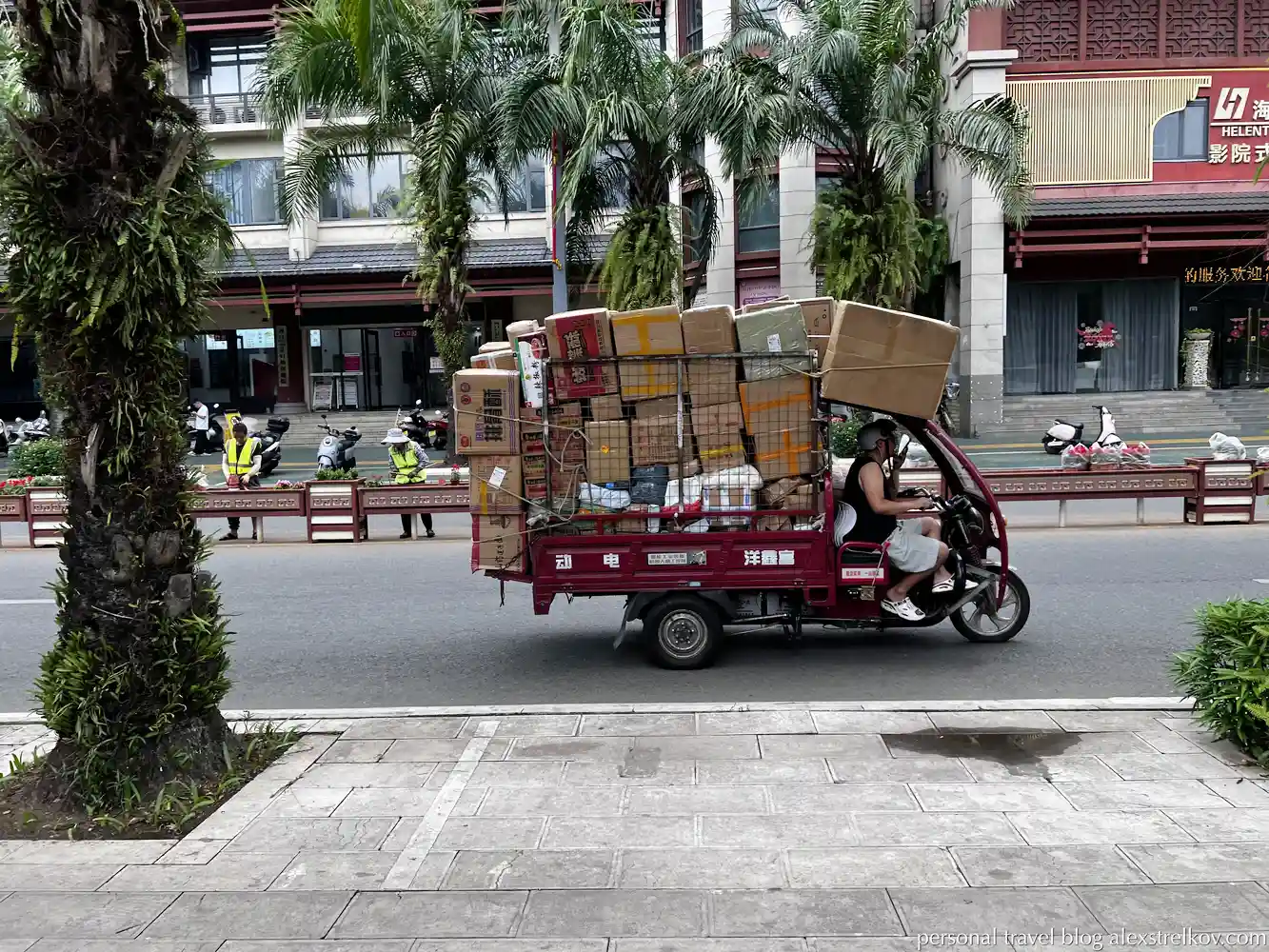
Getting around is easy with local electric tuk-tuks — covered three-wheeled bikes. I got from the city center to the North Railway Station (where trains to Kunming depart) for 20 yuan. Walking would have taken about an hour and a half.
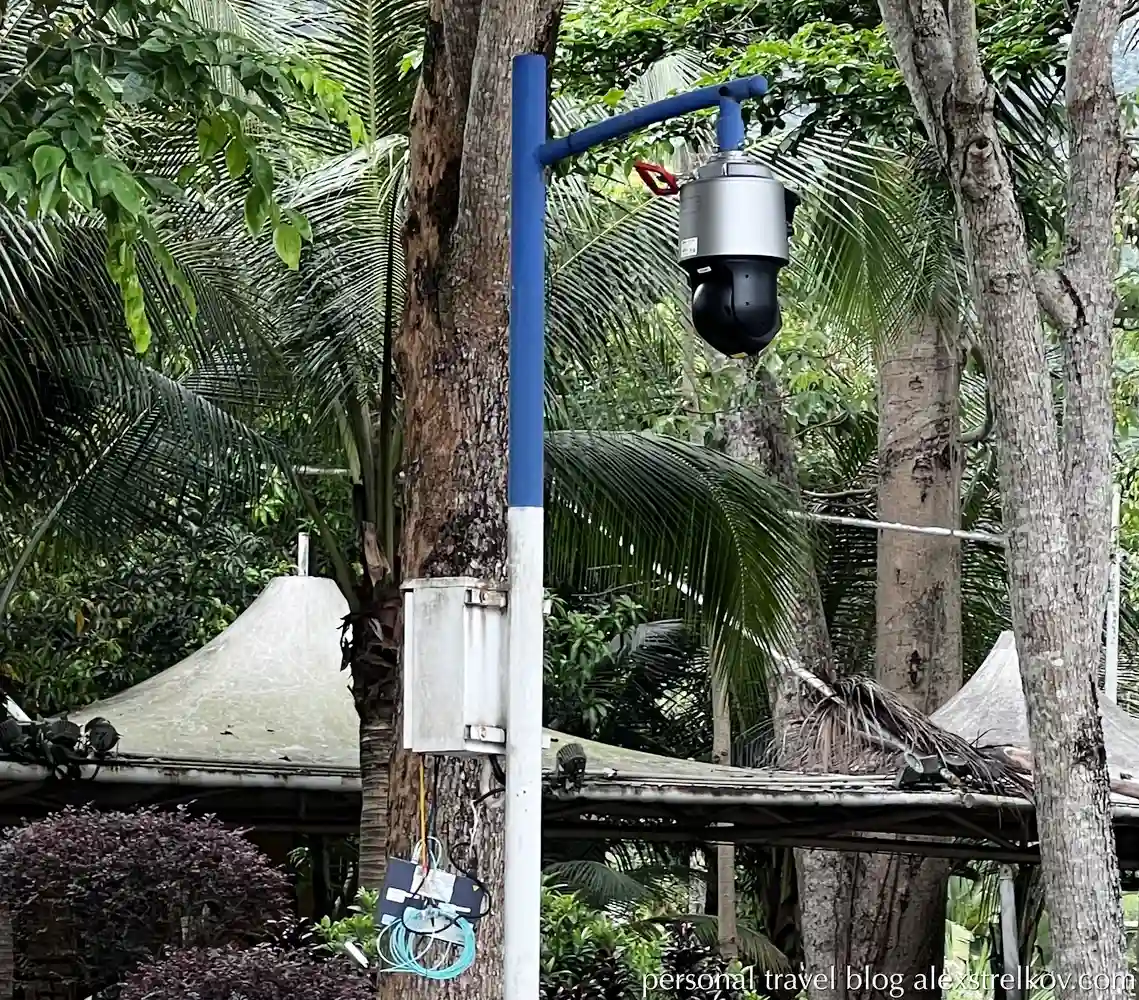
One thing that stands out immediately: the cameras. There are a lot of them. On every pole, in parks, at shop entrances, above intersections — part of the everyday infrastructure here.
You quickly realize that petty crime — the kind of thing that happens occasionally in Vietnam, like phones getting snatched — feels genuinely unlikely, especially toward tourists. The streets feel safe in a way that's hard to argue with.
At the same time, you're walking through a city where generations have grown up with this as a completely normal background reality. The scale of it is noticeable, especially if you're coming from elsewhere. It's worth seeing with your own eyes.
What to See
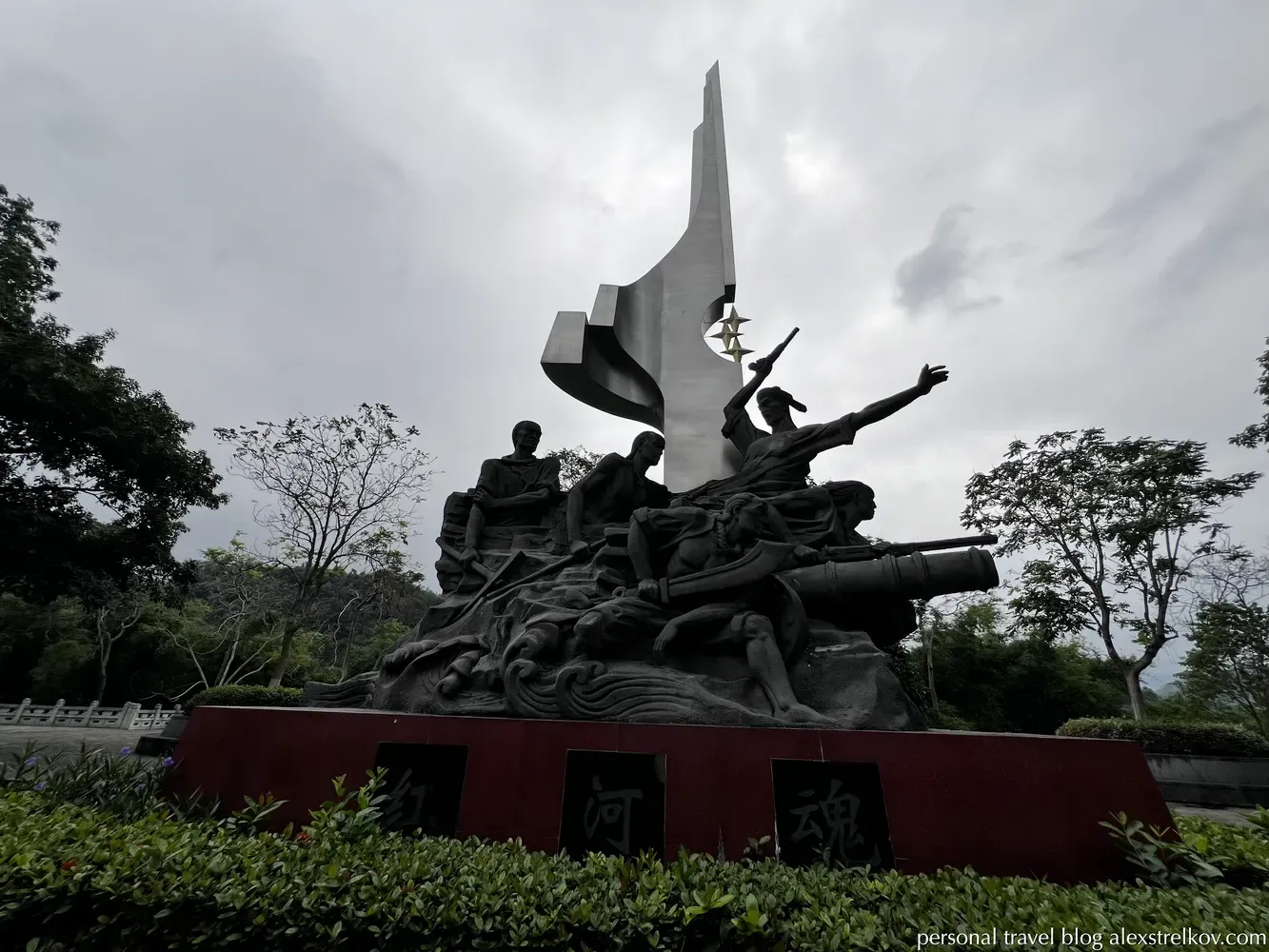
Hekou isn't a city with a must-see checklist. But there are a few things worth finding. On the Nanxi riverbank — the river that forms the actual border with Vietnam — stands the "Soul of the River" monument (河魂, Hé Hún): bronze figures rising above the water, a stele pointing skyward. It's dedicated to the Nanxi itself, the natural boundary that has separated and connected China and Vietnam for centuries. Atmospheric and worth finding.
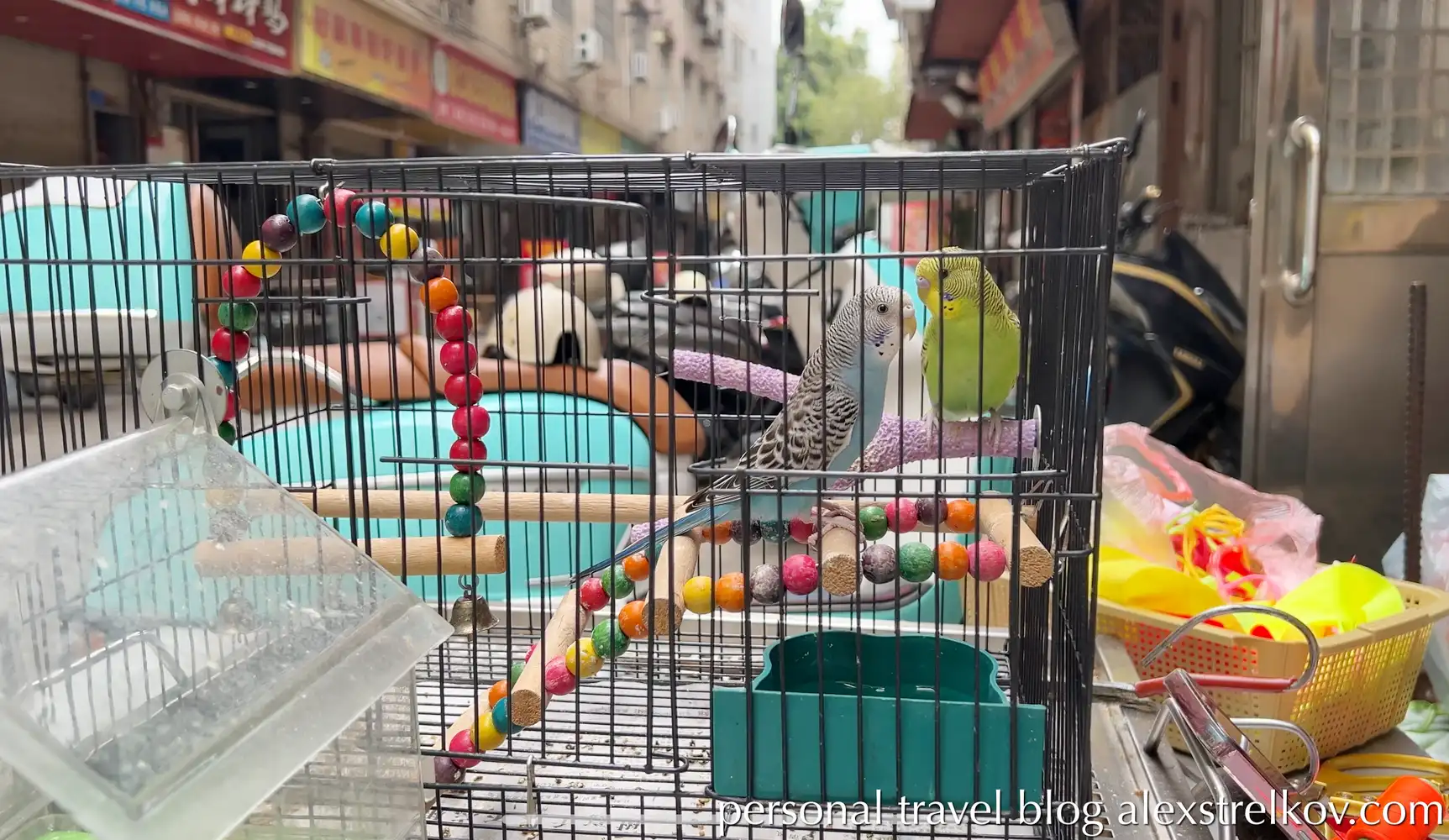
Near the embankment, there's a park where you can just sit. Retirees walk by, someone does morning exercises. A cat is tied to a post with a dumbbell and is asleep. Parakeets in a cage hang outside a shop entrance. Life proceeds at its own pace.

Getting Online and Paying: Sort It Before You Cross
One of the biggest fears backpackers have about China is payments and internet access. The answer: sort it out with one or two apps before you reach the border — not after.
It covers both an eSIM (with broader international access than a standard Chinese SIM) and basic payment functions in one place. If your phone supports eSIM, you'll have internet connectivity the moment you step into the country. A UnionPay card linked without issues. There's a lot more to say about apps for traveling in China — I'll cover it in a dedicated piece. Subscribe so you don't miss it.
Getting to Kunming
From Hekou, high-speed trains run to Kunming — the largest city in Yunnan — from the North Railway Station. A ticket costs around 100 yuan (slightly cheaper at the ticket window than online), journey time is about 3.5 hours. The trains are comfortable: air conditioning, power outlets, proper seats. You can also use the links at the bottom of this article to purchase your train tickets.
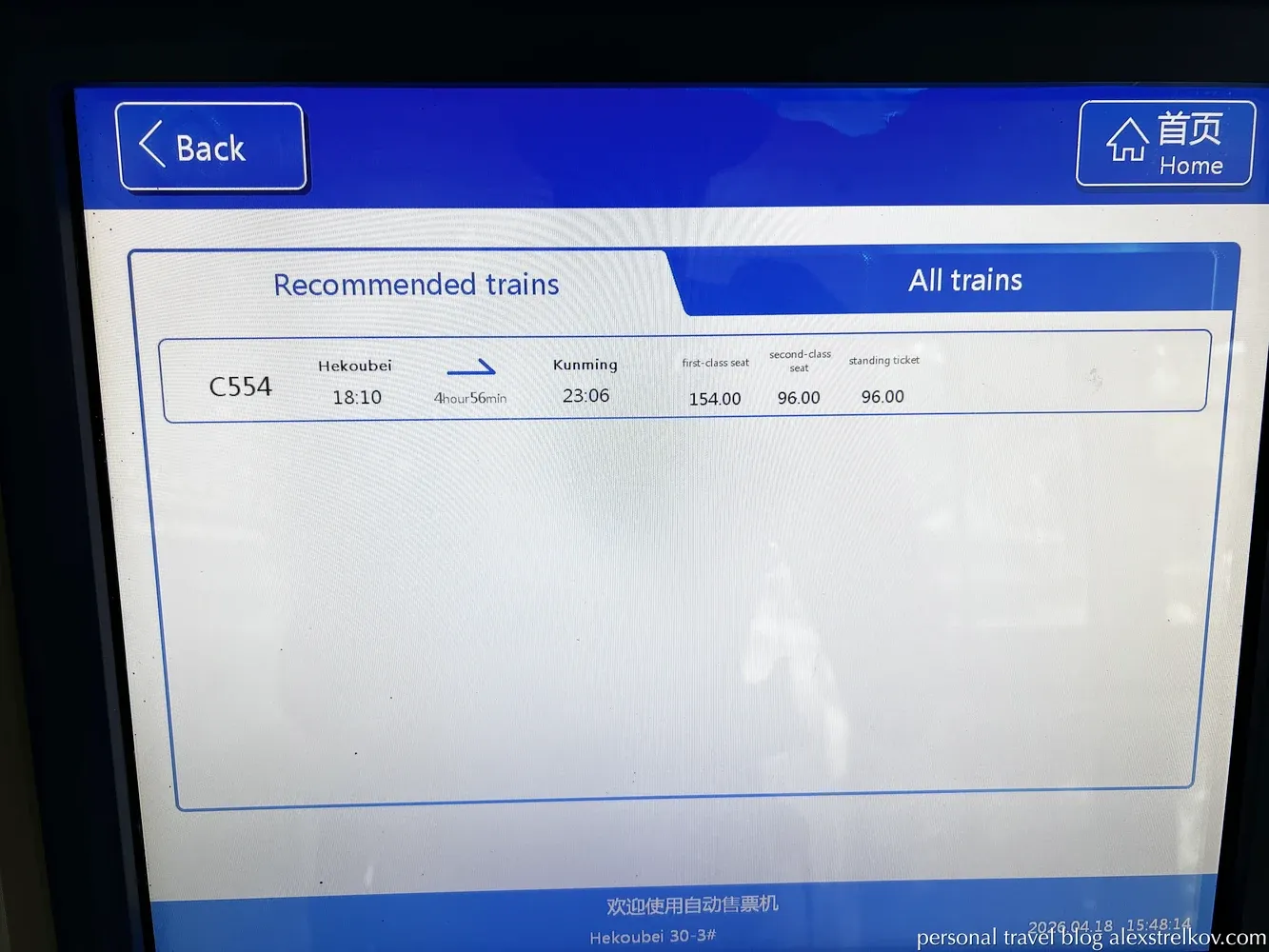
When booking your tickets, pay attention to the naming: Hekou is the actual border town and pedestrian crossing right next to Vietnam, while Hekoubei (Hekou North) is the modern passenger railway station located about 5 kilometers outside of town.
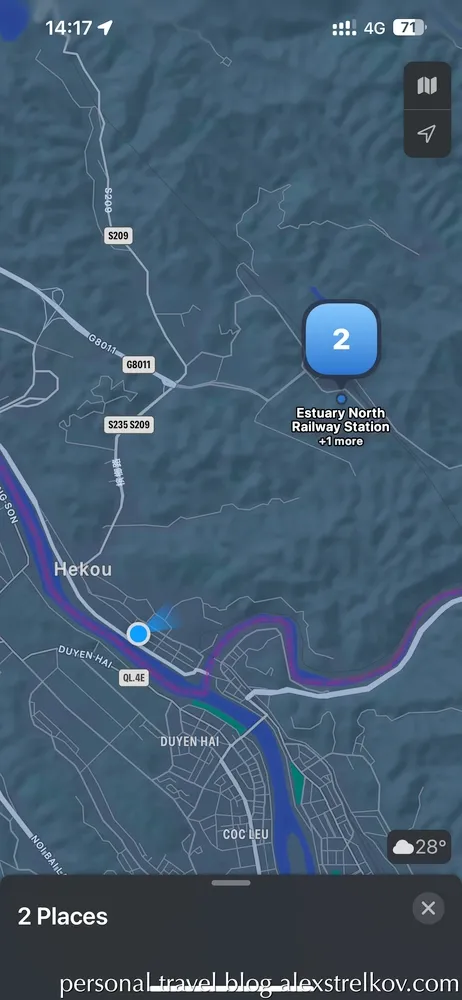
You cannot catch the high-speed train right at the border; you'll need to grab a quick 10-15 minute taxi or local bus from the crossing checkpoint to Hekoubei to head further north into China.
Should You Go?
Hekou isn't the main point on Yunnan's map. But if you're traveling overland from Vietnam into China, stopping here for a day or two isn't wasted time — it's a genuine cultural transition zone. The city helps you recalibrate: get used to the characters, the QR codes, the pace, the silence of electric vehicles everywhere. Try the lemonade. Watch a game of xiangqi. By the time you board the train to Kunming, China won't feel like another planet anymore.
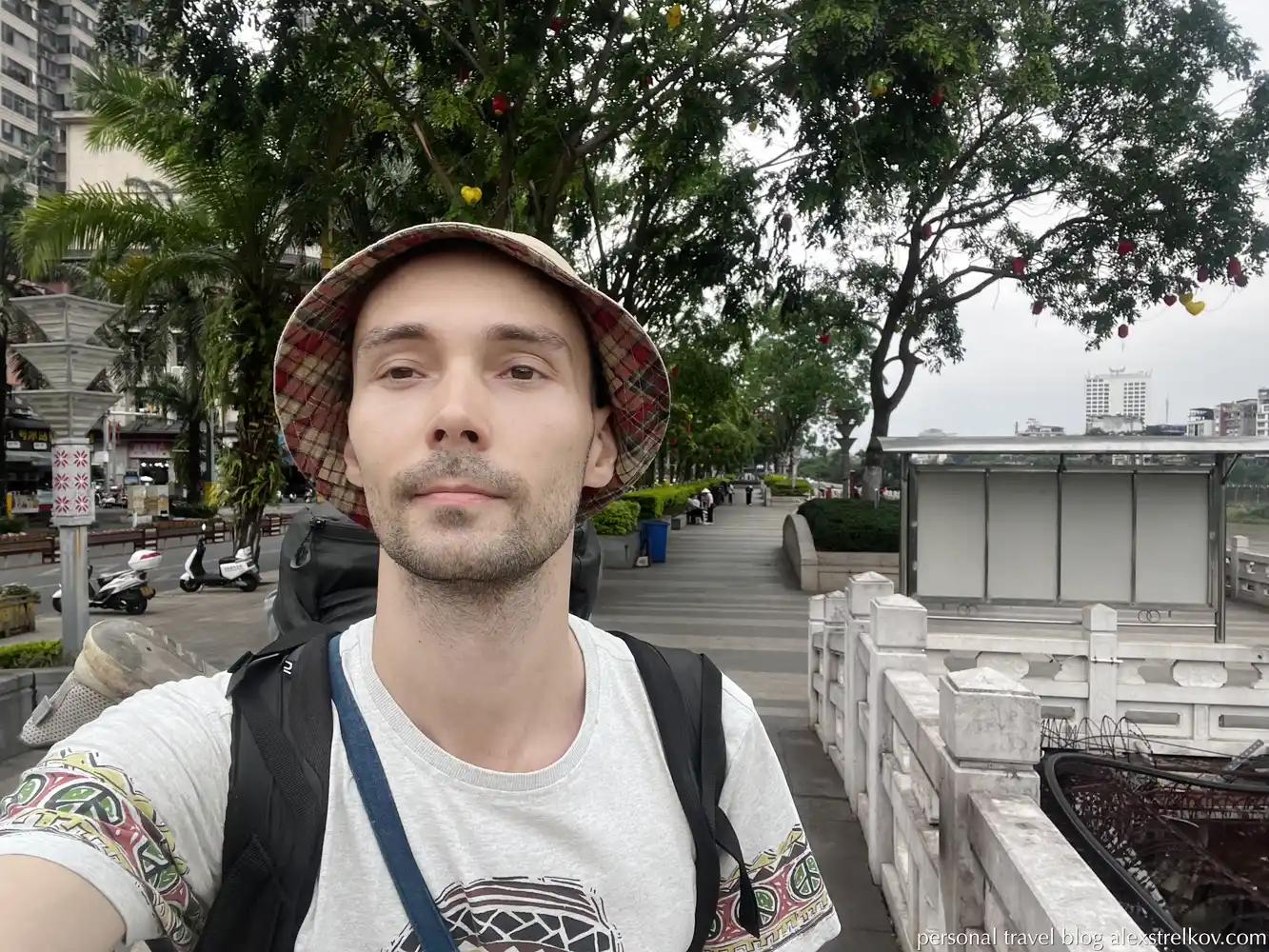
Most backpackers fly straight through Hekou. Now you know there's a reason to stay.
Useful Services I've Been Using for 6 Years of Travel
These are the platforms I actually use when planning and booking trips — nothing I don't rely on personally.
Klook — activities, day trips, and experiences across Asia and beyond. Good for booking entrance tickets, tours, and transport passes in advance. I use it especially in cities where showing up without a reservation means waiting in line for two hours.
Tiqets — instant mobile tickets for museums and attractions worldwide. The tickets go straight to your phone, no printing, no queue at the box office.
Kiwitaxi — airport and intercity transfers in 100+ countries, with English-speaking drivers. Useful when you arrive somewhere late at night and don't want to figure out local apps from scratch.
Aviasales — flight search aggregator I use to compare prices across airlines and booking agencies. Often finds combinations that other search engines miss entirely.